See the Prague astronomical clock without the crush. Learn show times, why the Old Town Hall tower ticket is the better buy, and how to time your visit.
What the Astronomical Clock Is and Why Go
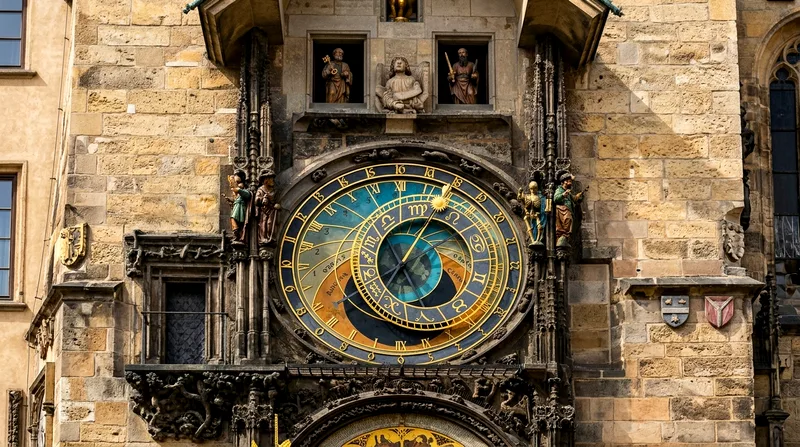
The Prague astronomical clock — the Orloj — is mounted on the south wall of the Old Town Hall, looking out over Old Town Square since 1410. That makes it one of the oldest working astronomical clocks anywhere, and the mechanism still does the job it was built for: tracking the position of the sun and moon against the zodiac, not just telling the time. It's a technical instrument that happens to also be a tourist spectacle, which is part of why it draws such a crowd every sixty minutes.
I'd put it on the list of Prague sights worth building a short stop around, but not worth rearranging your whole day for. It sits two minutes from the Church of Our Lady before Týn and about seven minutes' walk from Charles Bridge, so it's rarely a dedicated trip — it's a stop on the way to somewhere else. That's the right way to treat it.
How the Orloj Works
The clock has three main layers. The astronomical dial on top shows the time, the sun's position in the zodiac, and a rough sunrise/sunset indicator using old Czech and Babylonian time systems — it looks confusing because it's doing several jobs at once. Below that sits the calendar plate, a painted disc added in the 1800s showing the months and saints' days. Statues flank the whole thing: a skeleton representing death, a figure of vanity with a mirror, a miser clutching a bag of gold, and a Turkish figure meant to represent desire — all moving slightly during the hourly show.
Is It Worth Visiting?
Yes, but calibrate your expectations. The clock face itself is genuinely impressive as a piece of medieval engineering and worth a few minutes of study regardless of the show. The show itself — covered below — is short and, if you've seen photos beforehand, not especially surprising. What makes the visit worthwhile is the setting: Old Town Square, the Týn Church spires behind you, the Jan Hus Memorial a few steps away. Treat the clock as the anchor of a square worth loitering in, not as a standalone attraction.
How to Watch the Hourly Show
Every hour, from roughly 9 a.m. to 11 p.m. (9 a.m. to 8 p.m. in winter months — check current posted hours, since the schedule shifts slightly by season), the clock performs its "Walk of the Apostles." The skeleton figure tips an hourglass and pulls a cord ringing a small bell, the two shuttered windows above the dial open, and figures of the twelve Apostles shuffle past in procession. A rooster crows, the windows close, and the hour chimes on the clock's bell. The whole thing lasts around 45 seconds.
That's it. It's charming the first time and mildly amusing after that, but people often expect more motion or more time — go in knowing it's brief, and you won't feel shortchanged.
Best Viewing Spots in the Square
Directly below the clock, you'll be packed shoulder to shoulder and looking almost straight up, which is a bad angle for photos and not much better for your neck. Step back 15-20 meters toward the Jan Hus Memorial in the square's center — you get a flatter sightline, more breathing room, and you can see the whole facade rather than just the dial. Arriving 10 minutes before the hour is enough if you're happy standing at the back; arrive 20-25 minutes early for a front-row spot near the wall, especially in July and August or around Christmas markets season.
Independent Visit vs Guided Tour
Watching the show itself needs no ticket and no guide — it's a free public event on a public square, and that's unlikely to change. A guided walking tour earns its cost by explaining what you're looking at: the history of the 1410 mechanism, the 19th-century calendar plate, the legend about the clockmaker Hanuš being blinded to stop him building another one (a good story, historically shaky). If you want context, a 2-3 hour Old Town walking tour that includes the clock, Týn Church exterior, and Charles Bridge approach is a more efficient use of a guide's time than booking a clock-only tour, which doesn't really exist as a standalone product anyway. For the clock alone, independent viewing is the obvious choice — save the guide budget for the tower or a longer Old Town itinerary.
Old Town Hall Tower Tickets Explained
The Old Town Hall tower sits directly behind the clock, and this is where the money is better spent. Entry is ticketed, with adult, reduced (students/seniors), and family pricing typically available — check current prices and hours before you go, since they're adjusted periodically and vary slightly by season. A combined ticket covering the tower and the Town Hall's historic halls is usually the best value if you also want to see the Gothic chapel and underground spaces.
The free street-level show is quick and crowded, while the Old Town Hall tower ticket trades a small fee for the better view and more time.
Prague astronomical clock: ways to experience it compared
| Option | Cost | Time Needed | Crowd Level | Best For |
|---|---|---|---|---|
| Street-level clock show | Free | 10-15 min | High, shoulder-to-shoulder | Quick photo, first-timers |
| Old Town Hall tower view | Paid ticket | 30-45 min | Low to moderate | Panoramic views, photos |
| Town Hall combined ticket (tower + halls + chapel) | Paid, higher tier | 60-90 min | Low | History, mechanism close-up |
| Guided Old Town walking tour | Paid, per person | 2-3 hours | Moderate | Context and storytelling |
| Café seating on the square | Price of a drink, often marked up | Open-ended | Moderate | Slow viewing, resting feet |
Typical figures based on standard visitor patterns; prices, hours and ticket combinations change, so check official sources before you go.
What the Ticket Includes
A standard tower ticket gets you up via a lift (there's step-free access for most of the way, with a short stair section near the top in some configurations — worth confirming if mobility is a concern) to an open-air viewing gallery that wraps around the top of the tower. Some tickets bundle in the Town Hall's Gothic chapel, where you can see the clock's mechanism and the Apostle figures from behind, and the underground spaces including old cellars and a Romanesque hall. Audio guide access is often included or available as an add-on. Compare current prices and ticket combinations before booking — the Town Hall website or official booking point in the square lists the up-to-date breakdown.
Why the Tower Beats Watching From Below
From street level, you see the clock face but none of the square's layout — the Týn Church spires, the Powder Tower off toward Josefov, the red rooftops running toward Wenceslas Square. From the tower gallery, you get all of it at once, plus a rare high-angle look down at the crowd forming for the next show. It's also simply more comfortable: no crush, no craning your neck, and you can linger as long as the ticket allows rather than fighting for a sightline. If you only do one paid thing in Old Town Square, make it this rather than a souvenir photo spot or a café with a "clock view" markup on its coffee.
Best Time to Visit Without the Crowds
Old Town Square is one of the most photographed spots in Prague, and the clock show is its single busiest recurring moment. Midday and early evening shows between May and September can draw genuinely dense crowds — tour groups time their arrival to the show, so you'll often see fifteen or twenty raised phones at once by the five-minute mark. That's manageable, but it's not a relaxed experience.
Best Times of Day and Year
The 9 a.m. or 10 a.m. shows are consistently the calmest — most group tours and day-trippers haven't arrived yet, and the morning light on the Týn Church facade is better for photos anyway. Late evening shows, after 9 p.m. in summer, also thin out once the day-trip buses leave, though the square takes on a different, more atmospheric feel lit up at night. Avoid the shows between roughly 11 a.m. and 4 p.m. if you can, especially on weekends. Seasonally, November through February is quieter overall except around the Christmas market weeks in December, when the square gets packed regardless of the hour — compare that to Vienna's equally crowded Christmas markets, or Krakow's Main Square, which gets busy but rarely to the same density. If crowds are your main concern, a shoulder-season visit — April or late September — gives you decent weather without the peak crush.
Nearby Add-Ons in Old Town
Because the clock is a brief stop, it pairs naturally with everything else clustered in Old Town. Budapest's Fisherman's Bastion and Vienna's Stephansplatz work the same way — a central landmark surrounded by enough else that you'd be wasting a trip if you only saw the one thing.
Walkable Sights Within Minutes
The Church of Our Lady before Týn is a 90-second walk and worth stepping inside if it's open — the Gothic interior is darker and more atmospheric than the twin spires suggest from outside. The Jan Hus Memorial in the square's center makes a good resting point and photo spot. Charles Bridge is about seven minutes on foot, and the Powder Tower marking the old city boundary toward Municipal House is roughly five minutes the other direction. Josefov, the former Jewish Quarter with the Old Jewish Cemetery and several synagogues, starts about ten minutes northwest — budget at least two hours there if you go, since the sites are ticketed separately and often require timed entry. Wenceslas Square, the newer commercial heart of the city, is a 10-12 minute walk south.
Pairing With a Walking Tour
A half-day Old Town walking tour is the most efficient way to see the clock, Týn Church, Charles Bridge, and a slice of Josefov without backtracking. Compared to Cesky Krumlov or Kutna Hora — both worthwhile as separate day trips from Prague, not add-ons to an Old Town walk — this cluster is compact enough to cover on foot in half a day. If you're also considering Dresden or Munich as onward stops, note that both are reachable by train in roughly 2-4 hours, so a Prague walking tour day fits naturally before or after a short rail trip.
Frequently asked questions
What time does the Prague astronomical clock show happen?
The show runs on the hour, every hour, typically from around 9 a.m. to 11 p.m. in summer and a slightly shorter window in winter. Exact start and end times shift seasonally, so check the current schedule posted at Old Town Hall or its official site before planning your visit around it.
Is the Old Town Hall tower ticket worth it?
Yes, for most visitors. The street show is free but brief and crowded; the tower ticket gets you a panoramic view over Old Town Square, the Týn Church spires, and the wider city for roughly 30-45 minutes without the crush. It's the single best-value paid experience in the square.
Where is the best place to watch the astronomical clock show?
Stand back 15-20 meters from the Old Town Hall wall, toward the Jan Hus Memorial, rather than directly underneath. You'll get a flatter view of the whole facade instead of craning your neck, and there's more room to stand comfortably.
How long does the astronomical clock show last?
About 45 seconds. The skeleton figure rings a bell, the Apostles parade past two small windows, a rooster crows, and the hour chimes. It's worth seeing once but don't expect an elaborate performance.
What is the best time to visit the astronomical clock to avoid crowds?
Aim for the 9 a.m. or 10 a.m. show, or a late evening show after 9 p.m. in summer. Midday and weekend afternoons between roughly 11 a.m. and 4 p.m. draw the heaviest tour-group traffic.