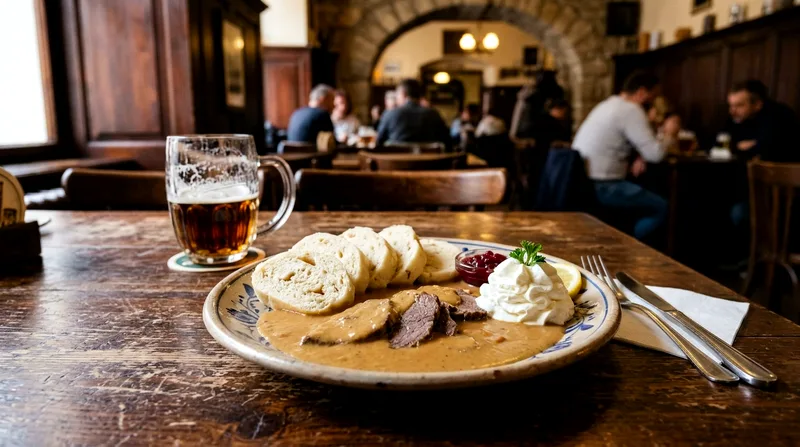
Prague Food Guide: Czech Dishes You Have to Try
Prague food explained: svickova, goulash, fried cheese, trdelnik myths and street snacks, plus where to find food tours to taste traditional Czech food.
10 min read · 3 Nov 2026
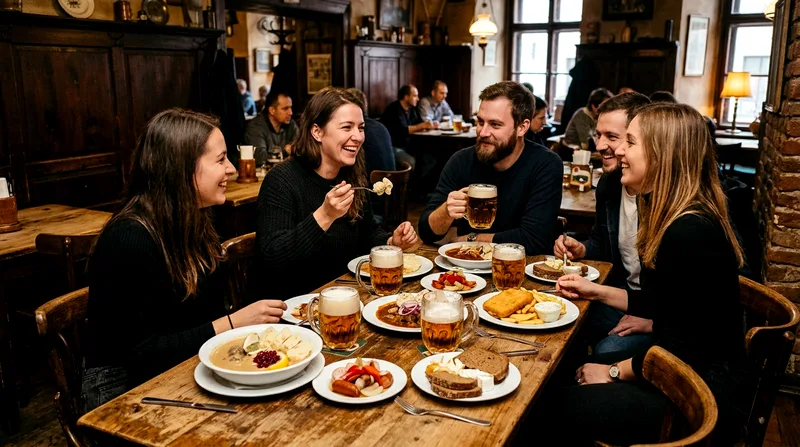
Tours & activities
Compare Prague food tours, from tasting walks and beer tours to brewery trips and cooking classes, and find the best fit for your appetite and group.
Prague's food scene is wider than most guidebooks suggest — svíčková and trdelník get the headlines, but the city runs on pork knuckle, garlic soup, fried cheese, and some genuinely serious craft beer. A Prague food tour is the fastest way through that list, especially if you've got two or three days in the city and don't want to spend them guessing which restaurant is a tourist trap. The honest trade-off is pace versus depth: a tasting walk covers more ground in less time, while a cooking class or brewery trip trades breadth for a slower, more hands-on afternoon.
Before picking a specific tour, work out what you actually want from it. Are you trying to eat your way through unfamiliar dishes without the research, or do you want to learn to cook them? Is beer the main draw, with food as a side note? Those are different products, often run by different types of guides, and conflating them leads to disappointment — showing up to a "food and beer tour" expecting a sit-down tasting menu, for instance, when it's really a walking format with five short stops.
Couples generally do best with an evening tasting walk through Old Town or Vinohrands — three to four stops, two to three hours, enough wine and beer pairings to make it feel like a date rather than a lecture. Families with kids under ten should lean toward market visits or a short cooking class instead; standing-heavy walking tours with four pub stops test most children's patience past the first hour. Solo travelers tend to get the most out of small-group tasting walks specifically because they're social by design — you're seated or standing with strangers, which beats eating alone at a restaurant you picked off a map. If you're traveling solo and feeling awkward about joining a group, know that most Prague food tour groups run six to twelve people, which is small enough that guides usually introduce everyone early on.
If this is your first visit to Prague, a general tasting walk through Old Town gives you food, history, and orientation in one go — you'll walk past the Astronomical Clock and Old Town Square anyway, so a guide narrating while you eat is efficient. Repeat visitors who've already done the highlight-reel version are usually better served by something narrower: a dedicated beer tour with a brewery visit, a cooking class focused on dumplings and svíčková, or a neighborhood-specific walk through Žižkov or Vinohrady, both of which have a grittier, more local pub scene than the center. I'd skip a second generic tasting walk on a repeat trip — the stops rarely change enough to justify the repeat cost.
"Prague food tour" covers at least four distinct products, and operators aren't always clear about which one you're booking. Reading the itinerary line by line — not just the title — saves you from a mismatch.
Tasting walks suit first-timers wanting breadth, while cooking classes and brewery trips reward those willing to trade speed for depth.
Prague food tour categories compared: pace, budget and who they suit
| Tour type | Typical duration | Pace | Budget level | Best for |
|---|---|---|---|---|
| Tasting walk | 2.5-3.5 hours | Moderate, 4-6 stops | Mid-range | First-timers, couples, solo travelers |
| Beer tour | 2-3 hours | Moderate, 2-4 venues | Mid-range | Beer enthusiasts, groups of friends |
| Brewery trip | Half-day to full day | Slow, fixed schedule | Higher | Repeat visitors, dedicated beer fans |
| Cooking class | 3-4 hours | Slow, hands-on | Mid-to-higher | Families, couples, repeat visitors |
Durations and budget levels are typical ranges; always check current prices, group size and inclusions before booking.
A tasting walk is the most common format: a guide leads a small group between four and six stops — a pub, a market stall, maybe a traditional bakery — over roughly three hours, with small portions at each so you don't fill up too early. Expect to try svíčková (beef in cream sauce), fried cheese, garlic soup, and usually a trdelník or similar pastry near the end. These run most evenings and some lunchtimes, and they're the best entry point if you've never had Czech food before.
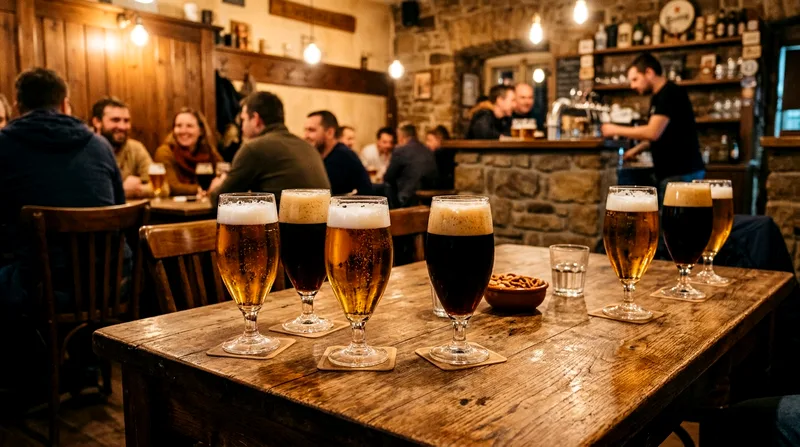
A beer tour is a different animal — less about eating, more about drinking with context. You'll typically visit two or three pubs or beer bars, taste four to six Czech beers (Pilsner Urquell and Staropramen show up often, alongside smaller regional brands), and get a guide explaining lagering, Czech brewing history, and why Czechs drink more beer per capita than anywhere else in Europe. Food, if included, is usually bar snacks rather than full dishes — don't book this expecting dinner.
A brewery trip is a half-day or full-day commitment, often outside central Prague, sometimes as far as Plzeň (about 90 minutes by car, home to Pilsner Urquell) or a smaller regional brewery closer to the city. These include a guided tour of the brewing facility, a tasting flight, and sometimes a meal. They suit beer enthusiasts willing to give up most of a day, and they're a reasonable alternative to a Vienna or Munich brewery day trip if you're based in Prague and don't want to add another city to your itinerary.
Cooking classes typically run three to four hours, often starting with a short shopping stop — sometimes at Havelské Tržiště, Prague's long-running open-air market in Old Town — before moving to a kitchen to prepare dumplings, svíčková, or a seasonal soup. You eat what you cook, which means portions are generous, and you leave with a recipe you can actually repeat at home. These classes suit couples and families better than solo travelers looking for a quick bite, since the whole format is built around a shared cooking task, not fast-paced walking.
Market visits alone — without a cooking component — are less common as standalone bookings in Prague but sometimes get folded into tasting walks as a single stop. If you want a slower, more market-focused morning, look specifically for tours that list Havelské Tržiště or a similar market by name in the itinerary, rather than assuming any walking tour includes one.
Most Prague food tours run as small groups by default, but private versions exist for nearly every format — tasting walks, beer tours, even cooking classes can usually be booked as a private session for an added cost. The decision comes down to flexibility versus price and atmosphere.
Group tours cost less per person and tend to feel more social — you're seated with strangers, which some travelers love and others find tiring after a long travel day. The downside is a fixed schedule and fixed stops; if you have a shellfish allergy or genuinely dislike offal, you can't swap it out mid-tour. Group sizes commonly run six to fourteen people, though some operators cap tasting walks smaller for a better experience at individual pubs.
Private tours cost more — often close to double per person for small groups, sometimes more for a party of two — but you control timing, pace, and to some extent the stops. This matters most for families with young kids who can't sit still for three hours, travelers with specific dietary restrictions beyond standard vegetarian options, or anyone who wants to start at 10am instead of the standard 6pm slot. If you're celebrating something — an anniversary, a milestone birthday — a private tasting walk or cooking class is worth the premium. For a standard first-time visit with no special requirements, I don't think the extra cost of private buys you much beyond a quieter room.
The tour description rarely tells you everything you need. A few minutes of checking before you pay avoids most complaints.
Check whether drinks are included or extra — many tasting walks include beer or wine pairings at some stops but charge separately at others, and "food and beer tour" doesn't always mean unlimited beer. Confirm the number of stops and roughly how much food that adds up to; four small tastings is plenty for most people, but if you skipped lunch expecting a full meal, you might leave still hungry. Ask (or read carefully) how many people will be in your group — anything over sixteen starts to feel more like a tour group than a food experience, with less guide interaction per person.
Vegetarian travelers are generally well served in Prague — most tours can accommodate vegetarian substitutions with advance notice, since fried cheese, dumplings, and potato dishes are already Czech staples. Vegans and those with severe allergies have a harder time, since many traditional dishes use butter, cream, or lard as a base; message the operator directly before booking rather than assuming the standard menu flexes.
Outdoor-heavy tours — anything centered on market stalls or walking between distant pub stops — should have a clear weather policy. Prague gets genuine winter cold from December through February and sudden summer downpours in June and July, so ask what happens if it rains: rerouted indoors, rescheduled, or refunded. Check the cancellation window too; many tours allow free cancellation up to 24 or 48 hours ahead, but last-minute changes close to the start time often aren't refundable. Compare current prices and cancellation terms for a few options before you book, since policies vary more between operators than the food itself does.
Prague food tours run year-round, but demand and comfort both shift with the season, and booking timing affects which slots are left.
Spring (April-May) and early autumn (September-October) are the most comfortable months for walking tours — mild temperatures, fewer crowds than peak July-August, and pubs not yet in full tourist-season overflow. Summer tours fill fastest and the center gets uncomfortably busy around Old Town Square; if you're set on a July visit, book your tasting walk or cooking class at least a week or two ahead. Winter has its own appeal — a beer tour or brewery trip feels more fitting on a cold December evening, and Christmas market season (late November through December) adds mulled wine and seasonal stalls to the mix, though daylight is short.
Evening slots, typically starting between 5pm and 7pm, are the most common for tasting walks and beer tours, partly because pubs are livelier then. Cooking classes run more flexibly, including mornings, which suits families better than a 7pm start with young children. Weekday tours are generally less crowded than weekend ones — if your schedule allows it, a Tuesday or Wednesday evening tour usually means smaller groups and less competition for table space in popular pubs.
A general tasting walk through Old Town is the strongest first-timer choice — it usually combines four to six food stops with historical context, so you get oriented in the city while trying svíčková, fried cheese, and a pastry like trdelník in one evening. Avoid booking a narrow brewery trip or specialized cooking class as your only food experience on a first visit; save those for a repeat trip once you've got the lay of the land.
Tasting walks and beer tours generally run two and a half to three and a half hours. Cooking classes run three to four hours including the shopping or prep stage. Brewery day trips outside the city, such as to Plzeň, can take a half day to a full day once travel time is included — check the listed duration carefully, since "half day" is used loosely by different operators.
Yes, generally — Czech cuisine already includes vegetarian staples like fried cheese, potato pancakes, and dumplings, so most tasting walks and cooking classes can substitute meat dishes with notice. Vegans and travelers with severe allergies should message the operator directly before booking, since cream, butter, and lard appear in many traditional recipes and full substitutions aren't always possible.
It depends on what you care about more. A beer tour centers on tasting four to six Czech beers with brewing history and context, with food usually limited to bar snacks. A food tour — the tasting walk format — prioritizes dishes, with beer or wine as pairings rather than the main event. If you want both roughly equally, look for tours explicitly labeled "food and beer tour," which blend the two formats.
Yes, especially for summer visits (June-August) and December's Christmas market season, when popular evening slots can fill a week or more ahead. Shoulder-season visits in spring or autumn allow more flexibility, sometimes even same-week booking, but checking availability a few days ahead is still safer than assuming a walk-up spot will be open.
Prague food explained: svickova, goulash, fried cheese, trdelnik myths and street snacks, plus where to find food tours to taste traditional Czech food.
10 min read · 3 Nov 2026
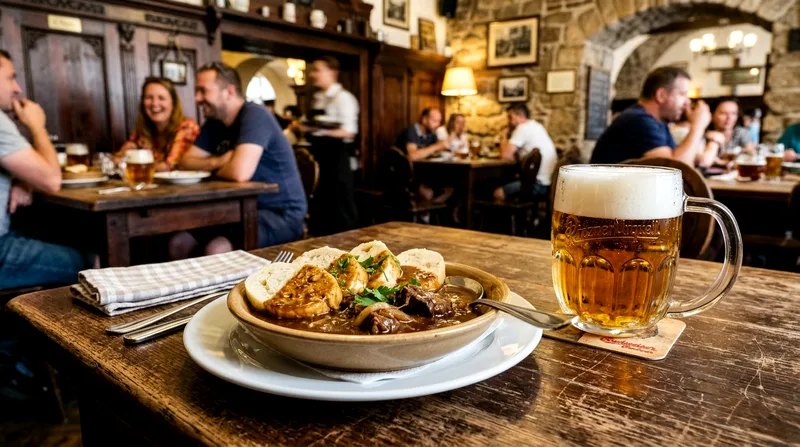
Understand Prague prices for food and drink, from restaurant meals to a pint of beer. Learn lunch-menu hacks and spot Old Town Square tourist traps.
10 min read · 3 Nov 2026
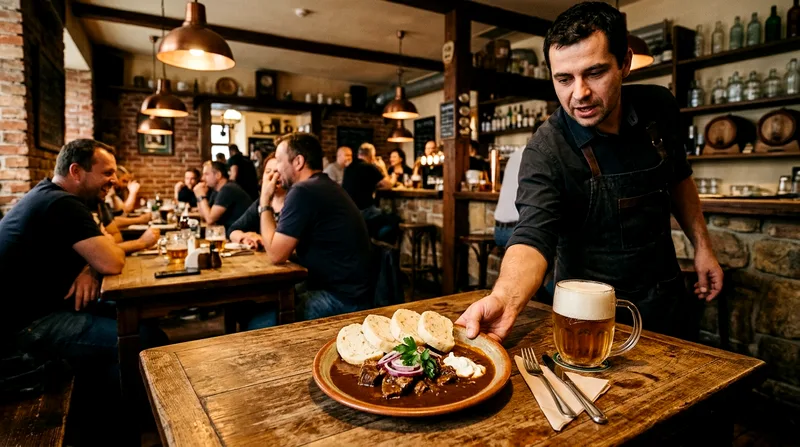
Find the Prague best restaurants by area: traditional Czech pubs, fine dining and family friendly spots, plus tips to plan meals around sightseeing.
10 min read · 3 Nov 2026
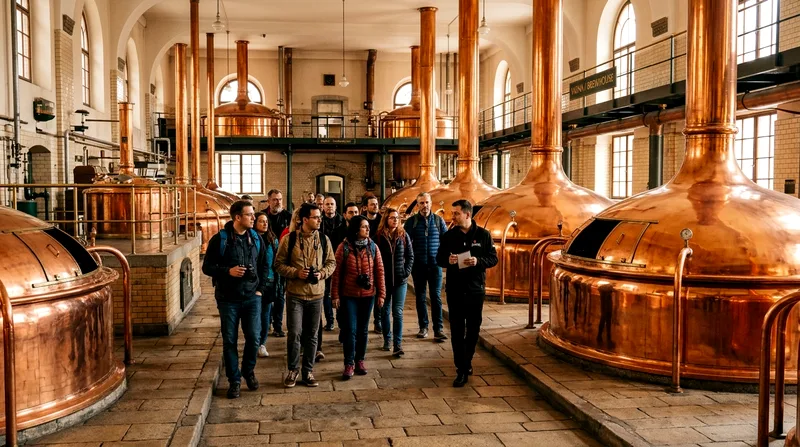
Compare guided Pilsner Urquell brewery tours from Prague with a DIY train trip. See who each suits, cost breakdown, booking tips and when to go.
9 min read · 3 Nov 2026
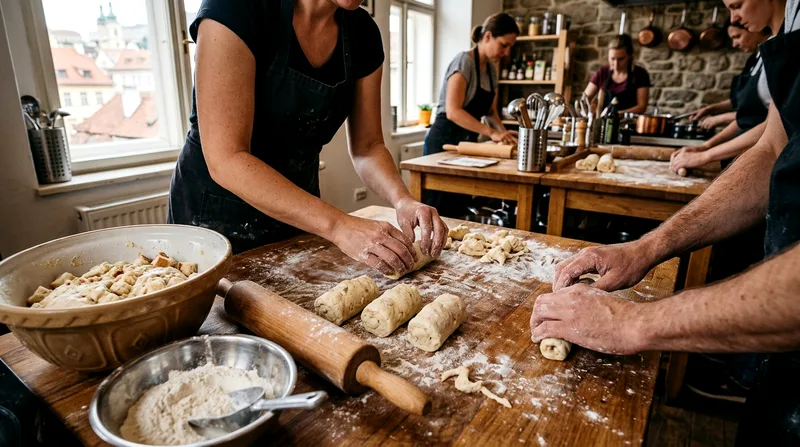
Compare Prague cooking class styles, from dumpling and goulash workshops to market tours, and find the best fit for couples, families and solo travellers.
9 min read · 3 Nov 2026
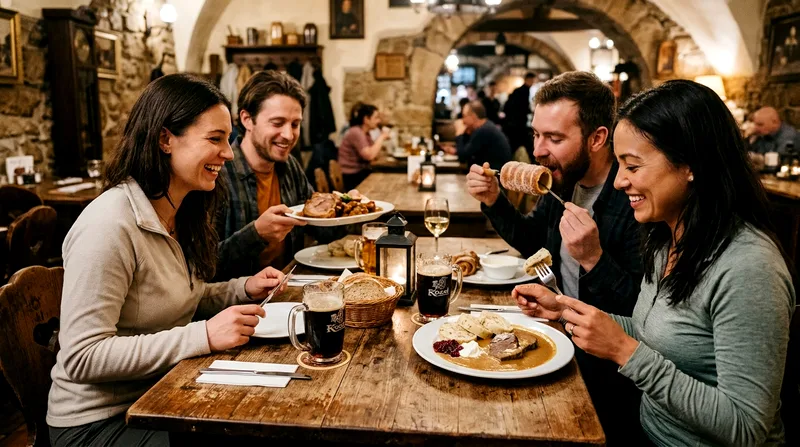
Prague food tour vs beer tour: compare what you eat and drink, value per stop and fit for non-drinkers, so your group can pick the right tasting tour fast.
8 min read · 3 Nov 2026
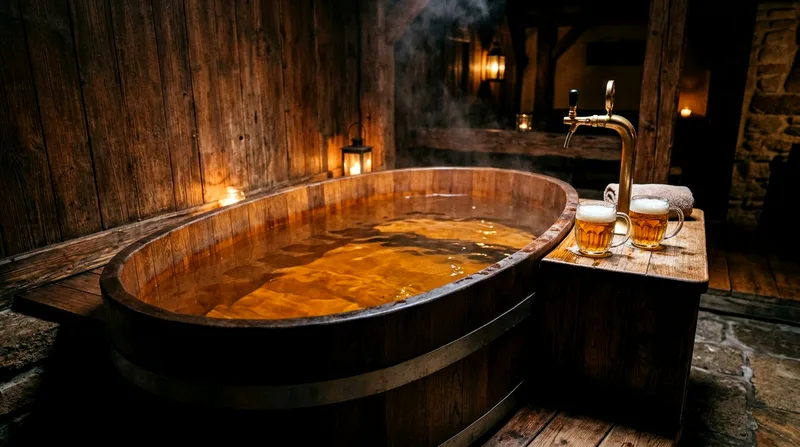
Planning a Prague beer spa? Compare tub sizes, unlimited beer policies and couple packages, see what's included, and learn how to book correctly.
10 min read · 3 Nov 2026
Compare Prague beer tours: craft brewery tastings, historic pub walks and private vs group options. Learn Czech beer styles and how to book the right one.
9 min read · 3 Nov 2026