Which cross-border day trips from Prague are realistic? Compare Dresden, Wroclaw and more by tour type, and learn what to check before you book.
Who Cross-Border Day Tours Suit
Prague's location is genuinely unusual among European capitals — Germany, Austria, and Poland are all within striking distance, and the Czech Republic's membership in the Schengen Area means no border checkpoints slow you down. That proximity gets oversold, though. A day trip from Prague to another country works well for some travelers and badly for others, and it's worth being honest about which camp you're in before you book anything.
If your main goal is seeing Prague itself — the Castle, Charles Bridge, the Old Town Square astronomical clock — carving out a full day for a cross-border trip means sacrificing roughly a fifth of a five-day visit. That's a real cost. For travelers with seven or more days in the city, or those who've already covered the highlights, a day trip to Dresden or beyond becomes a reasonable way to see something genuinely different without repacking a suitcase.
First-time visitors and short stays
If this is your first visit to Prague and you've got three or four days, my honest advice is to skip the cross-border trip entirely. Prague Castle alone deserves half a day, and the Jewish Quarter, Vltava river cruises, and Petřín Hill viewpoint will fill the rest. Adding Dresden or Wroclaw on a short trip means you'll remember a bus window more than either city. Save cross-border tours for a second visit, or a longer stay of five-plus days where one day away doesn't gut your itinerary.
Travellers without a car or rail confidence
Where tours genuinely earn their cost is for travelers who don't want to navigate a foreign rail system, buy tickets in another currency, or figure out connecting trams in a city where they don't read the language. A guided day trip from Prague to Germany or Poland removes nearly all of that friction — pickup from a central point, a seat on a coach or minivan, and a guide who handles tickets and timing. For solo travelers and senior travelers especially, that convenience is worth paying for, even though independent train travel is usually cheaper.
Which Countries Work as a Day Trip
Not every neighboring country is created equal here. Distance and road quality matter more than the map suggests, and the difference between a comfortable day and an exhausting one usually comes down to whether your destination is under two hours away or closer to four.
Germany: Dresden and Saxon Switzerland
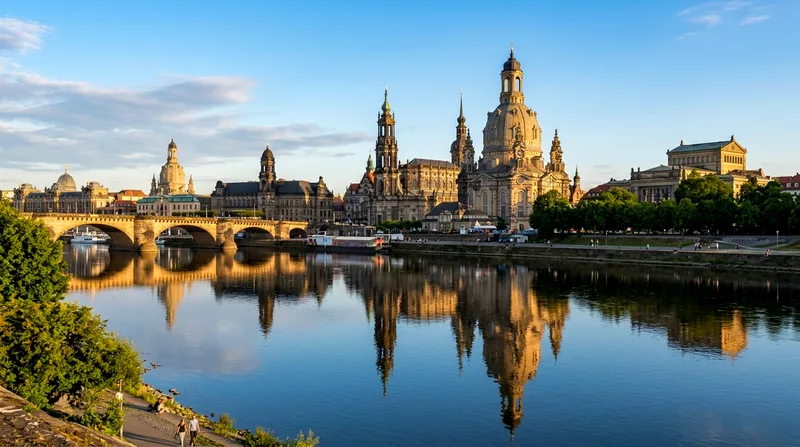
Dresden is the standout answer to "which day trips from Prague to other countries actually work," and it's not close. The drive is around two hours each way on a decent motorway, which leaves five or six real hours in Germany on a tour that leaves Prague by 8 or 9 am. Dresden's rebuilt Old Town centers on the Frauenkirche, the domed church destroyed in 1945 and reconstructed using original stones where possible, plus the Zwinger Palace and the Elbe riverbank promenade.
Many Dresden day tours extend into Saxon Switzerland, the sandstone landscape southeast of the city, where the Bastei Bridge crosses dramatic rock towers above the Elbe valley. Combining both in one day is tight — expect a shorter stop at each rather than a leisurely visit to both — but it's a genuinely popular pairing and one of the better-value combined itineraries out of Prague. If you only have time for one, Dresden's Old Town rewards slow walking more than Bastei does, since the rock formations are impressive but the viewing platform gets crowded by midday.
Poland and beyond: Wroclaw, Vienna, Krakow
A Prague day trip to Poland is possible but it's the first option where I'd ask you to think hard about pace. Wroclaw sits roughly three to three and a half hours from Prague by road, which means a Prague to Wroclaw day trip involves six-plus hours of travel against maybe four hours on the ground. You'll see the Market Square and its Gothic town hall, and the colored facades around it are worth the trip — but you're paying for it with a very long day, often leaving before 7 am and returning after 9 pm.
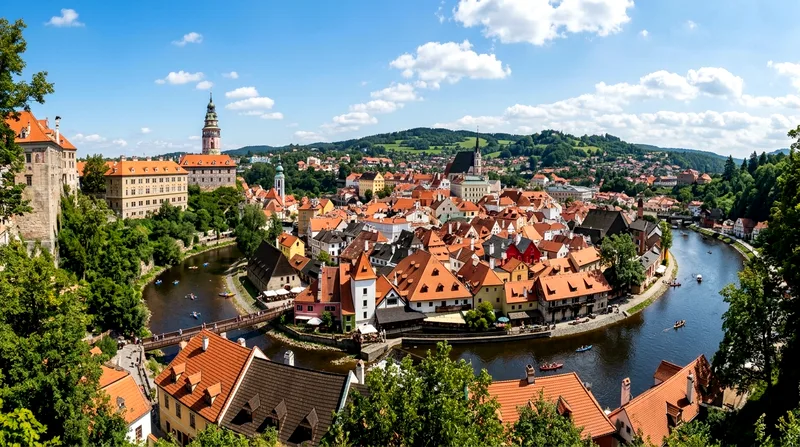
Krakow is further still, generally a four-hour drive or longer, and realistically better as an overnight trip than a single day. Vienna sits in between — a Prague to Vienna day trip by fast train takes around four hours each way, so a guided day tour typically allots only three to four hours in the city itself. All three are marketed as day trips, and tours do run them, but they're stretch options. If scenery and pace matter to you, compare them honestly against a Prague–Český Krumlov day trip or a Kutná Hora visit, both inside the Czech Republic and under 90 minutes away, which leave far more time for actual sightseeing.
Tour Types Compared: Group, Private, Combined
Once you've picked a destination, the bigger decision is tour format. Three categories dominate the market for cross-border day trips from Prague, and each suits a different traveler.
Group tours are the default: a coach or minivan with somewhere between 15 and 50 people, a fixed itinerary, and a guide who narrates en route and leads a walking portion on arrival. They're the cheapest per person and the easiest to book, but you move on a fixed schedule and get limited free time — often just an hour or two to wander alone in Dresden's Old Town or Wroclaw's square.
Private tours use a car or small van for your group only, with a driver-guide and a flexible schedule. These cost noticeably more — typically several times the group-tour rate — but you choose the stops, skip anything that doesn't interest you, and avoid herding with 40 strangers through a church. For families with children who tire out mid-afternoon, or senior travelers who need slower pacing and more rest stops, private tours are usually worth the premium.
Combined tours pair two destinations or activities in one day, like Dresden plus Bastei Bridge, or a Dresden stop plus Saxon Switzerland hiking. They maximize what you see per day but compress time at each stop — read the itinerary carefully, because "visit Bastei Bridge" sometimes means 45 minutes at a viewpoint, not a hike.
Dresden offers the best balance of travel time and sightseeing time, while Wroclaw, Vienna and Krakow demand a longer day for a shorter visit.
Day trips from Prague to other countries compared by tour type and destination
| Destination/Tour Type | One-way travel time | Typical time on-site | Best suited for |
|---|---|---|---|
| Dresden (group tour) | approx. 2 hours | 4-6 hours | First-timers, easy logistics |
| Dresden + Saxon Switzerland (combined) | approx. 2 hours | 3-4 hours split | Scenery plus city in one day |
| Wroclaw (group tour) | approx. 3-3.5 hours | 3-4 hours | Poland-curious, long-day tolerant |
| Vienna (group tour or train) | approx. 4 hours | 3-4 hours | Museum and architecture fans |
| Krakow (group tour) | approx. 4+ hours | 3-4 hours | Better as overnight than day trip |
| Private tour (any destination) | same as above | flexible, often longer | Families, seniors, slower pace |
Travel times are typical for road or rail under normal conditions; border queues are rare within the Schengen Area but weekend and holiday traffic can add time, so check current schedules before you book.
Comparison table of tour categories
Here's how the main categories stack up when you're deciding between a scheduled coach seat, a private car, or a trip you book and ride independently.
What to Check Before Booking
The listing photos for cross-border day tours all look similar — a coach, a smiling guide, a castle in the background — so the real differences show up in the fine print. Read it before you pay, not after.
Inclusions, group size and cancellation
Check exactly what's included: transport is standard, but entry tickets to specific sites — a church interior, a palace, a boat ride on the Elbe — are often listed separately as optional add-ons. A guide "included" sometimes means a driver who points things out, not a licensed city guide who leads a walking tour on arrival. Group size matters too: a tour capped at 8 people moves faster through security and lunch stops than one with 50. Cancellation terms vary a lot — some allow a full refund up to 24 hours before departure, others charge a fee once booked. Compare current prices and reviews before you book, since these terms change by operator and season, and a cheap listing with a strict no-refund policy isn't actually the best deal if your plans might shift.
Border and passport requirements
Because the Czech Republic, Germany, Austria, and Poland are all in the Schengen Area, there are normally no passport checks at the border — you won't stop at a checkpoint the way you might outside Schengen. That said, you should still carry a passport or valid national ID card on any cross-border trip; spot checks do happen occasionally, and you'll need ID for things like hotel check-in or currency exchange anyway. Non-EU travelers on a Schengen visa should also confirm their visa covers multiple entries if they plan more than one cross-border trip during their stay, since some short-stay visas have entry restrictions worth checking in advance.
When to Book Your Trip
Timing affects both price and experience more than most travelers expect. Summer (June through August) brings the longest daylight hours, which matters for the longer routes to Wroclaw or Krakow since more daylight means a more relaxed-feeling day even if travel time doesn't change. It also brings the biggest crowds at Dresden's Frauenkirche and the Bastei Bridge viewpoint, where you may be sharing the platform with several tour groups at once by midday.
Spring and early autumn are my preferred windows for any cross-border day trip from Prague — comfortable walking weather, shorter queues, and tours running at normal frequency without the summer surcharge some operators apply. Winter trims daylight hours significantly, which hits Wroclaw and Krakow hardest since you'll arrive and leave in the dark on the shoulder months; Dresden's shorter drive makes it far more forgiving in winter.
Book group tours at least a few days ahead in peak summer season, since popular departures do sell out. Private tours generally need more lead time — a week or more — because they require matching a driver-guide to your date. Whatever the season, check live prices and availability for your actual travel dates before committing, since schedules and seasonal routes do shift.
Frequently asked questions
Can you visit another country on a day trip from Prague?
Yes. Prague's location near the German, Austrian, and Polish borders makes several countries reachable in a single day, and the Schengen Area means no border formalities slow you down. Dresden, Germany is the most comfortable option at around two hours each way; Wroclaw, Vienna, and Krakow are possible but involve three to four-plus hours of one-way travel, leaving a shorter window for actual sightseeing.
Is Dresden worth visiting as a day trip from Prague?
Yes, and it's the best-balanced option on this list. At roughly two hours each way, a Dresden day trip from Prague leaves five to six hours on the ground — enough to see the rebuilt Frauenkirche, the Zwinger Palace, and walk the Elbe riverbank without feeling rushed. Many tours also add a stop in Saxon Switzerland for the Bastei Bridge, though that combination compresses time at each stop.
Can you do a day trip from Prague to Poland?
Yes, but it's a long day. Wroclaw is the realistic Polish option at around three to three and a half hours each way by road, meaning six-plus hours of travel for roughly three to four hours in the city. Krakow is further still and better suited to an overnight stay than a single-day tour unless you're comfortable with a very early departure and late return.
Do I need a passport for a day trip from Prague to Germany?
You should carry a passport or valid national ID card even though routine border checks don't happen within the Schengen Area. Spot checks occur occasionally, and you'll likely need ID anyway for hotel check-ins, currency exchange, or if a guide needs to verify group manifests. Leaving it behind is a risk not worth taking for a minor inconvenience.
Is a guided tour better than going independently to Dresden?
It depends on your priorities. A direct train from Prague's main station reaches Dresden in about two and a quarter hours with no transfers, making independent travel genuinely easy and cheaper than a tour. A guided tour adds narrated history, a structured walking route, and no need to plan — worth it if you'd rather not research sights yourself, but not essential for Dresden specifically since the train connection is so direct.