Prague free walking tour vs paid tour: compare group size, guide quality, real cost after tips and the sales pitch to decide which suits you.
Free vs Paid Prague Tours at a Glance
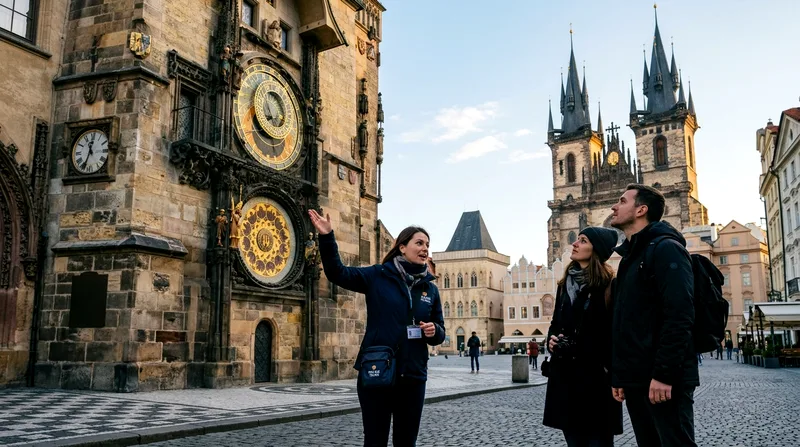
The Prague free walking tour vs paid tour decision comes down to what you value more: saving money upfront or controlling your experience. Free tours operate on tips, gather large groups outside the Astronomical Clock or near Old Town Square, and cover the greatest-hits route in two to two and a half hours. Paid tours charge a fixed fee in advance, cap group size, and often let you choose a theme — Prague Castle and Hradčany in depth, the Jewish Quarter's synagogues, or a private route built around your interests.
Neither model is objectively better. A free tour is the right call if you landed in Prague this morning, have no idea what's where, and want a two-hour lay of the land before deciding what to explore on your own. A paid tour makes more sense if you've done a free tour in another city before — Budapest and Krakow both run near-identical free-tour operations — and know the format gets thin once the group passes twenty people.
Typical route and duration
Most free tours in Prague run a fixed loop: start near Old Town Square or Wenceslas Square, pass the Astronomical Clock, cut through the Jewish Quarter's edge, cross Charles Bridge, and finish near Prague Castle or Lesser Town. Expect two to two and a half hours, departing once or twice daily, usually late morning and early afternoon. Paid tours vary more — a dedicated Castle tour might run three hours and go nowhere near Charles Bridge, while a Jewish Quarter tour stays within a few blocks and focuses on the synagogues and cemetery, often with a separate admission fee not included in the tour price.
What each tour type includes
Free tours include the guide's commentary and nothing else — no entry tickets, no transport, no food. You walk, you listen, you tip at the end. Paid tours vary by operator: some include Castle complex entry or skip-the-line access, others are walk-and-talk only like the free version but with a smaller group and a guide paid a flat fee rather than tips. Always check the tour description for what's bundled before assuming a higher price means more access — compare current prices and inclusions when booking, since this changes by operator and season.
How the Tip-Based Model Really Works
"Free" is a marketing framing, not a financial reality. The guide isn't a volunteer — they're a freelancer or contractor working entirely on tips, and the company that organizes the tour typically takes a cut or charges the guide for the right to lead that time slot. That structure explains two things tourists often complain about: the guide's polished, slightly rehearsed energy (their income depends on it) and the push toward evening pub crawls or day-trip sales at the end (the company's income depends on it).
This isn't unique to Prague — the same model runs in Budapest, Krakow, and most Central European capitals — but Prague's free-tour scene is dense enough that quality varies sharply between companies and even between guides within the same company. A guide having an off day, or a group too large to hear clearly over Old Town Square's accordion buskers, is common.
Real cost after tipping
Budget 200 to 400 Czech koruna per person as a fair tip for a two-hour group tour, more if the guide was genuinely excellent or you got personal attention. For a couple, that's roughly 400–800 CZK total — not far off the lower end of a budget paid group tour, which often runs in a similar range per person but with a fixed, known cost and a capped group size. The "free" tour's real cost is variable and depends on your sense of obligation, which is exactly the point critics make about the model: it shifts pricing risk from the operator to your conscience.
Head-to-Head: Cost, Group Size and Guide Quality
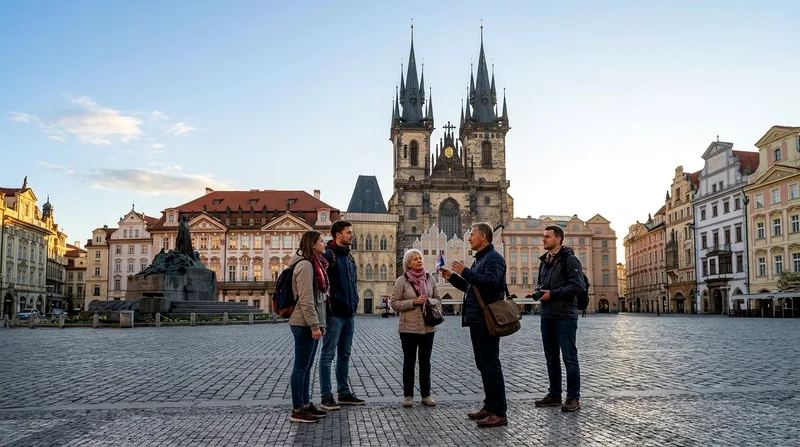
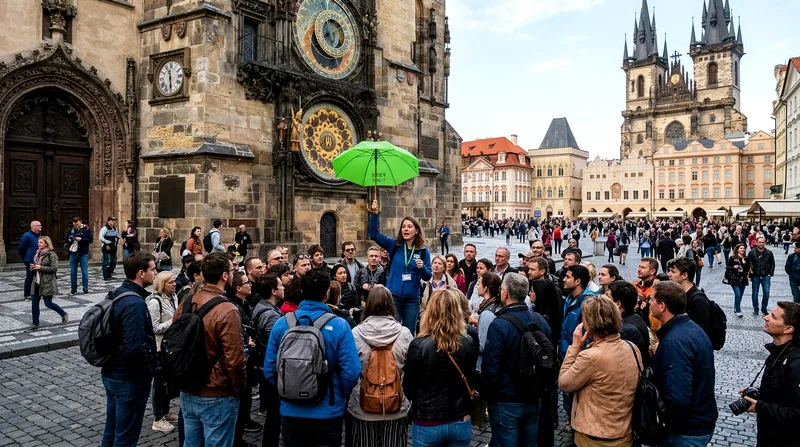
This is where the Prague free walking tour vs paid tour question gets concrete. Free tours in peak season regularly swell to 25–40 people, split awkwardly across a single guide and a portable speaker system. Paid group tours usually cap at 12–15, and private tours mean just you, your group, and the guide. That difference changes everything about what you can actually hear and ask.
Guide quality is the trickiest comparison because it's not strictly tied to price. Some free-tour guides are history graduates or long-time Prague residents doing it as a side income, genuinely excellent at storytelling. Some paid-tour guides are mediocre and coasting on the higher price tag. What paid tours reliably buy you is consistency — vetted, trained guides tied to a reputation and a fixed fee, rather than a rotating cast paid purely on tips and incentivized to work for volume over depth.
Free tours cost less on paper but trade group size and depth for flexibility, while paid tours cost more upfront in exchange for smaller groups and focused content.
Prague free walking tour vs paid tour compared by cost, group size and content depth
| Tour Type | Typical Cost Per Person | Group Size | Duration | Best For |
|---|---|---|---|---|
| Free walking tour (tip-based) | 200–400 CZK tip (suggested) | 20–40 people | 2–2.5 hours | First orientation, tight budgets |
| Budget paid group tour | Fixed fee, similar to a fair tip | 10–15 people | 2–3 hours | Better pace, no tipping math |
| Themed paid tour (Castle, Jewish Quarter) | Mid-range fixed fee | 10–15 people | 2–3.5 hours | Depth on one topic |
| Private tour | Higher fixed fee, often per group not person | 1–6 people | Flexible, 2–4 hours | Families, couples, custom pace |
| Self-guided walk | Free (no guide) | Just you | Flexible | Independent travelers, repeat visitors |
Figures are general ranges for comparison; always check current prices and group size caps before booking.
Group size and pace
A group of 30 outside the Astronomical Clock means you're often 10 meters from the guide, straining to hear over street noise, and stopping briefly at each point before moving on fast to keep the group together. A paid tour of 10–12 people lets the guide actually engage, answer questions mid-walk, and adjust pace for older travelers or kids who need more breaks — a real advantage for senior travelers or families with young children who can't keep up with a brisk 2.5-hour loop.
Depth of history and storytelling
Free tours are built for breadth, not depth — they need to cover Old Town Square, Charles Bridge, and a Castle view in roughly two hours, so each stop gets five to ten minutes. Paid tours focused on a single theme, say the Jewish Quarter or the Castle complex's architecture through the Habsburg centuries, can spend 30–40 minutes on one site. If you want the kind of detail you'd get on a dedicated Prague Castle tour or a Jewish Quarter history tour, the free format simply isn't built for it — compare that to Vienna's paid Habsburg-focused walks or Dresden's history tours, which lean the same way for the same reason.
The Sales Pitch and Upsell Factor
Here's the part most free-tour reviews skip over: the business model depends on upselling. The free walking tour is often a loss-leader for the same company's paid pub crawl, river cruise, or day trip to Cesky Krumlov or Kutna Hora. Expect a few minutes at the end — sometimes longer — dedicated to flyers, QR codes, and a pitch for the evening's "legendary" pub crawl. It's not dishonest, exactly, but it does mean the free tour's last ten minutes are a sales meeting you didn't sign up for.
Paid tours don't do this, generally, because you've already paid for the service you booked. That's a real point in their favor if you find the upsell pattern tiresome.
Pub crawl and day trip promotions
The pitch usually comes with a discount code or a "sign up now and skip the line" offer, timed for when the group is tired, mildly impressed, and standing near Prague Castle or Charles Bridge — prime decision-fatigue territory. Day trip promotions to Kutna Hora (the bone church) or Cesky Krumlov are common add-ons from the same operators, and they're not bad products necessarily, but you should compare current prices and reviews independently rather than booking on the spot.
How to politely opt out
A simple "thanks, I'll think about it" works fine — guides hear this constantly and won't push further. If you want to avoid the pitch altogether, tip the guide directly and step away a minute before the official close, which is usually when the sales segment starts. No guide will chase you down over this.
Which Tour Should You Choose?
There's no universal answer here, but there is a clear pattern based on traveler type. The honest framing: free tours win on flexibility and low commitment, paid tours win on control and depth.
Best for budget and first-time visitors
If you're on a tight budget, or this is your first morning in Prague and you just need orientation before picking what to explore properly, take the free tour. Solo travelers and backpackers moving through Prague as one stop on a longer Central European trip — maybe Munich, then Prague, then Vienna — get good value here, since the tip cost flexes with what you can afford that day.
Best for history buffs, families and small groups
If you care about actually learning the history rather than skimming it, or you're traveling with kids who need a slower pace and more bathroom breaks, book a paid tour — ideally a small-group or private one. Couples wanting a quieter, more personal two hours and senior travelers who struggle in large crowded groups should do the same. A private tour of Prague Castle or the Jewish Quarter, split across two or three people, often costs less per person than you'd expect once you compare it against the combined tip-plus-time cost of a mediocre free tour.
Verdict: Free or Paid in Prague
Weighing the Prague free walking tour vs paid tour choice one more time: free tours are a reasonable first move, cheap orientation with no real financial commitment, but they come with a large group, a fixed sales pitch, and guide quality that varies by the day. Paid tours cost more upfront — often in a similar range to what you'd tip anyway — but buy you a smaller group, a chosen theme, and no interruption for upsells.
If your Prague time is limited to a day or two, consider splitting the difference: take a free tour on arrival for the lay of the land, then book a paid or private tour for the one site you actually want to understand properly, whether that's Prague Castle, the Jewish Quarter, or a day trip out to Kutna Hora.
Frequently asked questions
Are free walking tours in Prague really free?
No — they're free to book but run entirely on tips, with guides earning income only from what the group pays at the end. The company organizing the tour also usually profits indirectly through pub crawl or day trip upsells pitched during or after the walk. "Free" means no upfront charge, not no cost.
How much should you tip on a Prague free walking tour?
A fair range is 200–400 Czech koruna per person for a standard two-hour group tour, adjusted up for an excellent guide or down for a rushed, crowded experience. Tip in cash, preferably koruna, and hand it over discreetly rather than announcing the amount.
Is a paid walking tour in Prague worth the money?
Yes, if you want a smaller group, a specific theme like the Jewish Quarter or Prague Castle, or simply dislike the pressure of tip-based pricing. It's less worth it if you only want a quick two-hour overview on your first morning, where a free tour does the same basic job for less commitment.
Do you need to book a free walking tour in Prague in advance?
Usually you reserve a free spot online a day or so ahead, since groups can fill up in peak season (spring and summer weekends especially). No payment is taken at booking — you simply show up at the meeting point, often near Old Town Square or Wenceslas Square, and pay the guide directly at the end via tip.
How long does a typical Prague walking tour last?
Free tours generally run two to two and a half hours covering Old Town Square, the Astronomical Clock, Charles Bridge and a view toward Prague Castle. Paid themed tours vary more, from shorter one-hour focused walks to three-and-a-half-hour deep dives into one district like Lesser Town or Hradčany.