Explore the Prague river: the Vltava's islands, riverside embankments and pedal boats, plus the best ways to enjoy the water on and off a cruise.
The Vltava River at a Glance
The Prague river is the Vltava, and it's not a minor backdrop — it's the reason the city sits where it does. At roughly 430 kilometers, the Vltava is the longest river fully within the Czech Republic, flowing north from the Šumava mountains near the Austrian border, through Český Krumlov and Český Budějovice, before cutting through Prague and eventually joining the Elbe north of the city. Travelers doing a Prague-Český Krumlov day trip are, in effect, following the same river upstream.
Inside Prague, the Vltava does the heavy lifting for the skyline everyone recognizes. Prague Castle sits above its western bank, Old Town and the Jewish Quarter sprawl along the eastern side, and the whole relationship between the two halves of the city is mediated by bridges, embankments and a scatter of islands. Compare this to Budapest, where the Danube performs a similar split between Buda and Pest — except the Vltava is narrower and calmer, which is exactly why pedal boats and small rowboats work here in a way they simply don't on the Danube.
One opinion worth stating plainly: the river is more interesting at ground level than from a hilltop viewpoint. Petřín Hill gives you the postcard shot, but it flattens the water into a ribbon. Walking the embankments or sitting on it in a small boat shows you the texture — the weirs, the lock near Slovanský Island, the way light moves across it in late afternoon.
River Course Through the City
The Vltava enters Prague from the south, curves past Vyšehrad, then bends northwest through the city center before straightening out again toward the northern suburbs. This S-curve is why so many classic viewpoints — from Vyšehrad, from Letná park, from Charles Bridge itself — catch the river at an angle rather than straight on. The current is gentle by river standards, which is part of why rowing clubs have operated here for well over a century and why cruise boats can run close to the historic center without much fuss. Expect the water level and color to shift with the season: paler and faster after spring snowmelt, greener and slower through a dry summer.
Bridges and Skyline Views
Prague has 18 bridges across the Vltava within city limits, though most visitors only ever register one. Charles Bridge, finished in the 15th century and closed to cars, is the obvious landmark, but it's also the most crowded spot in the entire city by mid-morning — if you want photos without a wall of selfie sticks, go before 8am or after 10pm. Legion Bridge (Most Legií), just south of Charles Bridge, is underrated: it crosses right past Střelecký Island and gives a clean sightline to both the castle and the National Theatre. Further south, the railway bridge near Vyšehrad and the Palacký Bridge offer quieter, more local views, closer to how Praguers actually experience the river rather than how tour groups do.
Prague Islands Worth Visiting
The Vltava holds several islands inside Prague, and they're one of the most overlooked parts of the city's river life. None of them require a boat to reach — all connect to the banks by footbridge or sit right alongside a quay — which makes them an easy add-on to a walking day rather than a separate excursion.
Unlike the islands you'd find in a river delta or lake system, these are narrow, elongated strips shaped by the current and reinforced over centuries. They function today mostly as parks, sport clubs and pedal boat docks rather than as residential or commercial space, which keeps them low-key and genuinely relaxing compared to the souvenir-shop density of the Charles Bridge approach.
Slovanský Island and Střelecký Island
Slovanský Island, just south of the National Theatre, is the main hub for pedal boat rental and has a shaded park plus a café in a 19th-century exhibition hall. It's flat, easy walking, and works well for families with young children or senior travelers who want river views without uneven terrain. Střelecký Island, reached from Legion Bridge, is smaller and wilder-feeling, with gravel paths and a summer open-air cinema that's been running for decades. It's a better pick if you want a quiet half hour away from crowds rather than activity.
Kampa and Child's Island
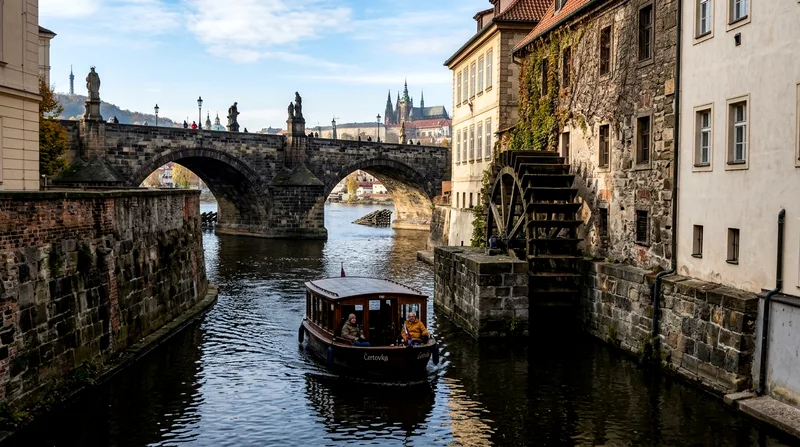
Kampa is technically an island — the Čertovka canal splits it from Malá Strana — and it's the most visited of the group thanks to the John Lennon Wall and the park running along its western edge. Grab a bench here at dusk and you get a near-private view of the Vltava and Charles Bridge that most tour groups never bother to find, since they stay up on the bridge itself. Dětský ostrov, or Child's Island, sits further south and is exactly what the name suggests: a playground-heavy park aimed at families, with less tourist traffic and more locals pushing strollers.
Walking the Vltava Embankments
The Vltava embankments are where Prague's river life actually happens day to day, and they reward slow walking far more than they reward a rushed photo stop. Stone quays run almost continuously through the center on both banks, built up through the 19th century after repeated flood damage — the most serious in 2002, when much of the embankment system and the Prague metro were underwater for days. That history explains why the walls look as solid as they do; they've been rebuilt to handle it.
Walking the full embankment from Vyšehrad to the northern edge of downtown takes about two to three hours at an easy pace, but almost nobody does that in one go. More realistically, pick a 30- to 45-minute stretch and treat it as a break between other sightseeing.
Old Town and Smetana Embankments
Smetana Embankment, right by Old Town and facing the castle, is the most scenic stretch and the most photographed. It's wide, flat and flanked by grand 19th-century buildings, including the Rudolfinum concert hall. The trade-off is foot traffic — on a summer evening it's shoulder to shoulder near the bridge approaches. Walk 10 minutes north past the crowd and it thins out considerably.
Náplavka and Vyšehrad Riverside
Náplavka, on the eastern bank south of the city center, is the embankment locals actually use. It's lined with houseboats-turned-cafés and bars, and it hosts a well-regarded farmers' market on Saturday mornings. In the evening, especially from spring through early autumn, it fills with people sitting on the steps with a beer rather than walking — it's closer to a riverside social scene than a tourist sight. Continue south and the path climbs toward Vyšehrad fortress, where the river views open up and the crowds drop to almost nothing, a sharp contrast to the Charles Bridge scrum twenty minutes north.
Pedal Boats and Rowing on the Vltava
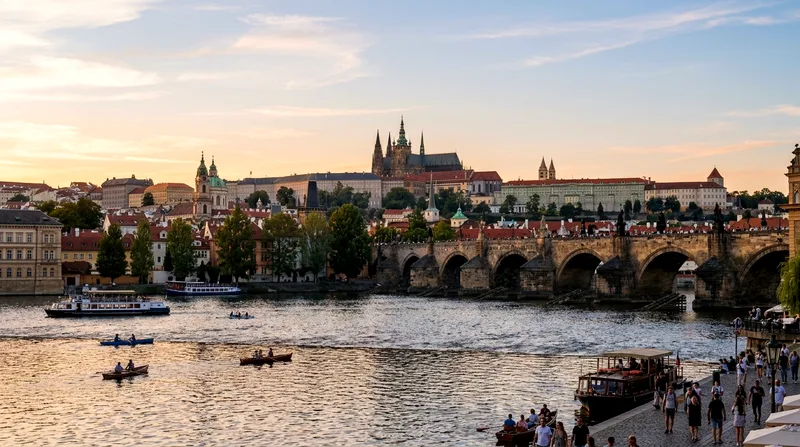
Prague pedal boats are one of the most low-key, genuinely fun things to do on the river, and they're consistently underrated by first-time visitors who assume the Vltava is only for cruise boats. Rental typically runs by the half hour or hour, with swan-shaped and standard pedal boats both available, plus simple rowboats at some docks. Expect to pay a modest hourly rate — treat any specific number you see online as a rough guide and confirm current pricing at the dock, since operators adjust seasonally.
The appeal is the angle it gives you: from water level, Charles Bridge's arches look taller, the castle sits higher above you, and the whole scene slows down. It's a good activity for couples looking for something low-cost and unstructured, and manageable for older children with an adult steering. It's less ideal for anyone with limited mobility — getting in and out of a pedal boat requires a reasonably steady step, and there's no accessible boarding ramp at most docks.
Where Boat Rental Spots Are Found
The main concentration of rental docks sits around Slovanský Island and the adjacent bank near the National Theatre, with a smaller cluster near Kampa. Peak season — roughly May through September — means queues on weekend afternoons; weekday late mornings are quieter. Life jackets are generally provided and basic safety instruction is minimal, so this isn't a guided activity — it's self-directed, which some travelers love and others find slightly underwhelming if they wanted narration about what they're seeing.
Enjoying the Prague River on a Cruise
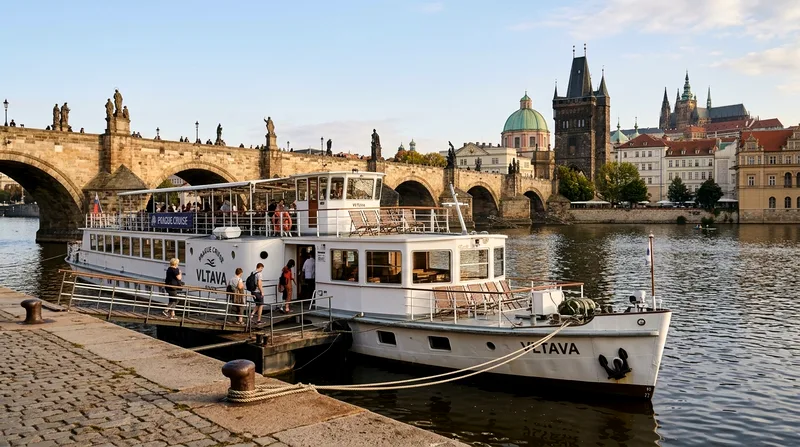
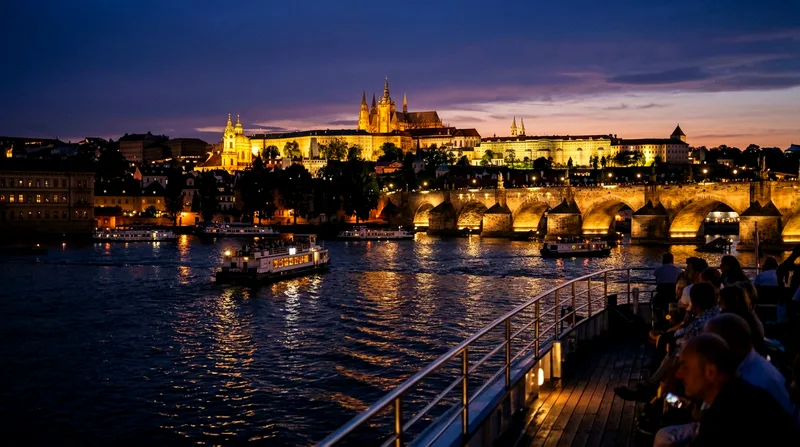
A Vltava river cruise is the easiest way to see the whole stretch of Prague's historic center from the water without any physical effort, and it's worth doing once — ideally near sunset, when the castle and bridges catch the light. Boats range from small open vessels holding a few dozen passengers to larger glass-roofed boats with onboard dining. Routes generally run a loop past Charles Bridge, Kampa, and the National Theatre, sometimes extending south toward Vyšehrad on longer itineraries.
Don't expect a cruise to replace walking the embankments — it's a different pace entirely, and an hour on the water covers ground you could also cover in a 20-minute walk. The value is in seeing the bridges from underneath and getting photos of the castle that aren't possible from the bank.
Types of River Cruises
Options generally split into short sightseeing cruises (around 40 minutes to an hour, no food included), dinner cruises (two to three hours, with a set menu), and occasional evening cruises with live music. Short daytime cruises suit families and anyone with limited time; dinner cruises suit couples wanting an evening activity but come at a noticeably higher cost and a slower pace that doesn't suit restless kids. Compare current prices and departure times before you book, since schedules shift by season and boat operators vary in what's included.
What You See From the Water
From the river, you get a continuous view of Prague Castle, the Charles Bridge statues from below, the National Theatre's gold roof, and the wooded slope leading up to Petřín. It's a genuinely different vantage point from the Old Town side streets, and for photography it beats most of the bridge viewpoints simply because you're not fighting for space with fifty other people trying to get the same shot.
Best Ways to Experience the River
There's no single correct way to do the Vltava — it depends on time, budget and how much walking you want to do. Treat the river as a flexible half-day plan rather than a single ticketed activity, and build it around whichever of the following fits your trip.
A short sightseeing cruise and a walk along Náplavka cover the most ground for the least cost and effort.
Ways to experience the Prague river Vltava compared
| Activity | Typical Duration | Effort Level | Best For |
|---|---|---|---|
| Sightseeing cruise | 40-60 min | Low | First-time visitors, families |
| Dinner cruise | 2-3 hours | Low | Couples, special evenings |
| Pedal boat | 30-60 min | Moderate | Couples, older children |
| Embankment walk (Náplavka) | 30-45 min | Low-moderate | Solo travelers, evening atmosphere |
| Full embankment walk (Vyšehrad to center) | 2-3 hours | Moderate | Active travelers, photographers |
| Island visit (Kampa or Slovanský) | 20-40 min | Low | Families, quiet breaks |
Durations are typical ranges; actual cruise lengths and boat rental times vary by operator and season, so check current options before you book.
Best Times of Day and Season
Early morning, before 9am, gives you Charles Bridge without the crowd and soft light on the water. Late afternoon into sunset is the best window for a cruise or for sitting at Náplavka. Midday in July and August is the worst combination — full sun, no shade on most embankment stretches, and the islands' pedal boat queues at their longest. Winter cruises run but with far fewer departures; the embankments are at their most atmospheric then, with none of the crowds, though wrap up — the wind off the water is sharper than the air temperature alone suggests.
Combining Cruise, Walk and Boat
The most satisfying approach, and the one I'd actually recommend over picking just one, is layering: a short sightseeing cruise in late afternoon, followed by an hour walking from Kampa down to Náplavka for an early dinner. If you have a second day near the river, add 30 minutes pedal-boating from Slovanský Island in the morning before the heat builds. This costs more in total than any single activity but gives you three distinct perspectives on the same stretch of water, which is more than most two-day Prague itineraries bother to offer.
Frequently asked questions
What is the river in Prague called?
It's the Vltava, sometimes known by its German name, the Moldau, in older maps and music (Smetana's famous symphonic poem uses this name). It's the longest river entirely within the Czech Republic and flows through Prague before joining the Elbe further north.
What are the main islands on the Vltava in Prague?
The main ones are Slovanský Island (pedal boats, café, park), Střelecký Island (quiet, summer cinema), Kampa (technically an island, home to the John Lennon Wall), and Dětský ostrov, or Child's Island, which is aimed squarely at families with playgrounds and open lawns.
Can you rent pedal boats on the Vltava in Prague?
Yes. The main rental docks cluster around Slovanský Island near the National Theatre, with smaller options near Kampa. Rentals run by the half hour or hour with swan boats, standard pedal boats, and some rowboats; check current rates at the dock since they vary by season and operator.
What is the best way to see the Vltava river in Prague?
No single way beats the rest — a short sightseeing cruise near sunset covers the most landmarks with zero effort, while walking from Kampa to Náplavka gives a slower, more local feel. Combining both over a day or two gives the fullest picture.
Is it worth walking along the Vltava embankments?
Yes, particularly the Náplavka stretch in the evening, which has a genuine local atmosphere with riverside cafés and a Saturday market, and the quieter path south toward Vyšehrad, where crowds thin out and the castle views open up.