Plan Prague in December with a four-day festive itinerary: Christmas markets, advent concerts, cozy indoor sights, plus booking deadlines for peak dates.
Who This December Itinerary Suits
Prague in December is a city running on candlelight, roasted chestnuts and hot wine — and on a lot of other people's travel plans. This itinerary assumes you want the classic festive version: markets, a castle visit, maybe a concert in a church that still smells faintly of beeswax. It's built for four days, which is enough time to cover the center properly without racing between sights in the cold.
It won't suit everyone. If you despise crowds, the week around Christmas and New Year's Eve will test you — Old Town Square gets as dense as Vienna's Christkindlmarkt at its peak, and queues for mulled wine stalls can run ten minutes deep after 5pm. If you're hoping for a quiet, contemplative city break, consider shifting to early December (the 1st to 10th) when the markets are up but the crowds are thinner, or look at Kutna Hora or Cesky Krumlov as a quieter day trip add-on.
Best for First-Time and Festive-Season Visitors
First-timers get the most out of this plan because it hits the postcard sights — Charles Bridge, Prague Castle, Old Town Square — while they still feel new, dressed in lights and snow rather than summer crowds. Families with kids aged roughly 6 and up tend to do well here too, since the markets double as playgrounds of smell and sound, even if the actual rides are modest compared to, say, Munich's bigger Christmas markets. Solo travelers and couples benefit from the compact geography: almost everything in this itinerary sits within a 25-minute walk of Old Town Square. Senior travelers should know the cobblestones get properly treacherous when wet or icy — more on that under the winter transport section.
Days 1-2: Markets and Old Town
The first two days stay close to the historic core, which is deliberate — December daylight in Prague runs out around 4:15pm, so you want sights within easy reach of each other and of a warm café when your hands stop working.
Day 1: Old Town Square, Wenceslas Square and Evening Market Food
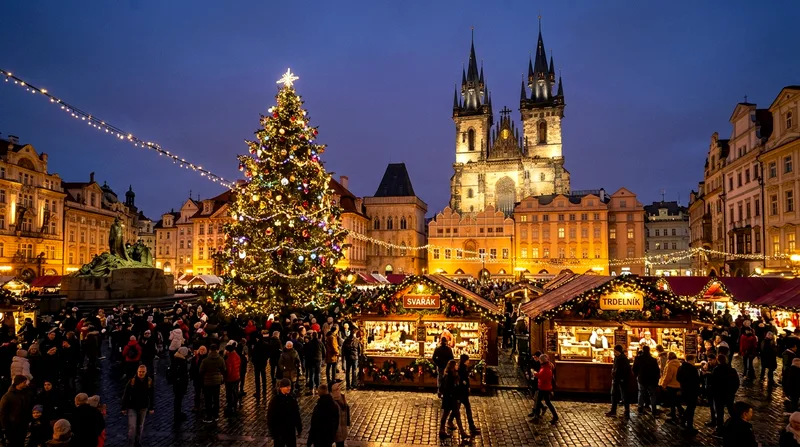
Morning: start at Old Town Square by 9:30am, before the day-trip buses arrive. The market here is the biggest and most photographed, with a tree lit most evenings from late November through early January, stalls selling trdelník (a cinnamon-sugar pastry, often filled with ice cream for tourists — the traditional version is plain), and the Astronomical Clock on the Old Town Hall tower doing its hourly show. Climb the tower (roughly 250 steps or a lift option, about 20 minutes round trip) for a rooftop view over the market stalls.
Afternoon: walk 15 minutes down Na Příkopě to Wenceslas Square, which has its own smaller market stretch and the National Museum at the top — worth an hour if the cold has won. Lunch at one of the stand-up kiosks near the square: expect goulash in a bread bowl or klobása (grilled sausage) for a reasonable price.
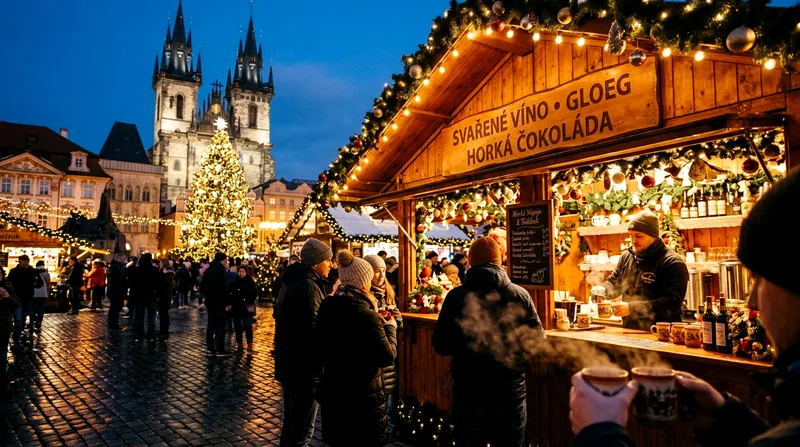
Evening: back to Old Town Square after dark, when the lighting actually makes the square — this is the one evening I'd prioritize for market food and hot wine (svařák) over a sit-down dinner. Watch out for stalls charging a deposit on mugs; you get it back if you return the cup, which many visitors forget and lose a few dollars on.
Day 2: Charles Bridge, Lesser Town and a Vltava-Side Evening
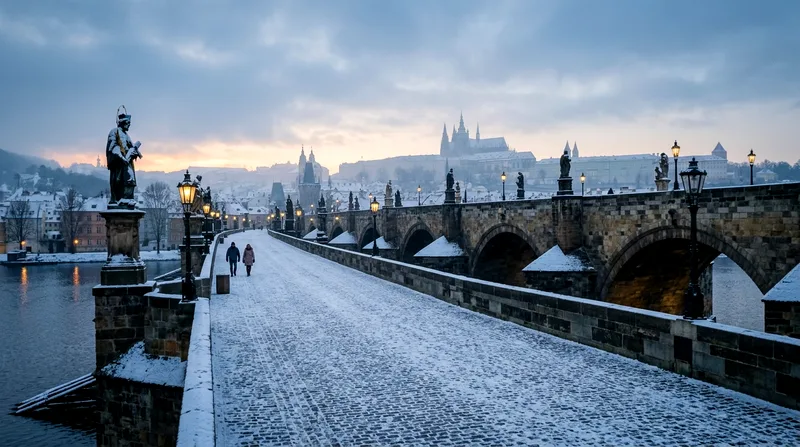
Morning: cross Charles Bridge early — by 8am if you can manage it, since by 10am it's shoulder-to-shoulder with tour groups. In December, snow dusting on the statues and the near-empty bridge at dawn is a genuinely different experience from the summer crush. This is also when the comparison-shopping between Prague and Krakow comes up most: both have Gothic bridges and squares, but Prague's river setting gives it a visual edge that Krakow's Rynek Główny doesn't match.
Afternoon: explore Lesser Town (Malá Strana) on the far bank — narrow lanes, the Lennon Wall, and a smaller, less frantic Christmas market near Kampa Island. Stop into a café here rather than Old Town; prices run lower and it's quieter.
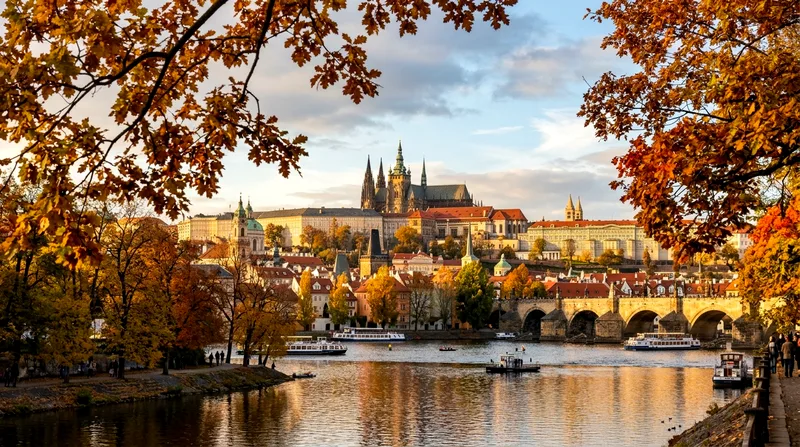
Evening: walk the Vltava River embankment as the lights come on across the water toward Prague Castle. This is a good evening to book a river cruise with mulled wine or dinner service — a sunset or evening boat tour along the Vltava is one of the few December experiences worth reserving ahead, since boats run shorter or reduced schedules in winter and good tables near the windows fill first. Compare current boat tours and prices before you book.
Days 3-4: Concerts, Castle and Warm Sights
The second half of the trip shifts toward indoor and semi-indoor sights, partly because your legs will want a change of pace and partly because December weather in Prague is genuinely unpredictable — damp cold in the low single digits Celsius, occasional snow, frequent gray skies with limited sun.
Day 3: Prague Castle, Museums and an Advent Concert
Morning: take the tram up to Prague Castle (tram 22 from Malostranská, about 10 minutes) rather than walking the steep approach in icy conditions. Budget two to three hours for the castle complex — St. Vitus Cathedral, the Old Royal Palace, and St. George's Basilica are the main stops, and all are indoors or partly covered, a relief if it's sleeting.
Afternoon: duck into a museum if your energy's fading. The Museum of Decorative Arts or the Lobkowicz Palace within the castle grounds both work well as a warm-up hour.
Evening: this is the night to go to an advent concert. Prague's baroque churches — St. Nicholas Church in Lesser Town and the Church of Our Lady before Týn among them — host candlelit concerts through December, usually chamber ensembles playing Vivaldi, Bach or Christmas carols. These run on a seasonal schedule rather than year-round, so check current listings and book a seat rather than showing up — popular churches sell out their front rows days ahead during the second half of December. Expect a 60-75 minute performance.
Day 4: Cafes, Petřín Views and New Year's Eve Options
Morning: a slower start. Visit Municipal House (Obecní dům), the Art Nouveau building near Náměstí Republiky, for its café and occasional concert hall tours — a good indoor option if the morning is wet.
Afternoon: take the funicular up Petřín Hill (about 15 minutes from the base near Újezd, running on the standard Prague transit ticket) for views over the snow-dusted rooftops toward the castle. The observation tower at the top is a mini Eiffel Tower replica; skip the climb if it's windy, as it gets exposed and cold fast.
Evening: if you're in Prague for New Year's Eve, know what you're signing up for. Old Town Square and the Vltava embankments fill with crowds for a fireworks display that's largely informal — people setting off their own fireworks across the city, which is loud, a bit chaotic, and not to everyone's taste, especially with young kids. Restaurants near Old Town Square often require advance booking for NYE dinner seatings, sometimes with a fixed menu. If you want calmer, book a river cruise or a restaurant in Lesser Town or Vinohrady instead.
Getting Around Prague in Winter
Prague's center is walkable, but December changes the calculus. Days are short, pavements get slick, and a tram ride that saves 20 minutes of cold walking is worth the fare.
Trams, Metro and Walking on Icy Cobblestones
The Prague Metro (three lines: A, B, C) is fast and reliable, and it's the best option for crossing longer distances — Wenceslas Square to the castle area, for instance, or getting out to Vinohrady. Trams cover more ground above street level and are genuinely scenic in winter; tram 22 up toward the castle is practically a sightseeing ride in its own right. A single ticket covers about 90 minutes of transfers across tram, metro and bus; a 24-hour or 72-hour pass is worth it if you're moving around a lot, and day passes are generally better value than buying singles repeatedly.
Walking is unavoidable in Old Town and Lesser Town, where cobblestones get genuinely icy by late December. Flat, grippy-soled boots matter more than fashion here — heeled boots on wet cobblestones near Charles Bridge are a common way to end a trip early. Senior travelers in particular should budget extra time for slower, careful walking rather than rushing between sights.
Where to Base Yourself in December
Old Town puts you in the thick of it, which sounds appealing until you're trying to sleep above a street still busy with market-goers at midnight. Rooms here also carry the steepest December premium, especially the week of Christmas and New Year's.
Lesser Town is my pick for most of the travelers this itinerary targets — couples, senior travelers, anyone who wants castle views and a five-minute walk to a quieter market, with Old Town still a 10-15 minute walk away. New Town, around Wenceslas Square, works well for families because it's close to transit hubs and has a broader range of mid-range hotel chains. If you're staying four nights or longer, Vinohrady is worth considering: it's a short tram ride out, noticeably calmer, and generally cheaper than the center — similar to how staying slightly outside Vienna's Ringstrasse or Munich's Altstadt saves money without losing easy access.
Avoid booking anything within immediate sight of Old Town Square unless you've checked for double-glazed windows and asked about noise — market sound carries.
Old Town puts you inside the market action but costs more and gets noisy; Lesser Town and New Town trade a short walk for quieter nights and better value.
Where to stay in Prague in December: neighborhoods compared
| Neighborhood | Walk to Old Town Square | Typical price level | Best for | Noise at night |
|---|---|---|---|---|
| Old Town | 0-5 min | High | First-timers wanting everything on foot | High near the square |
| Lesser Town (Malá Strana) | 10-15 min | High | Couples, quieter evenings, castle views | Low to moderate |
| New Town (around Wenceslas Square) | 5-10 min | Moderate | Families, transport links | Moderate |
| Vinohrady | 20-25 min walk / 10 min tram | Moderate | Longer stays, local feel | Low |
Price levels are relative to each other, not fixed figures; December rates rise sharply for Christmas week and New Year's Eve regardless of neighborhood.
Optional Bookable Experiences and Deadlines
December is Prague's second peak season after summer, and a narrower one — which means certain things sell out fast while the rest of the city stays easy to book last-minute.
What to Reserve Early for Peak Dates
Three things are worth locking in ahead rather than winging it: advent concerts in the more popular churches (St. Nicholas Church and Týn Church concerts can sell out their best seats within a week or two of the performance during Christmas week), a sunset or evening river cruise on the Vltava (reduced winter schedules mean fewer departures to choose from), and any Christmas Eve, Christmas Day or New Year's Eve dinner reservation at a sit-down restaurant near the main sights. Prague Castle tickets rarely sell out entirely, but buying online ahead skips a ticket-office queue that can run 20-30 minutes on a cold morning.
Christmas Week and New Year's Eve Booking Timing
Accommodation for the week of December 23rd to January 2nd should be booked at least six to eight weeks out if you want a specific neighborhood or price range — prices climb steadily as the dates approach and the best-located rooms go first. Note that many shops, some restaurants and most museums close or run reduced hours on December 24th and 25th; Christmas Eve afternoon in particular goes quiet as locals head home for their own celebrations, so plan indoor sightseeing for the morning of the 24th and expect a subdued, walk-around-and-look city that evening rather than restaurant-hopping. December 26th through New Year's Eve, things reopen and the city gets busy again. If your dates are flexible, the first two weeks of December offer the market atmosphere with roughly half the crowd density of Christmas week.
Frequently asked questions
Is Prague worth visiting in December?
Yes, with the right expectations. You trade long days and patio dining for Christmas markets, candlelit concerts and a castle that looks better dusted with snow than under a flat summer sky. It's not a budget month, and the week around Christmas and New Year's is genuinely crowded, but early December offers most of the atmosphere with noticeably fewer people.
How cold is Prague in December and what should I pack?
Daytime temperatures typically sit between -1°C and 4°C (around 30-39°F), with damp, penetrating cold rather than dry freezing air. Pack a proper insulated coat, waterproof boots with grip for icy cobblestones, thermal layers, gloves and a hat — umbrellas help less than you'd think once wind picks up near the river.
How many days do you need in Prague for Christmas?
Four days covers the essentials well: markets, Charles Bridge, the castle, and one evening concert or river cruise, without rushing. Three days works if you cut one museum or the Petřín Hill visit; five or six suits travelers adding a day trip to Kutna Hora or Cesky Krumlov.
When should I book for Prague New Year's Eve?
Book accommodation and any restaurant dinner seating at least six to eight weeks ahead if you want central locations or specific restaurants, since prices rise and availability narrows fast through December. The fireworks and street celebration themselves need no ticket or booking at all.
Are shops and attractions open on Christmas Eve and Christmas Day?
Most shops and many restaurants close or shorten hours on December 24th, especially from early afternoon, as locals head home for their own celebrations, and December 25th sees similarly reduced hours citywide. Major sights like Prague Castle typically keep some access, but check specific opening hours before relying on them for either day.