Plan easy day trips from Prague by train to Kutná Hora, Plzeň and Karlštejn with ready-made itineraries, getting-around tips and Czech train ticket advice.
Who These Rail Itineraries Suit
Prague's rail links put medieval silver towns, brewing capitals and royal castles within an hour or two, so you can see more of Bohemia without renting a car. The Czech Republic's rail network is dense, cheap by Western European standards, and run mostly by České dráhy (Czech Railways), with a private operator or two on busier routes. For a visitor based in Prague, that means Kutná Hora, Plzeň and Karlštejn Castle are all realistic single-day trips, each with a different flavor — one is bone-chapel gothic, one is beer-hall industrial heritage, one is fairy-tale castle on a hill.
These three itineraries assume you're not driving. If you'd rather not deal with timetables at all, guided minibus day tours exist for all three destinations and are worth comparing on price against the DIY train version — sometimes the difference is €10-15 per person, sometimes it's not worth paying extra for a group of 40 on a coach. Trains win on flexibility: you choose your own return time rather than being marched back to a bus at 4 p.m. sharp.
Kutná Hora is the easiest half-day option, Plzeň needs a full day for the brewery, and Karlštejn demands the most walking.
Day trips from Prague by train compared: journey time, effort and best for
| Destination | Train time from Prague | Best for | Effort level |
|---|---|---|---|
| Kutná Hora | approx. 50 min–1 hr | Bone chapel, Gothic cathedral, families | Low–moderate, some walking between sights |
| Plzeň | approx. 1.5–2 hrs | Beer history, brewery tour | Low, mostly flat, long day overall |
| Karlštejn Castle | approx. 35–40 min | Castle views, active travelers | Moderate–high, uphill walk to castle |
Approximate figures only; always check current Czech Railways timetables before you travel.
Independent travellers and first-timers
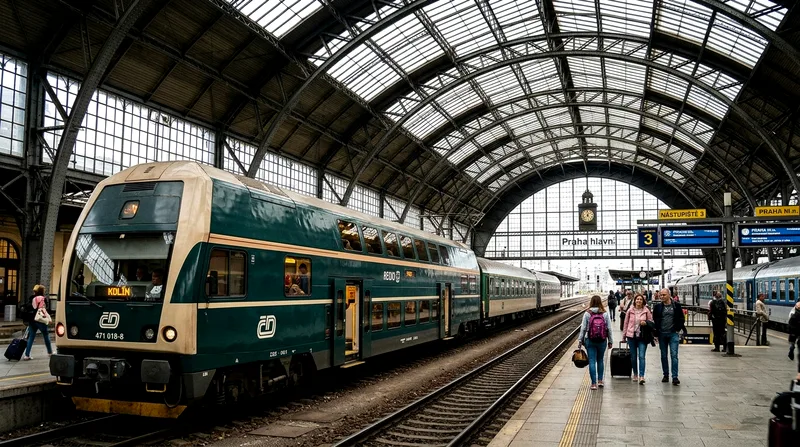
If you've never used Czech trains, don't overthink it. Platforms are signed in Czech and usually English, departure boards list the platform ("nástupiště") and track number, and conductors on regional trains are generally used to tourists fumbling with tickets. Families with children under 10 will find Kutná Hora the easiest logistically — short ride, short walk from the station area to the ossuary, and bathrooms at the main sights. Solo travelers and couples who want a more active day should lean toward Karlštejn, which involves a 25-30 minute uphill walk from the village to the castle gate.
How to combine or pick one day
Don't try to combine two of these in one day — it's technically possible with Kutná Hora and nothing else nearby, but Plzeň and Karlštejn are in opposite directions from Prague and each deserves its own day. If you have three or four days in Prague total, dedicating one full day to a rail trip and keeping the others for the Old Town, Prague Castle and a river cruise on the Vltava is a better split than rushing two towns back to back.
Day 1: Kutná Hora by Train
Kutná Hora is the easiest and most popular of the three — a former silver-mining town roughly an hour from Prague by direct train, famous for a chapel decorated entirely in human bones. Trains leave from Praha hlavní nádraží (Prague main station) roughly every hour or two on the line toward Kolín/Havlíčkův Brod, with some direct and some requiring a quick change at Kolín. The journey itself takes about 50 minutes to just under an hour depending on the service.
One quirk worth knowing: the main train stops at "Kutná Hora hlavní nádraží," which is about 2 km from the town center and the ossuary — not walkable with small kids in tow. A local connecting train (a few minutes' ride) or a 10-15 minute taxi gets you into town; some itineraries build in a walk along a marked path instead, which takes about 25 minutes past the plague column and into Sedlec.
Morning and afternoon: Sedlec Ossuary and St. Barbara's Cathedral
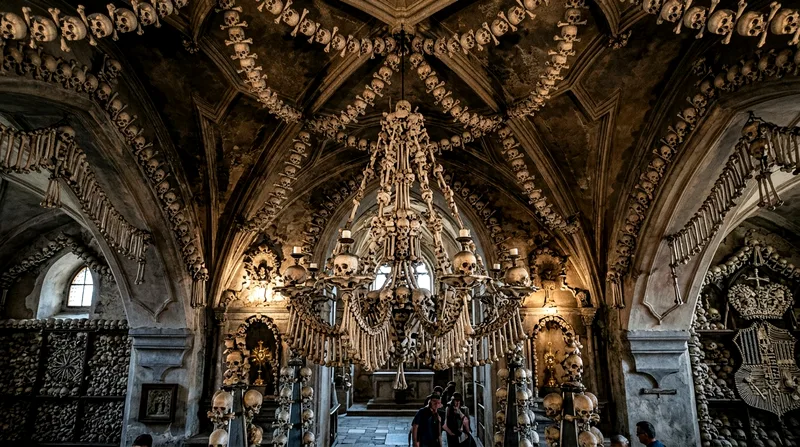
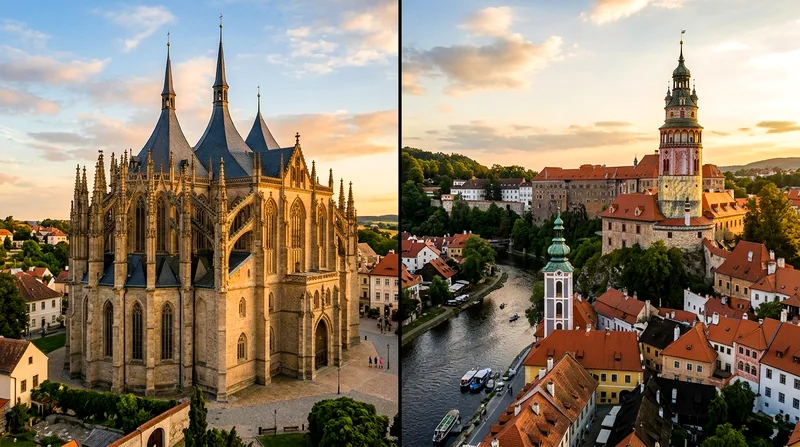
Aim for a train leaving Prague between 8 and 9 a.m. so you're at the Sedlec Ossuary by late morning. The ossuary — a small chapel containing the bones of an estimated 40,000 people, arranged into chandeliers, garlands and a coat of arms — takes about 30-45 minutes to see properly and is usually not crowded before 11 a.m. From there it's a 2 km walk or a short bus/taxi ride into the historic center to see St. Barbara's Cathedral, a Gothic structure begun in 1388 and funded by the town's silver-mining wealth; budget an hour for the cathedral and the pleasant walk along the terrace overlooking the river valley. Lunch in the old town — goulash or trdelník from a stall — rounds out early afternoon.
Evening: return to Prague
Trains back to Prague run at similar intervals to the morning, so there's no need to rush; a 5 or 6 p.m. departure gets you back to Praha hlavní nádraží with the evening free for dinner in Prague. If the ossuary felt rushed or you want more time, Kutná Hora supports a full day easily — add the Italian Court, the old silver mine tour (book this one ahead, as mine tours run on fixed time slots and do sell out in summer), or the Czech Museum of Silver.
Day 2: Plzeň by Train
Plzeň (Pilsen) is further out — about 90 minutes to 2 hours by direct train from Prague — but it's the trip beer fans shouldn't skip, since this is the birthplace of pilsner-style lager and home to the Pilsner Urquell Brewery. Direct trains run regularly from Praha hlavní nádraží; this is one of the more comfortable rides, often on modern rolling stock with reclining seats and a snack trolley on some services.
Because of the longer travel time, Plzeň works best as a dedicated full day rather than a half-day add-on. Pair it mentally with Dresden or Munich as a "beer city" comparison if you're weighing multiple European trips — Plzeň is smaller and far less touristed than either, with a walkable historic core you can cover on foot in under 30 minutes.
Morning and afternoon: old town and brewery visit
Catch a morning train by 8 a.m. to arrive with a full day ahead. Plzeň's main square, náměstí Republiky, is a 10-minute walk from the station and centers on the Gothic Cathedral of St. Bartholomew, whose spire is the tallest in the Czech Republic. Spend 30-45 minutes here before walking (or taking a short tram ride) to the Pilsner Urquell Brewery on the edge of the old town. The standard brewery tour runs about 90 minutes, includes the historic cellars, and ends with an unfiltered, unpasteurized sample of lager straight from the tank — noticeably different from the bottled export version. Tours run on a fixed schedule in multiple languages, so check times and reserve a slot before you go, especially on weekends.
Evening: dinner in Plzeň or return to Prague
After the brewery, you'll likely have mid-afternoon free — the underground tunnels beneath the old town (Plzeň Historical Underground) are a good rainy-day filler, running about 50 minutes. Dinner options in Plzeň are decent but unremarkable compared to Prague, so most visitors eat a late lunch locally and take a train back to Prague in time for dinner there. Last direct trains back run into the evening, but don't leave this to the last possible departure — delays happen, and missing the final direct connection means a longer trip via a transfer.
Day 3: Karlštejn Castle by Train
Karlštejn Castle is the closest of the three and the most purely scenic. Built in the 14th century by Charles IV to house the Bohemian crown jewels and holy relics, it sits on a wooded hilltop above the Berounka river, about 35-40 minutes from Prague by direct regional train. Trains run frequently, often every hour, from Praha hlavní nádraží, making this the most flexible of the three trips if you want to decide your departure time that morning rather than plan weeks ahead.
This is the trip to skip if you're traveling with anyone who struggles with hills or stairs — the walk up from Karlštejn village to the castle gate climbs steadily for 25-30 minutes, and the castle interior itself involves more stairs. It's also the busiest of the three on summer weekends, with tour buses arriving from Prague on top of the train crowds, so a weekday visit is noticeably calmer.
Morning and afternoon: village walk and castle tour
Take a mid-morning train — there's no need to rush since the ride is short and departures are frequent. From Karlštejn station, the walk through the village up to the castle takes 25-30 minutes past souvenir shops and small cafés; it's a pleasant approach but has no shade in summer, so bring water. The castle itself is seen by guided tour only, with two different tour routes — a shorter one covering the main halls, and a longer one that includes the Chapel of the Holy Cross, which requires separate, limited-capacity booking well ahead (sometimes weeks in summer). If you only want the shorter tour, same-day tickets are usually available at the gate, but don't count on it in July or August.
Evening: relaxed return to Prague
Because trains run so frequently, there's no fixed "last chance" departure to worry about — you can linger over a late lunch in the village, browse the shops, or just sit by the river before walking back down. Trains run until late evening, so this is the one day trip where you can genuinely improvise the return time without checking a schedule in advance.
Getting Around and Booking Czech Train Tickets
All three of these day trips start from Praha hlavní nádraží, Prague's main station, which is on metro line C (Hlavní nádraží stop) and a short walk or tram ride from most central hotels. The station has been renovated in parts but still has a slightly scruffy underground passage near the metro exit — don't let that put you off, the platform level above is modern and well-signed.
Buying tickets online, at stations and on the day
You can buy Czech train tickets three ways: online in advance through the national carrier's website or app, at ticket machines or counters at the station, or in some cases directly from the conductor on board (usually with a small surcharge). For regional routes like these, buying on the day is generally fine — these aren't high-speed lines with assigned seating that sell out, except around major holidays. Booking online ahead can save a little money on longer routes like Plzeň and locks in a specific train, which matters if you want a guaranteed direct service rather than one with a change. Keep a screenshot or printout of any e-ticket; some conductors still expect to scan a QR code rather than see a confirmation email.
Reading timetables and choosing departure times
Czech timetables list trains by category — rychlík (fast/express regional) and osobní (slow, all-stops) are the two you'll see most on these routes. For Kutná Hora and Karlštejn, stick to rychlík services where possible; for Plzeň, direct trains are usually the faster category by default. Departure boards show "zpoždění" if a train is delayed — a few minutes is common, 20+ minutes is rare but happens, so build slack into castle tour bookings especially. Avoid planning a tight connection through Kolín or another junction if you can get a direct train instead; a missed five-minute transfer can cost you an hour.
Where to Base Yourself and Optional Experiences
Where you sleep in Prague affects how painless these early starts feel, and it's worth factoring into your itinerary planning alongside the trains themselves.
Best Prague areas for the main station
Staying in Nové Město (New Town) or Vinohrady puts you within a 10-15 minute walk or one metro stop of Praha hlavní nádraží, which matters when you're catching an 8 a.m. train. Staying in the Old Town or Malá Strana is more atmospheric for evenings but adds a 15-20 minute metro or tram ride each morning. If your trip also includes Vienna or Budapest by international train, note that those services often use the same main station, so a central-adjacent hotel does double duty.
Optional guided tours and tastings
If timetables and transfers aren't your thing, guided day tours to Kutná Hora, Plzeň and Karlštejn all exist as small-group or coach options departing directly from central Prague, skipping the station altogether. These typically cost more than the train-plus-entry combination but remove all the planning, and some include skip-the-line castle or brewery access that's handy in peak season. It's reasonable to book the castle or brewery portion ahead even if you do the transport yourself — compare current prices and availability for guided options before you decide, since a hybrid approach (train there, pre-booked tour on arrival) often works out as the best value.
Frequently asked questions
What is the easiest day trip from Prague by train?
Kutná Hora is the easiest overall — about an hour each way, frequent direct or one-change trains, and the main sights (Sedlec Ossuary, St. Barbara's Cathedral) are close together once you're in town. Karlštejn is shorter in travel time but involves a steady uphill walk that makes it slightly more demanding.
How do I buy Czech train tickets as a tourist?
Buy online through the national rail operator's website or app ahead of time, or simply buy at a station ticket machine or counter on the day — both work fine for these regional routes. On-board purchase from the conductor is possible too, usually with a small surcharge, but don't rely on it as your only plan since not every conductor carries change for large notes.
Can I visit Kutná Hora and Plzeň in one day?
Not realistically. They're in roughly opposite directions from Prague, and Plzeň alone needs most of a day once you factor in the brewery tour length. Treat each as its own day trip rather than trying to combine them.
Do I need to book Karlštejn Castle tours in advance?
For the shorter standard tour, same-day tickets are often available outside peak summer weekends, but the longer tour including the Chapel of the Holy Cross has limited capacity and should be booked well ahead, sometimes weeks in summer. Check current availability before your trip rather than assuming you can walk up and get a slot.
Which Prague train station do day trip trains leave from?
All three routes — Kutná Hora, Plzeň and Karlštejn — depart from Praha hlavní nádraží, Prague's main station, reachable via metro line C. Double-check your platform on the departure board shortly before boarding, since assignments can change.