Plan your visit to the Prague Jewish Cemetery: how entry works via the Jewish Museum ticket, etiquette tips, and a detour to Kafka's grave at the New Cemetery.
Why Visit the Old Jewish Cemetery
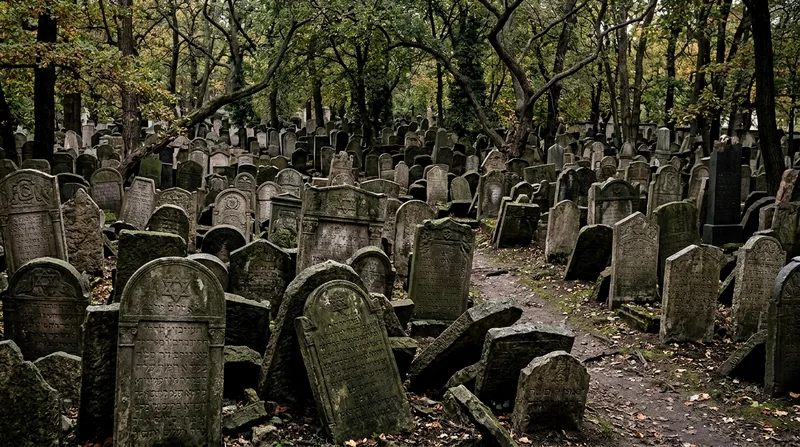
Walk up to the fence along U Starého hřbitova and the first thing you notice isn't any single grave — it's the density. Thousands of stones tilt against each other at odd angles, packed into a space that feels too small for what it holds. The Prague Jewish Cemetery in Josefov is one of the oldest surviving Jewish burial grounds in Europe, and the crowding isn't an accident of neglect. It's the physical record of a community that, for centuries, had nowhere else to bury its dead.
This is a site worth building real time into your Prague itinerary, not squeezing between the Charles Bridge and lunch. It sits at the center of the Jewish Museum in Prague's complex of sites, alongside the Pinkas Synagogue and the Spanish Synagogue, and visiting it properly — meaning reading the context, not just snapping photos of leaning stones — takes closer to an hour than fifteen minutes.
History and layered burials
The cemetery was in continuous use from the early 15th century until 1787, when Habsburg authorities closed burials inside the city walls. Jewish law generally prohibits removing or disturbing graves, so as space ran out over the centuries, the community did the only thing it could: it added new soil on top and buried again. Estimates suggest as many as 12 layers of burials in places, which is why an estimated 12,000 visible gravestones likely represent closer to 100,000 actual burials beneath them. That's the detail that explains everything else about the site — the crowding, the tilting, the sense that the ground itself is uneven and alive with history.
Notable graves to look for
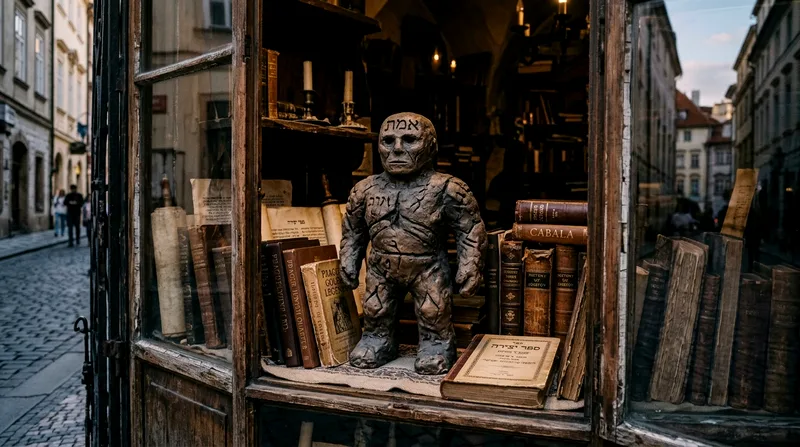
The grave most visitors look for belongs to Rabbi Judah Loew ben Bezalel, the 16th-century scholar associated with the legend of the Golem of Prague. His tomb, marked with a distinctive carved tympanum, still draws visitors who leave small stones on top — a traditional Jewish gesture of respect rather than flowers. Other notable markers belong to Mordecai Maisel, the wealthy mayor of the Jewish Town who funded much of Josefov's development, and David Gans, a historian and astronomer who worked with Johannes Kepler. You won't find Franz Kafka here — his grave is across the city, which we'll get to.
Tickets and Entry via the Museum
Here's the part that trips people up: you can't simply walk up and buy a standalone ticket to the Old Jewish Cemetery at its gate. Entry is bundled into tickets sold by the Jewish Museum in Prague, which administers the cemetery along with several synagogues in Josefov. This isn't a money grab — it reflects how the sites are physically and administratively linked, with the cemetery viewing path running alongside the Pinkas Synagogue building.
Entry to the Old Jewish Cemetery only works through a Jewish Museum ticket, so how you visit depends mainly on time and context, not access.
Old Jewish Cemetery Prague visit options compared
| Visit Option | Typical Duration | Context Provided | Best For |
|---|---|---|---|
| Self-guided, museum ticket only | 30-45 min in cemetery | Signage and optional audio guide | Independent travelers, couples short on time |
| Self-guided, full Josefov route | Half day | Signage across all included sites | History-focused travelers, families |
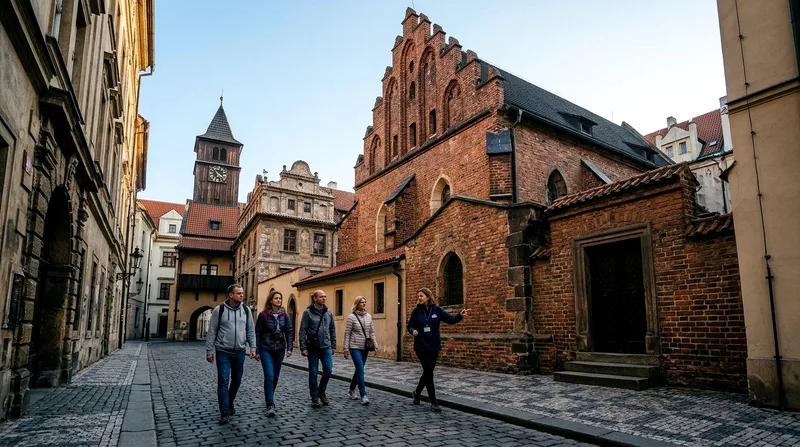
| Guided Jewish Quarter tour | 2-3 hours | Live guide narrative | First-time visitors, solo travelers wanting depth |
| Cemetery plus Kafka grave detour | Half day total | Self-researched | Literary travelers, repeat visitors to Prague |
Durations are typical ranges; actual pace depends on crowds and your own interest level, so check official museum hours before planning your day.
What the museum ticket covers
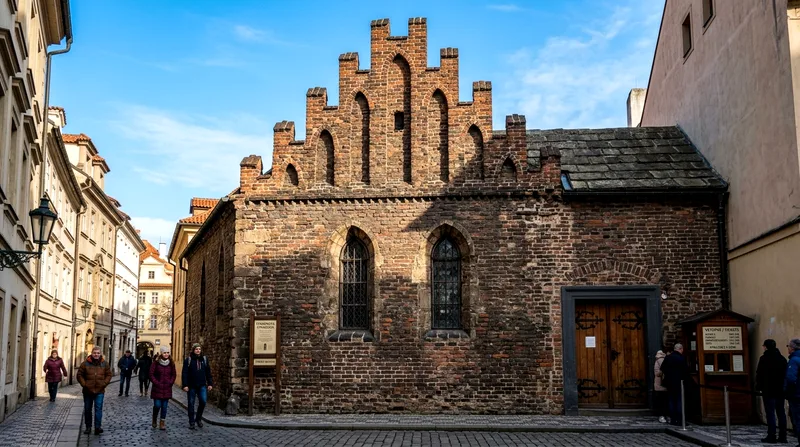
The standard Jewish Museum ticket typically covers the Old Jewish Cemetery, the Pinkas Synagogue (which houses a somber memorial listing the names of Czech Jewish Holocaust victims), the Klausen Synagogue, the Maisel Synagogue, and the Ceremonial Hall. The Old-New Synagogue, still an active house of worship and one of Europe's oldest surviving medieval synagogues, is usually sold on a separate ticket or combined pass — check current combinations before you go, since the museum occasionally adjusts bundling. Don't assume one ticket gets you everywhere in Josefov; it's worth confirming exactly what's included the day you plan to visit.
Where to buy and how to enter
Buy tickets online through the Jewish Museum's official website in advance, especially from late spring through early autumn when queues at the physical ticket offices near the Pinkas and Maisel Synagogues can run long. Entry to the cemetery itself happens through the Pinkas Synagogue, meaning you walk through the synagogue's memorial hall before stepping out onto the elevated wooden walkway that loops through the graves — you don't wander freely among the stones, which actually helps preserve them. Security screening similar to airport-style bag checks is standard at the entrance, so arrive a few minutes before you think you need to.
Visiting Independently or With a Guide
Most visitors go self-guided, and that's a reasonable default — the museum provides decent signage and an optional audio guide, and the cemetery path itself is short enough that you won't get lost. But a lot of the meaning here is invisible without context: who Maisel was, what the Pinkas memorial names actually represent, why the Golem legend attaches itself to Rabbi Loew. If you go in cold, you'll see old stones. If you go in with some background, you'll understand why this site survived at all while so much of Jewish Prague didn't.
Self-guided route
If you're doing this alone, start at the Pinkas Synagogue, take your time with the Holocaust memorial walls before you reach the cemetery exit, then follow the wooden walkway loop at your own pace — most people take 30 to 45 minutes just in the cemetery itself. Pair it with the Spanish Synagogue afterward if your ticket covers it; its Moorish Revival interior is arguably more visually striking than any synagogue in the complex, and it's a short walk away. Budget a half-day for the whole Josefov cluster if you want to do it properly rather than rushing.
Visitor Etiquette and Practical Tips
This is an active religious and historical site, not a park, and the museum enforces that distinction more than you might expect.
Dress, behavior and photography
Men are generally expected to cover their heads inside the Old-New Synagogue and sometimes within other synagogue spaces — paper kippot are usually provided free at the entrance if you don't have your own. Keep voices down on the cemetery walkway; it's a working memorial, and groups treating it as a photo backdrop stand out for the wrong reasons. Photography is typically allowed in the cemetery itself, though flash and tripods may be restricted inside the synagogues — check posted signs, since rules differ building to building. Leaving a small stone on a grave, Rabbi Loew's especially, is welcomed; leaving flowers or other items is not traditional here and best avoided.
Accessibility and Sabbath closures
The wooden walkway through the cemetery isn't fully wheelchair accessible in places due to uneven ground and narrow sections, so travelers with mobility needs should contact the museum in advance to ask about alternatives. The entire Jewish Museum complex, cemetery included, closes on Saturdays for the Sabbath and on major Jewish holidays — this catches people off guard more than almost any other closure in Prague, since most tourist sites in the city run daily. It also closes on some Jewish holidays that don't align with typical Christian holiday calendars, so if you're visiting around Passover or Yom Kippur, double-check the museum's calendar rather than assuming normal hours apply.
Best Time to Visit
Arrive right at opening if you want the walkway relatively uncrowded — by mid-morning, tour groups from river cruises and city-wide walking tours stack up, and the narrow path doesn't absorb crowds gracefully. Weekday mornings, particularly Tuesday through Thursday, tend to be calmer than weekends. Late autumn through winter brings fewer visitors overall, though the bare trees arguably suit the cemetery's mood better than summer's greenery does anyway. Avoid visiting in the final hour before closing if you can — the museum starts moving people through faster, and you'll feel rushed past exactly the details worth lingering over. Compare this to Vienna's Zentralfriedhof, which is vast and largely empty even on weekends — the Old Jewish Cemetery's small footprint means crowd timing matters far more here than at bigger European cemeteries.
Detour to Kafka's Grave
One of the most common mix-ups among first-time visitors: Franz Kafka is not buried in the Old Jewish Cemetery in Josefov. He's buried in the New Jewish Cemetery, a separate site in the Žižkov district, established after the old one closed in 1787 and still in occasional use today. If literary pilgrimage is part of why you're coming to Prague, treat this as a distinct trip, not an add-on to your Josefov visit.
Getting to the New Jewish Cemetery
Take the metro's A line (green) to Želivského station — the cemetery entrance is a short walk from the exit, clearly separate from the much larger non-Jewish Olšany Cemetery next door, which people sometimes wander into by mistake. The two cemeteries share a wall in places, and signage isn't always generous, so follow signs specifically for the "Nový židovský hřbitov" rather than just the first cemetery gate you reach. Entry to the New Jewish Cemetery is free or low-cost and separate from the Jewish Museum ticket system entirely — it's not run by the same institution.
Finding the Kafka family grave
The Kafka family grave sits in a specific numbered section near the cemetery's front section — pick up or photograph the small site map near the entrance, since the cemetery is large and not laid out intuitively. The grave itself is a simple, angular white stone shared with Kafka's parents, often marked with small stones, notes, and occasionally pens left by visitors — a quiet contrast to the elaborate 19th-century monuments nearby. It's a five-minute stop once you find it, but finding it without the map can eat twenty minutes you didn't plan for.
Frequently asked questions
Can you buy tickets for the Old Jewish Cemetery separately?
No — entry to the Old Jewish Cemetery is sold as part of a Jewish Museum in Prague ticket that also covers synagogues like the Pinkas and Maisel. There's no standalone cemetery-only ticket at the gate, so check the museum's official website for current ticket combinations before your visit.
How long does a visit to the Old Jewish Cemetery take?
Plan on 30 to 45 minutes for the cemetery walkway alone, longer if you read the Pinkas Synagogue memorial carefully on the way in. If you're visiting the full Josefov complex — synagogues included — budget closer to half a day.
Is the Prague Jewish Cemetery open on Saturdays?
No. The Old Jewish Cemetery and the wider Jewish Museum complex close on Saturdays for the Sabbath, along with major Jewish holidays. This differs from most Prague attractions, which run daily, so confirm the museum's calendar before building your itinerary around a Saturday visit.
Where is Kafka buried in Prague?
Franz Kafka is buried in the New Jewish Cemetery in Žižkov, not the Old Jewish Cemetery in Josefov. Take metro line A to Želivského station and follow signs for the New Jewish Cemetery specifically, since it sits beside the much larger Olšany Cemetery.
Is the Old Jewish Cemetery worth visiting?
Yes, particularly if you pair it with the Pinkas Synagogue memorial rather than treating it as a quick photo stop. The density of graves and the layered burial history make it one of the more genuinely moving sites in central Prague, though it rewards slower visitors more than rushed ones.