Prague tours for seniors made easy: compare vintage car, tram and minibus tours that reach the castle and old lanes with minimal walking.
Which Prague Tour Suits Which Senior Traveller
Prague looks flat on a map and feels anything but. The route from Charles Bridge up to Prague Castle climbs roughly 70 meters over cobbled streets, and the Castle complex itself spreads across a hilltop with uneven paving that's been there since the 1300s in places. If you're choosing Prague tours for seniors, the first decision isn't which company to book — it's how much walking you can realistically handle on a warm afternoon after a flight.
There's no single right answer here, and anyone who tells you one walking tour fits every older traveler is selling something. A fit 70-year-old who walks daily at home might handle a standard Old Town walking tour with rest stops. Someone managing arthritis or recovering from a hip replacement needs a different plan entirely — one built around a vehicle, not a guide's pace.
Limited Stamina or Joint Pain
If you can walk short distances — say, 200 to 400 meters — but tire quickly or struggle with stairs, a vintage car or minibus tour solves most of the problem. These tours drive you to viewpoints and drop-off points near major sights, so the walking happens in short bursts rather than a continuous slog. You'll still cross some cobblestones at Prague Castle or in Old Town Square, since no vehicle can drive into the pedestrian core, but the distances between stops shrink dramatically. Expect to walk a total of under a kilometer across a half-day tour, compared to 4-6 kilometers on a typical walking itinerary.
Wheelchair or Walker Users
This group needs to be more selective, because "accessible" gets used loosely in tour marketing. A minibus with a low step might still require boarding a curb with no ramp, and Prague's older trams are not wheelchair-friendly at all — only newer low-floor trams on certain lines have step-free boarding. If you use a wheelchair or walker, look specifically for tours advertising wheelchair-accessible vehicles with ramps or lifts, and avoid anything that doesn't explicitly confirm this in the listing. Email the operator directly before booking if the description is vague; a five-minute question can save you from arriving at a tour that can't actually accommodate you.
Main Low-Walking Tour Types Compared
Four categories dominate the low-walking Prague sightseeing market: vintage car tours, historic tram tours, private minibus tours, and river cruises on the Vltava. Each solves the mobility problem differently, and each has a real trade-off worth knowing before you hand over your money.
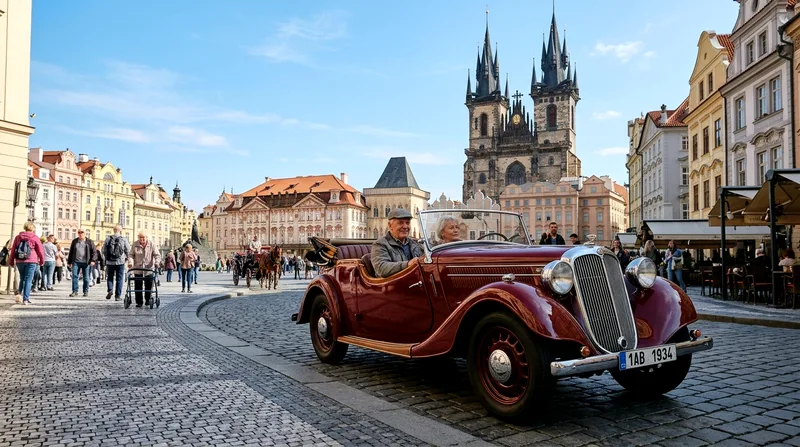
Vintage car tours — usually open-top 1920s-style convertibles or classic sedans — feel the most novel and photograph well, but they're weather-dependent and seat only two to four passengers, so they suit couples more than groups. Tram tours use restored historic trams running fixed or charter routes; you stay seated the entire time, which is ideal for anyone who can't manage repeated getting in and out of a vehicle, but you see Prague through a window rather than stopping freely. Minibus tours offer the most flexibility — door-to-door pickup, multiple stops, and usually a guide who adjusts pace — but comfort depends heavily on the specific vehicle's seat height and door width. River cruises skip cobblestones altogether, giving you Charles Bridge and Hradčany views from the water, though they won't get you inside the Castle or Old Town Square.
Minibus tours offer the most flexibility and best accessibility potential, while vintage car tours suit couples who want a scenic, low-walking experience with minimal group logistics.
Prague low-walking tour types compared for seniors: comfort, walking, and accessibility
| Tour Type | Walking Level | Wheelchair Access | Group Size | Best For |
|---|---|---|---|---|
| Vintage car tour | Low (short stops only) | Limited, check per vehicle | 2-4 people | Couples, photo-focused sightseeing |
| Historic tram tour | Very low (seated throughout) | Limited on older trams | 10-30 people | Those who tire from repeated boarding |
| Private minibus tour | Low to moderate | Good if ramp-equipped | 1-8 people | Wheelchair/walker users, flexible pacing |
| Vltava river cruise | Very low (seated throughout) | Generally good, check boat | 20-100+ people | Scenic views without any climbing |
Accessibility varies by individual vehicle and operator; always confirm ramps, step height, and seating directly before booking.
Comparison Table: Vintage Car, Tram, Minibus, River Cruise
The table below breaks down these four categories by comfort, walking level, accessibility, and typical group size, so you can match the format to your own mobility before you even start reading individual tour listings.
Private Versus Small-Group Options
Private tours cost more, but for seniors with specific needs — a slower pace, more frequent stops, a particular interest in one era of Prague history — they're usually worth it. You control the stops, the guide isn't managing other passengers' expectations, and you can ask to skip a cobbled stretch without feeling like you're holding up a group. Small-group tours (typically 6-12 people) cost less and still move at a gentler pace than large coach tours, but you're at the mercy of the group's slowest and fastest members, and bathroom breaks happen on the guide's schedule, not yours. If mobility is a serious concern, lean private. If it's more about avoiding exhaustion than accommodating a specific limitation, small-group works fine and saves money.
Vintage Car, Tram and Minibus Tours Explained
These three formats get mentioned together constantly, but they solve different problems. Understanding what each one actually does — rather than how it's marketed — matters more than picking by price.
Reaching Prague Castle Without the Climb
Prague Castle sits atop Hradčany hill, and the classic approach on foot means climbing New Castle Stairs or walking up from Malostranská — both involve sustained uphill cobblestone walking with no real rest points. A vintage car or minibus tour drives you up the back route via Keplerova or Pohořelec, dropping you much closer to the Castle's main entrance than any pedestrian route allows. You'll still walk through the Castle courtyards themselves, since vehicles can't enter the complex, and St. Vitus Cathedral's interior involves some uneven flooring. But the brutal uphill approach — the part that wrecks knees — gets eliminated. If climbing stairs is truly impossible for you, ask the operator in advance exactly where the drop-off point sits relative to the Castle's entrance gates, since "near the castle" can mean anything from 50 meters to 400 meters away.
Seeing the Old Town and Lesser Town by Vehicle
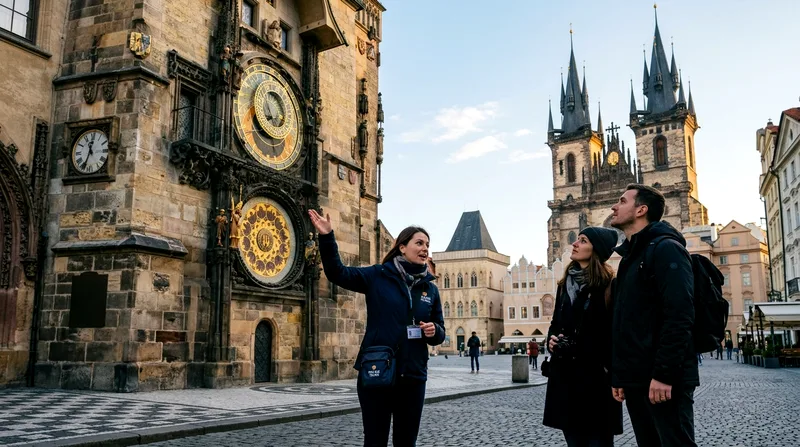
Old Town Square, Wenceslas Square, and the Lesser Town around Charles Bridge are largely pedestrianized, which is charming until you're trying to avoid a half-kilometer walk. Tram tours riding the Prague tram network skirt the edges of these districts and offer views into Lesser Town and toward the Castle without requiring you to navigate the crowds on foot. Minibus tours typically park at the edge of the pedestrian zones and walk you in for 10-15 minutes — enough to see Old Town Square's astronomical clock and Týn Church without the longer trek through Josefov or across the bridge itself. If seeing Charles Bridge up close matters to you, ask whether the tour includes a brief walk onto it, since some itineraries only offer a distant view from the embankment.
Accessibility Checks Before You Book
"Accessible" is not a regulated term in European tour marketing, and Prague operators use it inconsistently. Some mean a vehicle with a low step; others mean genuine wheelchair ramps and secured seating. Before you book any accessible tours in Prague, get specifics in writing — a phone call or email, not just the listing description.
Step-Free Boarding and Seating
Ask three direct questions: What is the step height to board? Is there a ramp, and does it support the weight of a standard wheelchair? Can a companion stay seated next to the wheelchair user, or do they board separately? Prague's cobblestones also matter for wheelchair users beyond the vehicle itself — Old Town Square and the Castle courtyards are uneven, and standard wheelchairs can struggle on certain stretches near Charles Bridge's approach. Some operators can arrange an all-terrain wheelchair for an additional fee; this is worth asking about directly rather than assuming it's included. Don't rely on photos in a tour listing to judge accessibility — they're usually taken to show the vehicle's best angle, not its door width or step height.
What to Look for When Booking
Beyond accessibility, a few practical details separate a comfortable Prague tour from a frustrating one. Pay attention to these before you commit, not after.
Inclusions, Group Size and Pace
Check whether admission to Prague Castle or St. Vitus Cathedral is included in the tour price or purchased separately — this varies widely and affects both cost and how much standing in ticket lines you'll do. Smaller group sizes generally mean more frequent stops and a guide more willing to adjust pace; a tour capped at 8 people behaves very differently from one running with 25. Ask how long the tour spends at each stop — 15 minutes at the Castle is barely enough to see the cathedral exterior, while 45 minutes allows a proper look inside. If you need to sit frequently, ask whether the itinerary includes seated rest points or café stops, since not all do.
Cancellation and Weather Policies
Vintage car tours in particular are weather-dependent — rain often means a modified route or a fully enclosed vehicle swap, and some operators cancel outright in heavy rain or snow. Before booking, check the cancellation policy for weather-related changes specifically, not just general refund terms. Prague's weather shifts quickly between April and October, with afternoon showers common in summer. A flexible or free-cancellation policy matters more here than on a typical city tour, since an open-top car tour in a downpour isn't just uncomfortable — it can be genuinely risky for anyone with mobility or health concerns. Always compare current prices and reviews before you book, since policies and availability change by season and by operator.
When to Book Your Tour
Timing affects both comfort and availability more than most travelers expect, especially for vehicle-based tours with limited seating capacity.
Best Seasons and Times of Day
Late spring (May-June) and early autumn (September-October) bring Prague's most comfortable temperatures — generally 15-22°C — without the dense summer crowds that clog Charles Bridge and Old Town Square by midday. If you're booking a minibus or private tour, aim for a morning slot, ideally starting before 10 a.m., when the Castle courtyards are less crowded and temperatures are cooler for anyone sensitive to heat. Vintage car tours with open tops are best scheduled for mid-morning to early afternoon in spring and autumn, avoiding both morning chill and intense midday sun. Winter tours (December-February) can work well for tram or minibus formats since you stay inside a heated vehicle, though daylight is limited to roughly 8 a.m. to 4:30 p.m., which shortens your sightseeing window. Book vehicle-based tours at least two to three weeks ahead in peak season (June-August and the Christmas market period in December), since small vehicle capacity means these fill faster than large coach tours.
Frequently asked questions
What is the best way for seniors to see Prague with limited walking?
A private minibus tour generally offers the best balance of accessibility, flexibility, and comfort, since the guide can adjust stops and pacing to your needs. Vintage car tours work well for couples wanting a scenic, low-walking option, while river cruises suit anyone who wants to avoid walking almost entirely, in exchange for seeing sights from the water rather than up close.
Are there wheelchair accessible tours in Prague?
Yes, but availability is inconsistent, and "accessible" isn't a standardized claim. Look specifically for operators advertising ramp-equipped minibuses or vans, and confirm step height, ramp weight capacity, and seating arrangements directly with the provider before booking — don't rely on the listing description alone.
Can you visit Prague Castle without climbing steep hills?
Yes. Vintage car and minibus tours drive up via roads like Keplerova or Pohořelec, avoiding the steep pedestrian approach from Malostranská or the New Castle Stairs. You'll still walk through some uneven courtyards once inside the complex, so ask exactly where the vehicle drops you relative to the entrance gates.
Is a private tour better than a group tour for older travellers?
For anyone with specific mobility needs, yes — private tours let you control pacing and stops without affecting other passengers. For travelers who simply want a gentler pace without any particular limitation, a small-group tour of 6-12 people costs less and still avoids the rush of large coach tours.
How far ahead should seniors book a Prague tour?
Book two to three weeks ahead during peak season (June through August, and the December Christmas market period), since vehicle-based tours like vintage cars and minibuses have limited capacity and fill faster than standard walking tours. In shoulder seasons like May or September, one to two weeks ahead is usually sufficient.