Prague dinner cruise vs sightseeing cruise compared on time, cost level, views, effort and crowds, so you can decide which Vltava river trip suits you.
The Two Cruise Options at a Glance
Prague's river cruise market splits cleanly into two products that get compared constantly, and for good reason — they use the same stretch of the Vltava River but sell completely different experiences. One is a brisk, low-cost sightseeing sail, usually around an hour, built for people who want the postcard view and nothing else. The other is a three-hour dinner cruise that functions more like a floating restaurant with a rotating backdrop of Charles Bridge, Hradčany and Prague Castle.
The confusion starts because both boats depart from similar docks near Old Town and Kampa Island, and both pass the same landmarks. That's where the similarity ends. A sightseeing cruise is a transport-and-view product; a dinner cruise is a hospitality product that happens to float. If you're deciding between them, the real question isn't "which boat is better" — it's whether you want a quick visual hit or a full evening commitment.
What a one-hour sightseeing sail covers
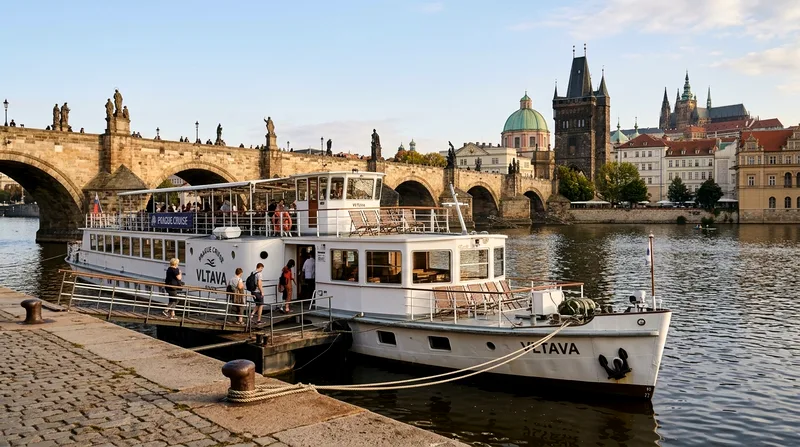
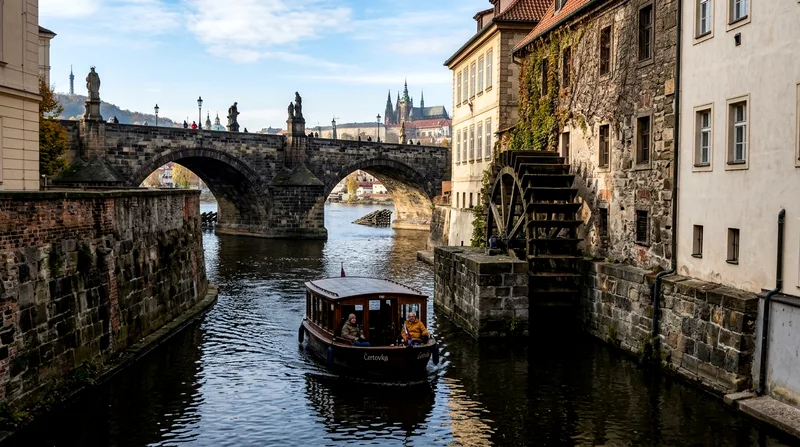
A typical one-hour Vltava cruise in Prague runs a loop from near the National Theatre or Čechův Most, past Old Town, under Charles Bridge, around Kampa Island, and back — sometimes extending slightly toward Mánes Bridge. You get open-deck or large-window views of Prague Castle on the hill, the Charles Bridge statues from water level (a genuinely different angle than from the bridge itself), and the Old Town waterfront. Most boats have a small bar on board selling drinks separately. There's no seating assignment drama, boarding is quick, and you can show up in whatever you're wearing for the day. This is the option for travelers who want the view without surrendering their evening.
What a three-hour dinner cruise includes
A dinner cruise covers more river distance simply because it runs longer, often extending further toward the edges of the city center, but the extra miles aren't really the point. The point is a seated, multi-course Czech or international menu, usually with wine or a welcome drink included, live music on some boats, and a dress-smart-casual expectation. Boarding takes longer because of table assignment and coat check. You're committed for roughly three hours, and the boat's schedule — not yours — decides when you see the castle lit up at dusk versus when you're mid-course and facing the wrong window. For some travelers that structure is exactly the appeal; for others it feels like dinner theater with a weaker kitchen than a good Old Town restaurant.
Head-to-Head: Time, Cost Level and Effort
Time is the first real fork in the road. A one-hour cruise is a slot you drop into an existing day — before dinner, after visiting Prague Castle, or squeezed between Old Town wandering and an evening at a beer hall. A dinner cruise is the evening. Once you board around 7pm or so, you're not doing anything else until it docks roughly three hours later, and that includes any wait for disembarking and the walk back to your hotel.
Cost level follows the same pattern: sightseeing cruises sit at the low end of river activities in Prague, often cheaper than a single restaurant main course per person. Dinner cruises sit at the mid-to-high end, comparable to a sit-down dinner at a mid-range Prague restaurant plus a moderate add-on for the boat, drinks, and the view tax that comes with any fixed-menu tourist dinner. Neither is unreasonable for what it is — the mismatch happens when travelers expect dinner-cruise food quality at sightseeing-cruise prices, or vice versa.
A one-hour sightseeing cruise costs less and takes far less of your evening than a three-hour dinner cruise, which trades savings for convenience and atmosphere.
Prague dinner cruise vs sightseeing cruise comparison by time, cost and crowd level
| Cruise Type | Typical Duration | Cost Level | Food Included | Best Time | Crowd Level |
|---|---|---|---|---|---|
| One-hour sightseeing cruise | approx. 1 hour | Low | No, bar drinks only | Day or sunset | Higher turnover, open deck |
| Three-hour dinner cruise | approx. 3 hours | Mid to High | Yes, multi-course | Evening | Lower turnover, fixed seating |
| DIY combo (sail + restaurant) | approx. 1 hour + 1.5-2 hours dining | Low to Mid | Yes, your choice | Late afternoon into evening | Variable, your choice |
Cost levels and durations are typical ranges; always check current prices and schedules before booking.
Time commitment and evening planning
If you're trying to pack Prague Castle, Charles Bridge, and Old Town Square into one trip — a common ask for first-timers with two or three days — a one-hour cruise slots in without reshuffling anything else. A dinner cruise, by contrast, effectively claims your entire evening and rules out that beer garden or jazz club you'd also wanted to try. For couples on a short city break this trade-off is fine; for families juggling kids' bedtimes, three hours on a slow-moving boat after a full day of walking can backfire badly.
Booking effort and flexibility
Sightseeing cruises in Prague run frequently through the day, often every hour or so in peak season, so last-minute booking or even walk-up tickets at the dock are realistic. Dinner cruises have fixed, limited evening departures and fill up on weekends and around holidays, so they need booking at least a few days ahead if you want a window-side table. Always check current prices and departure times before you book, since both schedules shift seasonally and with demand.
Cost Per View: Sail Plus Restaurant vs Dinner Cruise
Here's the calculation most comparison pages skip: what do you actually get per euro, or per koruna, on each option. A dinner cruise bundles a view and a meal into one higher price, but the meal is cooked in a galley kitchen for a fixed sitting of however many passengers are aboard — it's banquet food, competent but rarely memorable. A short sightseeing cruise costs a fraction of that, and you then choose your own dinner afterward from Prague's actual restaurant scene, which runs from Old Town tourist traps to genuinely good Czech cuisine spots in Kampa and beyond.
Run the numbers honestly and the DIY combo usually comes out ahead on food quality per cost, while costing roughly the same or less than the all-in dinner cruise price, depending on where you eat. The dinner cruise wins only on convenience — no decisions, no walking between venues, one booking instead of two.
Building the DIY combo: short sail plus riverside meal
Take the one-hour cruise in the late afternoon or early evening to catch the castle while there's still light, then walk ten to fifteen minutes to a riverside restaurant terrace near Kampa Island or the Old Town embankment for dinner with the water still in view. You get the same river, the same landmarks, better food options at every price point, and you control the pacing. The only real cost is logistics — you're managing two bookings or at least two decisions instead of one.
Food quality versus onboard convenience
Onboard dinner-cruise kitchens are built for volume and timing, not nuance — expect solid roast meat, dumplings, and a dessert course rather than anything a Prague food blog would rave about. If you've read up on Czech cuisine and want to actually taste what the city does well, a dedicated restaurant will beat the boat every time. If you'd rather not think about restaurant research at all, the cruise handles it for you, and that's a legitimate reason to book it.
Views, Crowds and Atmosphere Compared
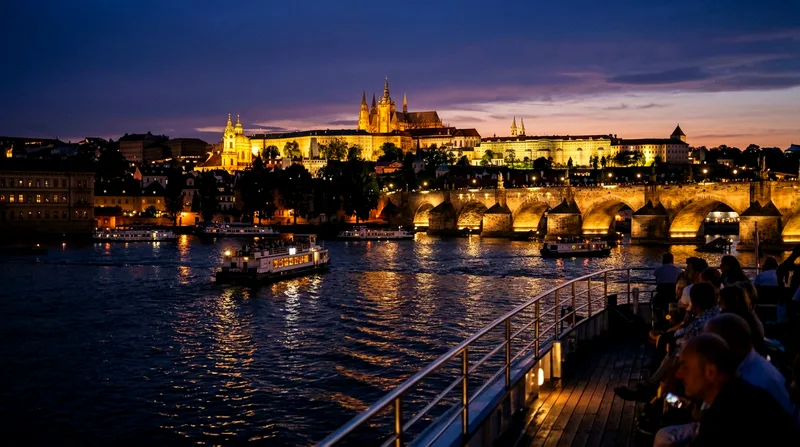
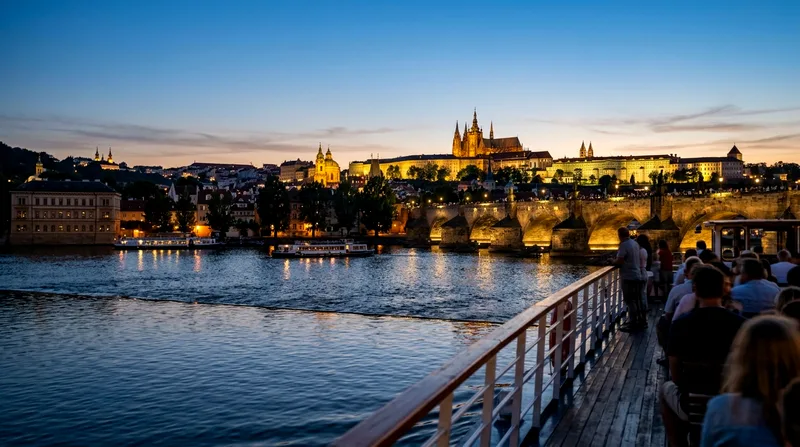
Daylight sailing shows off detail — stone carvings on Charles Bridge, the terraced gardens below Prague Castle, the color of Old Town facades. Dusk and evening cruises trade detail for drama: the castle and Hradčany floodlit against the sky, bridge lamps reflected on the water, a generally calmer, more romantic mood. Both are valid; they're just different products aimed at different moods, which is part of why "best time of day for a river cruise" doesn't have one universal answer.
Landmarks seen from the water at day versus dusk
A daytime one-hour cruise gives the sharpest photos of Charles Bridge's statues and the castle complex in natural light — better if you actually want usable pictures. An evening or dinner cruise timed around sunset catches the castle floodlighting, which switches on after dark, giving a moodier, more cinematic version of the same skyline. If photography matters to you, consider one sightseeing cruise at golden hour rather than assuming the dinner cruise automatically wins on atmosphere.
Boat size, seating and crowd levels
Sightseeing boats tend to be larger, with open deck space, standing room, and a constant turnover of passengers getting on and off — lively but less intimate, and crowds can bunch at the rail for photos near the bridge. Dinner cruise boats are usually smaller and configured with fixed tables, so you're seated with the same group all evening, which suits couples and quiet conversation but can feel confining if you dislike assigned seating or if the boat is fully booked with other diners.
Who Should Pick Which Cruise
Neither cruise is objectively better — they answer different questions. The decision comes down to how you want to spend your evening and what you're actually optimizing for: time, romance, food, or budget.
Couples, families and first-time visitors
Couples celebrating something specific — an anniversary, a proposal, a milestone birthday — often get genuine value from the dinner cruise's structure: someone else handles the evening, the lighting is good, and three hours of uninterrupted time together has its own worth beyond the food. First-time visitors short on days should lean toward the one-hour sightseeing cruise instead, since it frees up the evening for Old Town Square, a beer hall, or simply walking across Charles Bridge on foot after dark, which remains free and arguably more memorable than viewing it from a boat. Families with kids under eight should default to the short cruise — three hours seated at a formal dinner table rarely goes well with young children, and most dinner cruise boats aren't really built for strollers or restless toddlers.
Food lovers and budget-conscious travelers
If Czech cuisine is part of why you came to Prague, skip the boat kitchen and book a table at a proper restaurant — you'll eat better for similar or less money. Budget-conscious travelers, students, and solo travelers should almost always choose the one-hour cruise; it delivers the headline view-of-the-castle experience at a cost that barely dents a daily budget, leaving money for a Kutna Hora day trip or a Czech beer tasting instead.
Verdict: Which Is Worth It?
For most visitors, the one-hour sightseeing cruise paired with a restaurant of your own choosing beats the dinner cruise on value per view. You see the same Vltava River, the same Charles Bridge, the same Prague Castle silhouette, spend less, and keep your evening flexible. The dinner cruise earns its place for a narrower group: couples wanting a single, effortless, structured evening without decision fatigue, or travelers who genuinely prioritize convenience over food quality and don't mind paying a premium for it.
Compared with other European river cities — a Danube dinner cruise in Vienna or Budapest follows a similar script, trading food quality for scenery and convenience — Prague's version isn't unusually expensive or unusually good. It's just one evening format among several. If this is your only night in the city, and nothing else is pulling at your schedule, the dinner cruise is a reasonable splurge. If you've got multiple evenings, or you're also weighing a day trip to Český Krumlov or Kutná Hora, save the time and spend the savings on the activities that are harder to replicate — like a proper sit-down Czech meal in Old Town after a short, cheap sail past the castle at dusk.
Frequently asked questions
Is a Prague dinner cruise worth the extra cost?
It depends on what you're paying for. You're paying mainly for convenience and atmosphere — a seated three-hour evening with food, drink and a moving view handled in one booking. The food itself is rarely the highlight; a good Old Town or Kampa restaurant will usually out-cook the onboard kitchen. It's worth it for a celebration evening where you want zero planning, not for travelers chasing the best possible meal.
How long is a typical sightseeing cruise in Prague?
Most one-hour Vltava cruises run close to 60 minutes, looping from near Old Town or the National Theatre area past Charles Bridge and Kampa Island and back. Some operators offer shorter 40-minute versions or longer 1.5-hour routes extending toward Mánes Bridge, so check the specific route length when booking.
Which cruise has better views of Prague Castle and Charles Bridge?
Both see the same landmarks, since they share the same river stretch. A daytime sightseeing cruise gives sharper detail for photos; an evening or dinner cruise timed near sunset shows the castle floodlit, which looks more dramatic but less detailed. Neither route gets meaningfully closer to the castle itself.
Is it cheaper to take a short cruise and eat at a restaurant?
Generally yes. A one-hour sightseeing cruise plus a mid-range restaurant meal typically costs about the same as or less than an all-inclusive dinner cruise, and you get a wider choice of food quality. The dinner cruise only pulls ahead if you heavily value not having to plan or book two separate things.
Is a day or evening cruise better in Prague?
Day cruises suit photography and sightseeing detail — you'll see architecture and bridge carvings clearly. Evening cruises suit atmosphere, with the castle and bridges lit up after dark. Neither is objectively "better"; pick day if you want clear photos, evening if you want mood and romance.