Find the Prague best restaurants by area: traditional Czech pubs, fine dining and family friendly spots, plus tips to plan meals around sightseeing.
How to Eat Like a Local in Prague
Prague's restaurant scene splits cleanly into two tiers: places built for tour groups passing through Old Town Square, and places where Czechs actually have lunch. The gap between them is bigger than in most European capitals — bigger, frankly, than in Vienna or Munich, where even central tourist-zone restaurants tend to maintain decent quality. In Prague, a restaurant with a laminated multilingual menu taped to the window and a tout standing outside is a signal to keep walking, not to sit down.
The good news is that escaping the trap zone takes very little effort. Cross the river to Malá Strana, head into Vinohrady, or just walk six or seven minutes off the main square, and the same beer that costs 150-180 CZK near the Astronomical Clock drops to something far more reasonable, and the food stops being an afterthought. Locals eat lunch early, typically between 11:30 and 13:00, and dinner from around 18:00 — restaurants catering to tourists often serve continuously from 11am to 11pm, which is itself a small tell.
I'd also push back gently on the assumption that "traditional" means heavy and samey. Czech food has range — sour soups, freshwater fish, game in season — but tourist menus flatten it all into goulash and dumplings because that's what sells fastest. Seek out the fuller version of the cuisine and the trip improves noticeably.
Spotting Tourist Traps
A few reliable tells: menus printed in six languages with photos of every dish, a host actively inviting you in from the street, prices listed only in euros (Prague uses Czech koruna, and a restaurant hiding that is hoping you won't do the math), and "traditional Czech beer" priced above 100 CZK for a half-litre of Pilsner Urquell. Also watch for unlabeled "weight-priced" fish or meat dishes — a few notorious spots near Old Town Square have padded bills this way for years. If a menu has no Czech text at all, that's unusual enough to be a red flag.
Czech Dishes to Try
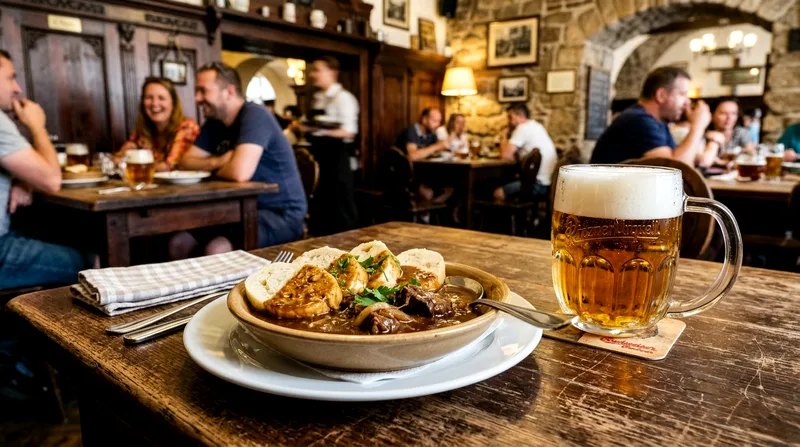
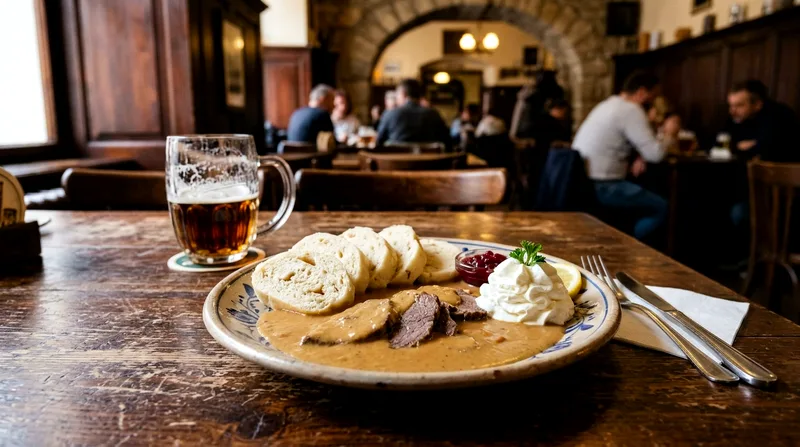
Svíčková — beef sirloin in a cream vegetable sauce with bread dumplings and a dollop of cranberry — is the dish most worth seeking out done properly. Guláš here is thicker and less paprika-forward than the Hungarian version. Try vepřo-knedlo-zelo (roast pork, dumplings, braised cabbage), smažený sýr (fried cheese, better than it sounds), and in autumn, roast duck or goose with red cabbage. Order Czech beer by name — Pilsner Urquell, Kozel, Budvar, or a local microbrew — rather than just "a beer," since pub staff will often ask which you want.
Best Traditional Czech Restaurants and Pubs
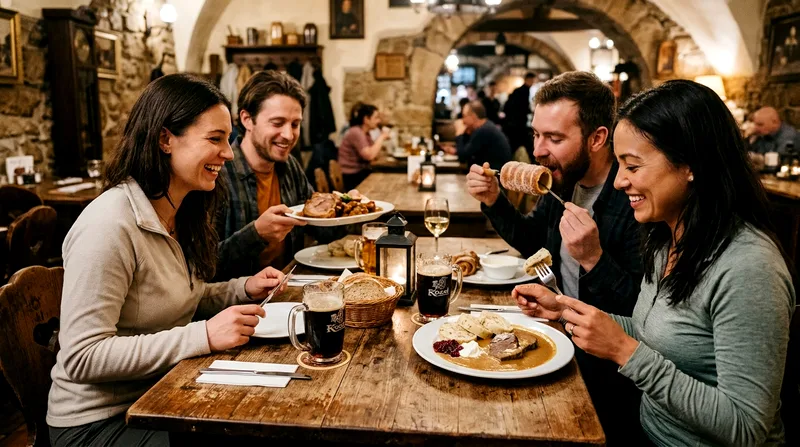
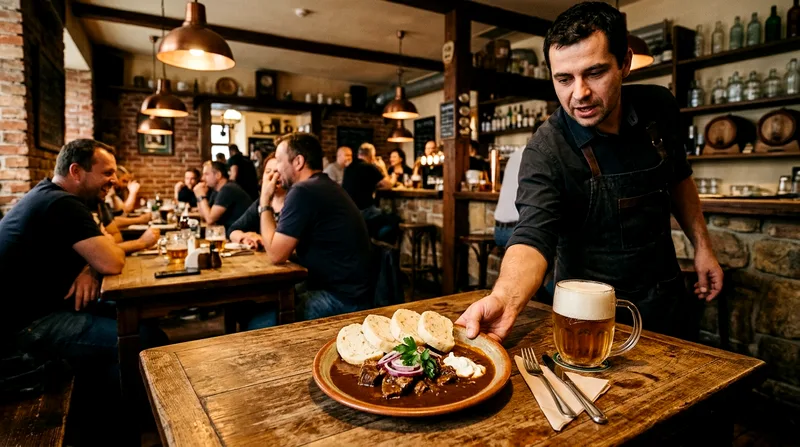
A traditional Czech restaurant in Prague usually means dark wood, long communal tables, and a menu that hasn't changed much in decades — in a good way. These are not fine dining rooms; they're built around beer and hearty food served fast, and the best ones are often slightly inconvenient to find, which keeps them honest.
Classic Beer Halls and Pubs
U Fleků in New Town is the famous one — a brewery pub operating since the 15th century, serving its own dark lager — but it's also the most tour-group-heavy, so go in with the right expectations rather than hoping for a quiet night. Better for atmosphere without the coach-tour crowd: U Kroka in Vinohrady, a neighborhood pub with no English signage outside and a menu that changes seasonally, or U Pinkasů near Wenceslas Square, one of the first places in Prague to pour Pilsner Urquell. Lokál, with several locations around the city, is a deliberate attempt to revive honest pub food and well-kept beer for a younger Czech crowd, and it's reliably good rather than reliably charming — the fluorescent lighting won't win design awards, but the tank beer is poured correctly, which matters more than you'd think.
Modern Takes on Czech Cuisine
A newer wave of restaurants takes the same raw ingredients — organ meats, root vegetables, game, freshwater fish — and plates them with more technique and less lard. Eska in Karlín, inside a converted factory building, bakes its own bread and runs a changing seasonal menu rooted in Czech produce. Field, which holds a Michelin star, reworks Czech staples into tasting-menu form without losing the flavor memory of the original dish. These cost more than a pub lunch, obviously, but they're the clearest answer if you want to understand what Czech cuisine is capable of beyond dumplings and beer.
Fine Dining Worth Booking in Prague
Prague's fine dining scene has grown up fast over the last decade, and the Michelin Guide now lists a genuine cluster of starred restaurants in the city — a level of recognition Budapest and Krakow are still catching up to, though Vienna remains ahead on sheer density of high-end options. For a special occasion — an anniversary, a proposal, a last night in the city — it's worth the splurge, but book ahead; the best rooms seat 20-30 covers a night and fill up, especially on weekends.
La Degustation Bohême Bourgeoise, in the Old Town, built its reputation on a tasting menu rooted entirely in 19th-century Czech cookbooks, reworked with modern technique — it's one of the more distinctive fine dining concepts in Central Europe, not just Prague. Field and Eska (mentioned above) both sit in this tier too. For rooftop views with your meal, restaurants in the Mandarin Oriental or along the Vltava embankment pair solid cooking with a genuine skyline, though you're partly paying for the view — be clear-eyed about that trade-off.
Tasting Menus and Special Occasions
Tasting menus in Prague's top restaurants typically run six to nine courses and take two to three hours — block out the evening, don't schedule anything after. Most require reservations at least several days ahead, longer for Friday or Saturday nights, and some request a credit card to hold the table. Dietary restrictions should be flagged when booking, not on arrival; kitchens built around a fixed tasting sequence have less flexibility than an à la carte pub. If you're combining a splurge dinner with other big-ticket plans, pair it with a quieter sightseeing day — a river cruise or a castle tour in the afternoon, dinner reservation at night, rather than stacking everything into one exhausting day.
Family Friendly Restaurants in Prague
Prague isn't a city built around kids' menus the way, say, Italy is, but it's far from hostile to families. Pubs generally welcome children, portions are large enough to split, and Czech food — dumplings, roast meat, potato pancakes — tends to be unfussy enough that even picky eaters find something. What you won't find much of is dedicated play areas or highchair stacks at every venue, so if that's a priority, call ahead or stick to the handful of spots that do cater to it.
Kid-Friendly Menus and Spaces
Lokál and most branches of the Czech pub chain Potrefená Husa offer straightforward menus, quick service, and enough noise in the room that nobody will mind a toddler meltdown. For something more geared to young kids specifically, look at restaurants attached to Prague's larger shopping centers (Palladium, Quadrio), which often have proper kids' corners with toys and space to move — not atmospheric, but practical on a long sightseeing day when everyone's patience is thin.
Relaxed Spots Near Major Sights
Near Prague Castle, steer away from the restaurants directly on the castle approach — overpriced and rushed — and instead walk down into Malá Strana proper, where pubs like U Modré Kachničky serve duck and traditional dishes in a calmer setting a short walk from the tram stop. Near the Jewish Quarter, smaller cafés just off Pařížská street offer lighter lunch options that won't derail an afternoon of museum visits. If you're combining the castle with a guided walking tour, build in a sit-down lunch break afterward rather than grabbing a street stall snack — kids especially do better with a real pause mid-afternoon.
Where to Eat by Area
Thinking by neighborhood, rather than by "best restaurants in Prague" lists alone, is the single most useful planning trick. Each area has a different rhythm, price point and crowd, and matching your meal to the neighborhood you're already exploring saves time and often money.
Matching your meal to the neighborhood you're sightseeing in is the fastest way to eat well in Prague.
Prague best restaurants by area: atmosphere, price level and who it suits
| Area | Price Level | Atmosphere | Best For |
|---|---|---|---|
| Old Town Square | High | Crowded, tourist-oriented | Quick lunch only, not dinner |
| Jewish Quarter | Mid to High | Quieter bistros, small cafés | Light lunch between museums |
| Malá Strana | Mid | Calm, residential side streets | Dinner after castle visit |
| Vinohrady | Mid | Leafy, café and wine-bar culture | Couples, relaxed evenings |
| Karlín | Mid to High | Industrial-chic, modern Czech food | Food-focused dinners |
| Žižkov | Low to Mid | Classic neighborhood pubs | Beer culture, budget meals |
Price levels are relative to each other, not fixed figures; always check current menus before you book.
Old Town and Jewish Quarter
Old Town Square itself is the zone to be most cautious in — prices are highest here and quality is the least consistent anywhere in the city. Walk five minutes into the surrounding streets, or into the Jewish Quarter around the Spanish Synagogue, and things improve: smaller bistros, better service, fewer menu photos. This area suits a quick lunch between sights rather than a long dinner — it gets loud and crowded by early evening.
Malá Strana and Prague Castle
Malá Strana has a quieter, more residential feel once you're off the main Charles Bridge approach, with good traditional restaurants tucked into side streets below the castle. This is a good area for an unhurried dinner after a castle tour — the crowds thin out noticeably after 6pm once the day-trippers head back across the river.
Vinohrady, Karlín and Žižkov
These three neighborhoods are where Prague residents actually live and eat, and it shows — Vinohrady has leafy streets and a strong café and wine-bar scene, Karlín (once industrial, now gentrified) has some of the city's best modern Czech cooking including Eska, and Žižkov has the highest concentration of genuine neighborhood pubs per block of anywhere in the city. None of these are more than a 15-20 minute tram ride from the center, and they're worth the trip for dinner even if your sightseeing stays in the old core.
Practical Tips for Dining in Prague
Dining logistics in Prague are mostly straightforward, but a few local habits catch visitors off guard. Many restaurants, even casual ones, charge automatically for bread or spreads put on the table before you order anything — if you don't want it, say so immediately or send it back. Card payment is near-universal now, though some small pubs in Žižkov or Karlín still prefer cash, so carry some koruna as backup.
Reservations, Tipping and Etiquette
Fine dining and popular mid-range spots should be booked at least a few days ahead, more for weekends; pubs generally take walk-ins except on Friday and Saturday evenings. Tipping isn't obligatory but is customary — rounding up or adding roughly 10% for good service is standard practice, done by telling the server the total you want to pay rather than leaving cash on the table. Don't tip the way you might in the US; 20% is unusual and slightly confuses Czech waitstaff. Splitting the bill item by item is common and not considered rude, unlike in some neighboring countries.
Planning Meals Around Sightseeing
Build meals around your itinerary rather than detouring across the city for them. If you're touring Prague Castle and Malá Strana in a day, eat lunch there rather than trekking back to Old Town. If you've booked a Vltava river cruise or a walking tour of the Jewish Quarter, pick a restaurant within a few minutes' walk of the end point so you're not wasting daylight. Many visitors pair a morning at Prague Castle with an afternoon river cruise and an evening meal in Malá Strana — a logical, low-backtracking day that works well for families and older travelers who don't want to cross the city repeatedly.
Frequently asked questions
What is the best traditional Czech restaurant in Prague?
There's no single "best," but U Kroka in Vinohrady and Lokál (multiple locations) consistently deliver honest Czech pub food and properly poured beer without the tour-group crowds found at Old Town Square venues. U Fleků is the most famous historic choice, dating to the 15th century, but expect a busier, more touristic room.
Where do locals eat in Prague?
Mostly in Vinohrady, Karlín and Žižkov — neighborhoods a short tram ride from the center where prices are lower and menus change seasonally rather than catering to one-time visitors. Locals rarely eat dinner on or near Old Town Square.
Are there good family friendly restaurants in Prague?
Yes. Czech pubs are generally welcoming to kids and portions are large enough to share. Restaurants attached to shopping centers like Palladium often have dedicated kids' play corners, useful on a long sightseeing day when a sit-down break is needed.
Do I need to book restaurants in Prague in advance?
For fine dining and tasting menus, yes — book several days ahead, more for weekends. Traditional pubs and casual spots usually take walk-ins, though popular ones fill up on Friday and Saturday nights, so arriving early or booking a table is safer.
How do I avoid tourist trap restaurants in Prague?
Walk at least five to ten minutes away from Old Town Square before choosing where to eat. Avoid places with multilingual photo menus, staff inviting you in from the street, euro-only pricing, or unlabeled weight-priced dishes — all common signs of inflated tourist pricing.