Understand Prague prices for food and drink, from restaurant meals to a pint of beer. Learn lunch-menu hacks and spot Old Town Square tourist traps.
Where Your Food Budget Goes in Prague
Prague prices for food and drink sit somewhere between Krakow's bargain reputation and Munich's steeper bills — cheaper than Vienna for a sit-down meal, but no longer the rock-bottom destination it was fifteen years ago. A simple lunch in a local Czech pub still runs roughly 150–220 CZK (about €6–9) for a main course, while a comparable meal in a central Old Town restaurant can easily hit 350–550 CZK (€14–22) before you've ordered a drink. The gap between those two numbers is really the whole story of eating in this city.
Where the money actually leaks is in the add-ons, not the main course. A 0.5-liter Pilsner Urquell costs 45–65 CZK (€1.80–2.60) in a genuine Czech pub, but the same glass on an Old Town Square terrace can be priced at 120–160 CZK (€5–6.50) — sometimes more during peak season. Bottled water, bread rolls brought to the table unasked, and a "tourist" cover charge can each add 30–60 CZK individually, and they compound fast across a party of four.
Restaurant meals versus pub food
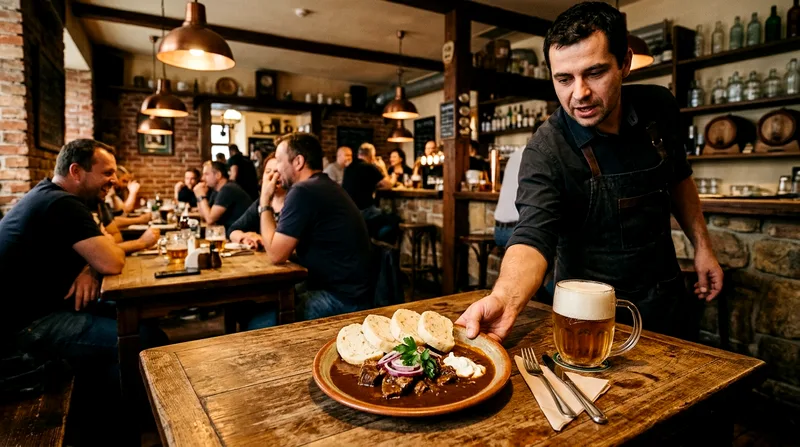
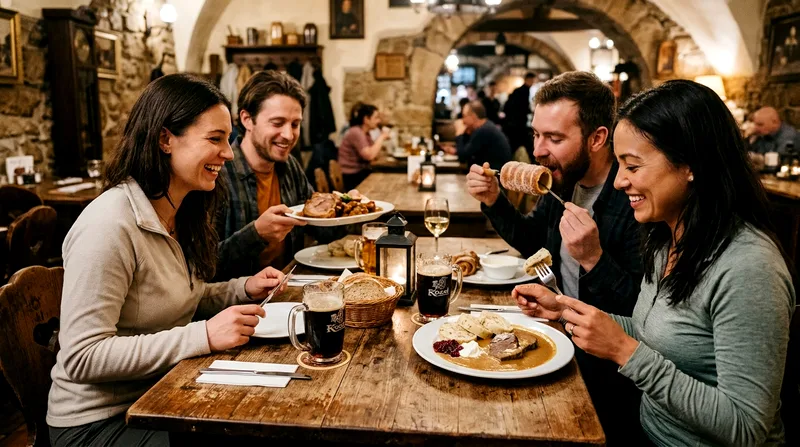
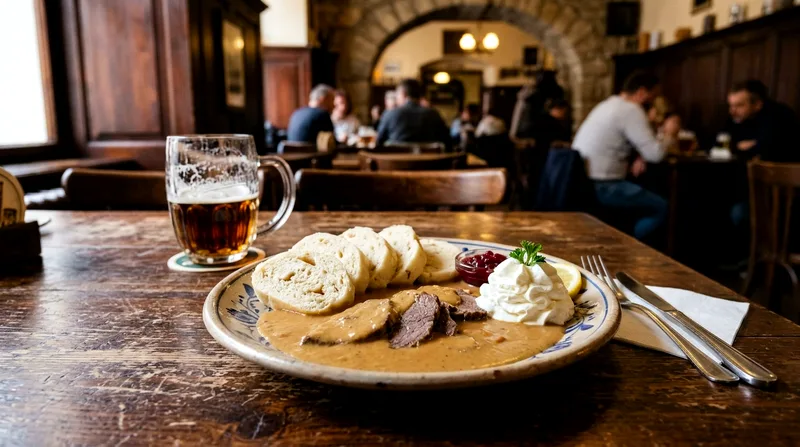
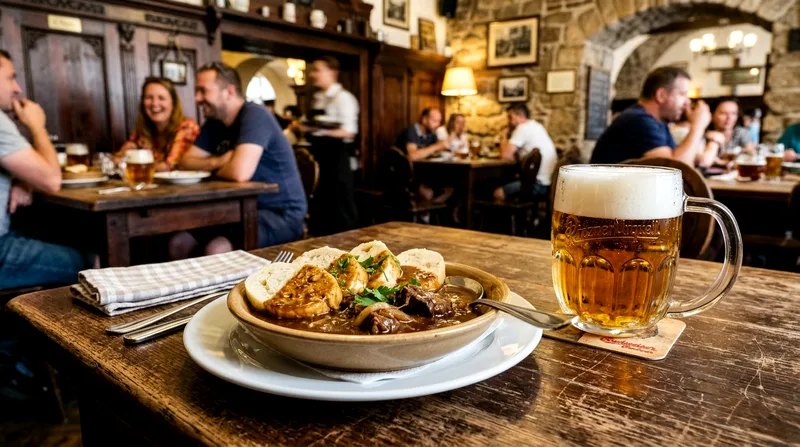
A proper Czech pub (hospoda) serving goulash, svíčková, or roast pork with dumplings and cabbage is almost always better value than a restaurant styled for tourists, and often better food too. Expect 150–250 CZK for a main at a pub versus 300–500 CZK at a restaurant with English menus and photos of the dishes outside — a fairly reliable warning sign in itself. The irony is that the pub version is frequently the more authentic plate, made the same way a Czech grandmother would make it, just served on a simpler table with less décor.
Beer, coffee and extras that add up
Coffee is where Prague has quietly become expensive — a flat white or cappuccino in a central café now costs 70–110 CZK (€3–4.50), close to Vienna café prices and well above what you'd pay in Krakow. Beer remains the better bargain by comparison, especially Czech lager styles like Pilsner Urquell, Staropramen, or regional brews, which stay under 70 CZK almost everywhere outside the main squares. Budget an extra 20–15 CZK per person per day for bottled water if you don't carry a refillable bottle — Prague tap water is safe to drink, so this is one cost you can cut to zero.
Price Ranges by Neighbourhood
Geography does more to control your bill in Prague than any coupon or app ever will. Old Town and Lesser Town (Malá Strana) carry a visible tourist markup on everything within about a five-minute walk of a major landmark, while residential districts like Vinohrady and Žižkov run 30–40% cheaper for essentially the same quality of food, sometimes better.
Moving from Old Town Square to Vinohrady or Žižkov typically cuts your meal and beer costs by roughly a third to a half.
Prague restaurant prices and beer price by neighbourhood compared
| Area | Pub main course (CZK) | Draft beer 0.5L (CZK) | Coffee (CZK) | Best for |
|---|---|---|---|---|
| Old Town Square | 350–600 | 110–170 | 90–120 | Sightseeing, not dining |
| Lesser Town (Malá Strana) | 300–550 | 100–150 | 85–110 | Views, romantic dinners |
| Wenceslas Square area | 220–400 | 60–100 | 70–95 | Mixed value, check menus |
| Vinohrady | 180–280 | 45–70 | 60–85 | Local bistros, quieter evenings |
| Žižkov | 150–250 | 35–60 | 55–75 | Cheap pubs, nightlife |
| Náplavka (riverside market area) | Street food 80–180 | 50–70 | 50–70 | Saturday market food |
Figures are typical ranges and vary by season and venue; always check the posted menu before sitting down.
Old Town and Lesser Town versus local districts
Around Old Town Square and the Charles Bridge approach in Lesser Town, expect restaurant mains at 350–600 CZK and little negotiating room — these areas know they have a captive audience of day-trippers who won't return twice. Walk into Vinohrades or Žižkov, both a 10–20 minute tram or metro ride from the center, and the same style of meal often drops to 180–280 CZK in pubs filled mostly with locals, students, and office workers on lunch break. Vinohrady in particular has a strong café and bistro scene that rivals the center on quality while charging district prices. If you're staying near Wenceslas Square, you're in an in-between zone — some genuinely good value spots sit alongside overpriced chains, so it pays to check a menu before sitting down rather than judging by location alone.
Beer price ranges: pub, bar and tourist terrace
A half-liter of draft beer breaks down roughly into three tiers: 35–55 CZK in a no-frills neighbourhood pub, 60–90 CZK in a nicer bar or brewpub aimed partly at visitors, and 110–170 CZK on a terrace facing Old Town Square or the Astronomical Clock. That's roughly a three-to-four-fold markup for the same brand of beer, purely for the view. Compare that to Munich, where beer garden prices are high everywhere regardless of location, or Budapest, where the center-versus-local gap is smaller — Prague's pricing swings by location more dramatically than most European capitals.
Smart Ways to Save on Meals and Beer
Saving money on food in Prague isn't about hunting for deals — it's about timing and location choices that are available to anyone, any day of the week.
Lunch-menu hacks on weekdays
The single best money-saving habit in Prague is eating your main meal at lunch on a weekday. Most sit-down restaurants outside the immediate tourist core offer a "polední menu" (lunch menu) from roughly 11:00 to 14:30, Monday to Friday, typically including soup, a main course, and sometimes a small dessert for 130–180 CZK total — often half what the same main costs à la carte in the evening. This isn't a tourist gimmick; it's standard practice for feeding local office workers, and visitors are welcome to use it. Look for a chalkboard or printed sheet outside the door, usually only in Czech, which is itself a decent sign the place is priced for locals rather than passersby. The catch: lunch menus usually aren't available on weekends or public holidays, so plan your bigger weekday lunches accordingly and treat dinner as the cheaper, lighter meal.
Local pubs, markets and takeaway options
A genuine Czech pub — look for one with handwritten daily specials and no multilingual photo menu — remains your most reliable source of a filling meal under 200 CZK. For a different kind of budget meal, the Náplavka farmers market along the riverbank, running on Saturday mornings, sells fresh bread, cheese, trdelník, and hot food stalls at prices generally lower than anything in Old Town, plus it's a genuinely pleasant way to spend an hour by the water. Supermarkets like Albert, Billa, or Tesco Express are everywhere and worth using for breakfast items, snacks, and bottled drinks — a loaf of bread, cheese, and fruit for a picnic lunch rarely exceeds 100 CZK total for two people. Street food stalls selling sausage (klobása) or fried cheese (smažený sýr) in a roll are another legitimate cheap option, usually 60–100 CZK, though quality varies more than at a sit-down pub.
Tourist-Trap Warning Signs Near Old Town Square
Old Town Square itself is the single worst value zone for food in the entire city, and that's true whether you compare it to the rest of Prague or to equivalent squares in Vienna, Krakow, or Budapest. The giveaway isn't always the price on the menu — it's what happens after you sit down.
Menu and street-touting red flags
Be wary of restaurants with staff actively waving menus or inviting you in from the street — a genuinely good, locally-patronized place rarely needs to do this. Menus printed in six languages with glossy food photos are usually priced for one-time visitors who won't come back to complain. Watch for a "couvert" or cover charge (sometimes listed as bread, dip, or "service" at 40–80 CZK per person) added automatically whether you touched it or not, and for beer served without a clearly marked price per 0.5L — if the menu only lists a price per 0.3L or doesn't specify volume at all, assume it's designed to confuse. Also check that the menu lists prices in Czech koruna, not euros; a few Old Town Square spots price in euros at a poor exchange rate specifically to pad the bill for visitors who don't do the math.
Where to walk for better value
You don't need to go far. Walking just beyond the square into the side streets toward Náměstí Republiky, or crossing into Lesser Town away from the direct Charles Bridge route, already improves prices noticeably. For a bigger jump in value, take the metro or tram ten minutes to Vinohrady or Žižkov — both are safe, pleasant, lived-in neighbourhoods rather than detours into somewhere rough. If your itinerary includes a day trip to Kutna Hora or Cesky Krumlov, you'll notice meal prices there are often gentler than central Prague too, which makes a useful comparison point for how inflated the square really is.
What Not to Skimp On
Saving money shouldn't mean eating badly, and a couple of places are worth spending slightly more without guilt.
Food safety, quality and traditional dishes worth paying for
Street food from a stall with low turnover — meat sitting out, no visible reheating — is the one place I'd actually spend a bit more to go sit in a proper pub instead; slow-moving fried cheese or sausage isn't worth the savings if it ruins a travel day. Traditional dishes like svíčková (beef in cream sauce), guláš, or roast duck with dumplings take real preparation time, and a pub charging noticeably less than 150 CZK for them is sometimes cutting corners with poor-quality meat or pre-made sauce. Paying an extra 50–80 CZK at a well-reviewed local pub over the cheapest option nearby is usually worth it for a dish you'll actually remember. I'd also avoid skimping on cheap "Czech beer" at bars that don't name the brewery — if a pub won't tell you whether it's pouring Pilsner Urquell, Staropramen, Kozel, or a regional brand, treat that as a quality red flag, not just a pricing one.
Eating Out Booking and Bill Checklist
A little bill literacy saves more money in Prague than any single restaurant choice.
Reservations, service charges and cover fees
Reservations aren't usually necessary for pubs or casual places, but booking ahead for a popular dinner spot in Old Town or Lesser Town on a Friday or Saturday evening is sensible, especially for groups of four or more — many well-regarded restaurants fill up by 19:00. Service charge is not automatically included in most Czech restaurants, unlike some parts of Western Europe, so check the bottom of the menu for a line about "service included" before assuming it is. A cover charge for bread or a welcome snack should be listed on the menu; if it appears only on the final bill, you're within your rights to question it or decline to pay for something you didn't order.
Checking the bill and paying in Czech koruna
Always ask for the bill (účet, prosím) and check it line by line before paying — double-charged items and added "tourist menu" translations are the most common errors reported in the city center. Pay in Czech koruna rather than euros whenever given the choice; venues that convert on the spot almost always use a worse exchange rate than your card issuer will. Tipping around 10% is standard and appreciated for good table service, rounding up the bill is fine for casual meals, but it's not obligatory the way it is in the US, and pubs where you order at the bar generally don't expect a tip at all. When you're ready to book a table for a special dinner or planning which Prague food experiences to combine with a river cruise or walking tour, compare current prices and availability before you commit — menus and hours shift seasonally even when the general price range doesn't.
Frequently asked questions
How much does a meal cost in Prague?
A pub main course typically costs 150–280 CZK (€6–11), while a central restaurant meal runs 300–550 CZK (€12–22). Weekday lunch menus bring the cost down to 130–180 CZK for soup plus a main, making lunch the cheapest sit-down meal of the day almost anywhere in the city.
How much is a beer in Prague?
A 0.5-liter draft beer costs 35–55 CZK in an ordinary neighbourhood pub, 60–90 CZK in a nicer bar, and 110–170 CZK on a terrace near Old Town Square. Pilsner Urquell and Staropramen are the most widely poured lagers and both fall within these ranges depending on location.
Is it cheaper to eat away from Old Town Square?
Yes, noticeably. Districts like Vinohrady and Žižkov, roughly 10–20 minutes by tram or metro from the center, charge 30–40% less for similar quality food and often serve better, less tourist-oriented versions of traditional dishes.
Do Prague restaurants offer weekday lunch menus?
Most restaurants outside the immediate tourist zone offer a polední menu Monday to Friday, roughly 11:00–14:30, with soup and a main course for 130–180 CZK. It's usually not available on weekends, so plan your bigger meal for a weekday lunch if you're budgeting carefully.
Should you tip in Prague restaurants?
Around 10% for table service is standard and welcomed, though not legally required. At pubs where you order and pay at the bar, tipping is optional and often skipped by locals; rounding up to the nearest round number is common practice there instead.