Prague food explained: svickova, goulash, fried cheese, trdelnik myths and street snacks, plus where to find food tours to taste traditional Czech food.
Traditional Czech Food: What to Expect
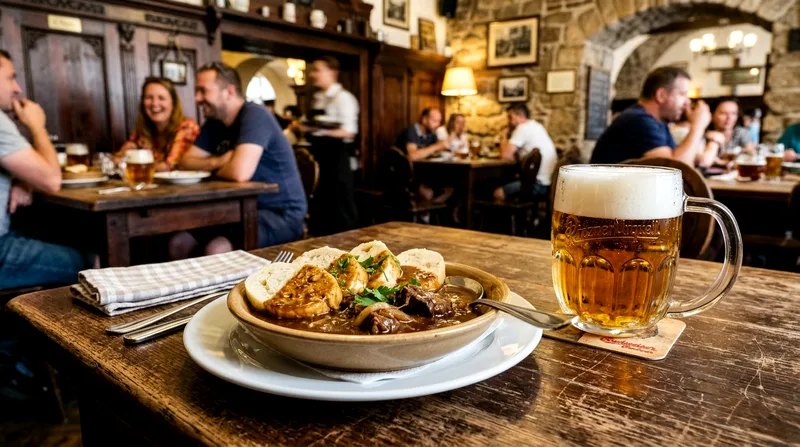
Everyone arrives in Prague asking the same question: what should I actually eat here, and how do I avoid wasting a meal on something made for tourists? The honest answer is that Prague food is heavier, saucier and slower than most people expect — closer to Bavarian or Austrian home cooking than to anything delicate. If you come wanting light salads and quick plates, you'll be disappointed. If you come ready for braised meat, dense dumplings and thick gravies, you're in the right city.
Czech cuisine developed as farm and forest food — meat stretched with grain, root vegetables, and whatever fermented or preserved well through winter. That history still shapes menus. This isn't a cuisine built around fresh herbs or quick searing; it's built around long cooking times and rich sauces that need bread or dumplings to soak them up. Compare it to Vienna's food scene, which shares some dishes (goulash, schnitzel) but leans lighter and more pastry-focused, or to Budapest, where paprika dominates in a way it doesn't in Czech kitchens. Prague food is its own thing, less seasoned with spice, more about depth from slow cooking.
Core ingredients and flavors
Pork is the default meat — in sausages, in roasts, in soups. Beef shows up in svickova and goulash, duck and goose appear seasonally, especially around winter holidays. Dumplings (knedliky) come in two main forms: bread dumplings (houskove knedliky), sliced like bread, and potato dumplings (bramborove knedliky), denser and used more with roast meats. Sauces lean sweet-sour-savory — cream, root vegetable purees, a touch of sugar or vinegar balancing a meat stock base. Caraway, marjoram and allspice turn up more than chili or fresh herbs. If you're expecting bold spice, you won't find it; the flavor here is built from reduction and time, not heat.
How a Czech meal is structured
A proper Czech lunch or dinner usually starts with soup — often a clear beef broth with liver dumplings or a creamy potato soup (bramboracka). The main course follows: meat, sauce, a starch (dumpling, potato or rice), and a small side of stewed vegetables or sauerkraut. Dessert is often skipped at lunch and saved for an afternoon coffee stop instead. Portions run large by French or Italian standards, and locals rarely eat three courses on a weekday — that's more of a weekend or restaurant-visit pattern, which is exactly the one tourists fall into.
Svickova and Other Classic Czech Mains
If you only eat one Czech dish in Prague, make it svickova. It's the dish that best explains what Czech cooking is trying to do: turn humble ingredients into something rich through patience rather than complexity. Skip it, and you've skipped the most representative meal in the country — more representative, honestly, than anything you'll find marketed directly at tourists on Old Town Square.
Svickova and goulash are the two dishes worth prioritizing if you only have time for a couple of proper Czech meals.
Traditional Czech food in Prague compared by dish
| Dish | What It Is | Typical Price Range | Best Eaten At |
|---|---|---|---|
| Svickova | Braised beef in creamy vegetable sauce with dumplings | Moderate | Sit-down pub or restaurant |
| Goulash | Beef stewed in onion gravy, served with dumplings | Low to moderate | Pub, quick lunch spot |
| Vepro knedlo zelo | Roast pork, dumplings, sauerkraut | Low | Everyday pub |
| Smazeny syr | Deep-fried breaded cheese with tartar sauce | Low | Pub, casual counter |
| Trdelnik | Cinnamon pastry tube, often ice-cream filled | Low | Street stall (treat, not a meal) |
| Chlebicky | Open-faced sandwich with varied toppings | Low | Deli counter, quick stop |
Price ranges are relative and vary by neighborhood and season; check current menu prices before you order.
Svickova and bread dumplings
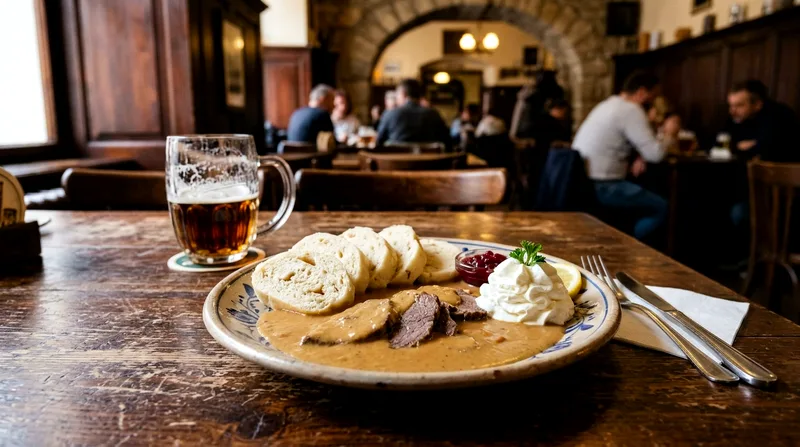
Svickova is braised beef sirloin served in a creamy vegetable sauce — carrots, parsley root, celeriac — blended smooth and finished with a touch of cream and sometimes a splash of vinegar for brightness. It's plated with slices of bread dumpling, a dollop of whipped cream, a spoon of cranberry sauce, and often a lemon wedge. That combination sounds strange on paper — sweet cream and tart cranberry next to savory beef — but it works because the sauce itself has a mild sweetness that the garnishes echo rather than fight. Texturally, it's soft throughout: tender beef, silky sauce, spongy dumpling. There's no crunch anywhere on the plate, which is typical of Czech mains generally. Order it at a sit-down pub rather than a quick-service spot; it needs a kitchen that's been reducing that sauce for hours, not minutes.
Goulash, roast duck and fried cheese
Czech goulash (gulas) is simpler and darker than its Hungarian cousin — less paprika-forward, more about slow-cooked beef in a thick onion-based gravy, usually served with dumplings rather than rice. Vepro knedlo zelo — roast pork, dumplings and sauerkraut — is the other everyday staple, found on nearly every pub menu and usually the cheapest filling meal you'll get. Roast duck or goose, often with red cabbage, shows up seasonally and is worth seeking out around autumn and winter; it's heavier and gamier than the pork dishes. Smazeny syr — fried cheese, usually Edam or Hermelin, breaded and deep-fried, served with tartar sauce and fries or potatoes — is the vegetarian pub staple and also a reliable hangover cure among locals. It's rich and a little greasy by design; don't expect it to be light. Compare these dishes to what you'd find in Krakow, where pierogi dominate instead, and it's clear Czech food relies far more on sauce-based mains than dumpling-as-the-star dishes.
Trdelnik Myths and Czech Sweet Treats
Trdelnik is everywhere in central Prague — the cinnamon-sugar-coated pastry tube baked on a spit over coals, often filled with soft-serve ice cream or Nutella for tourists. It smells great, which is exactly why stalls near Old Town Square and the Charles Bridge push it so hard. But before you treat it as the defining Czech dessert, it's worth knowing the actual history.
Is trdelnik really Czech?
Not originally. Trdelnik-style pastries trace back to regions of Hungary, Slovakia, Austria and Transylvania rather than Bohemia, and the version sold across Prague today — ice-cream-stuffed, Nutella-drizzled — is largely a tourist-era invention from the past couple of decades, not a historic Czech recipe. That doesn't make it bad; it's a pleasant snack, and there's no harm eating one. Just don't mistake it for a dish locals grew up eating at home, and don't let it be the only dessert you try. If you compare notes with someone who's spent time in Budapest, they'll likely recognize the pastry style immediately — it's closer kin to Hungarian kurtoskalacs than to anything traditionally Czech.
Better local desserts to try
For something genuinely Czech, look for kolace — small sweet buns with a well of poppy seed, fruit jam or farmer's cheese in the center — or koblihy, the Czech jam-filled doughnut, similar to a Berliner. Vdolky (yeasted flatbread-like buns, sometimes with jam or curd) and medovnik (honey layer cake) also show up in traditional bakeries and are closer to what a Czech grandmother would actually serve. Apple strudel (jablkovy strudl) is common too, likely borrowed from Austrian influence but baked into Czech bakeries for generations. These won't smell as strong on the street as trdelnik, which is partly why they get overlooked — but they're the better choice if you want to taste something with real local roots.
Prague Street Food and Quick Snacks
Not every meal in Prague needs to be a sit-down pub lunch. The city has a decent quick-food culture, especially around markets and transit hubs, and it's worth knowing which stalls are worth stopping at versus which exist purely to catch tourists walking between the Castle and Old Town.
Sausages, chlebicky and langos
Klobasa (grilled sausage) stands are a legitimate Prague street food, usually served with mustard and a slice of bread or a roll — cheap, filling, and a reasonable stand-in for lunch if you're short on time. Chlebicky are open-faced sandwiches on a thick slice of bread, topped with combinations like ham and potato salad, egg and mayo, or smoked salmon and cucumber — they're a Czech deli tradition more than street food exactly, usually bought from a counter and eaten standing up or taken to a bench. They're small, so plan on two or three per person. Langos, a deep-fried dough topped with garlic, cheese and sour cream, is actually Hungarian in origin, much like trdelnik, but it's sold widely around Prague and is genuinely good as an occasional indulgence rather than an everyday food.
Market and food hall bites
Havelske Market, just off Old Town Square, is a useful stop for fresh fruit, dried fruit, nuts and some prepared snacks, though prices there run higher than in a regular grocery store and quality on some stalls is inconsistent — check what's being sold before buying, since a few vendors cater purely to foot traffic with mediocre produce. For a better food hall experience with more variety — Czech and international — look for modern market halls in neighborhoods slightly outside the main tourist core; they tend to have better value and more interesting small-producer food than anything directly on Old Town Square.
Where to Taste Czech Dishes on Tours
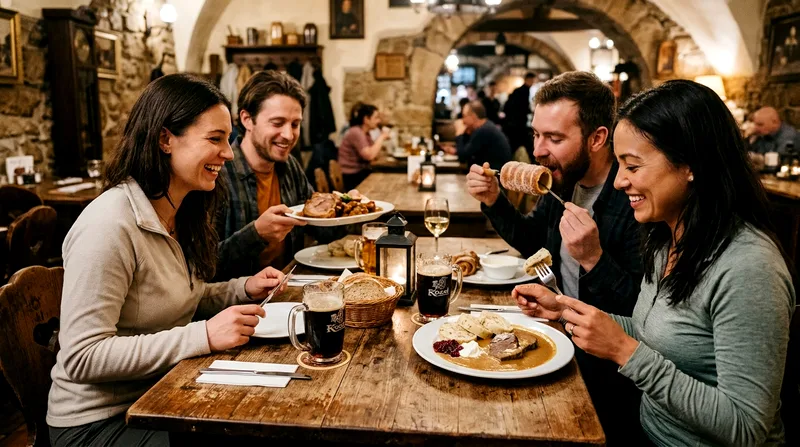
If you'd rather not gamble on restaurant choices, a guided food tour solves the two biggest problems first-time visitors run into: finding places that serve proper, slow-cooked Czech food rather than reheated tourist-menu versions, and understanding what you're eating without guessing from a translated menu. A few hours with a guide usually covers four or five tasting stops, mixing savory mains with a sweet finish and at least one beer pairing.
Food tours by dish and neighborhood
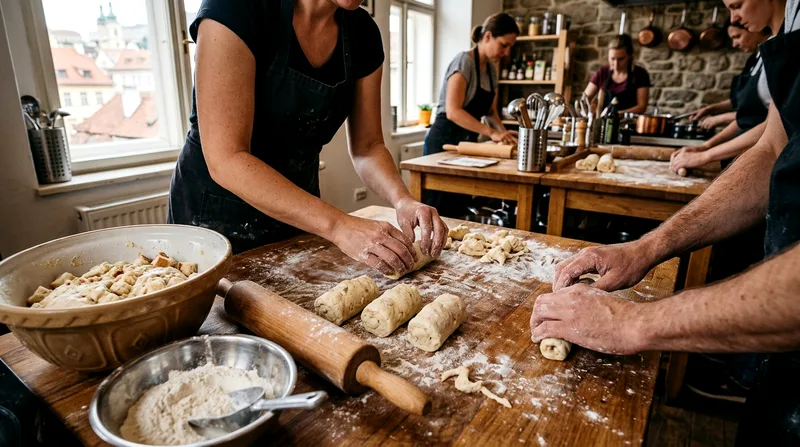
Most Prague food tours run through Old Town and the Lesser Town, stopping at small pubs and specialty shops rather than restaurants built for big tour groups. Some focus specifically on one category — a dumpling-and-sauce tasting crawl, or a beer-and-snack route — while others aim for a broader sampler covering soup, a main like goulash or svickova, and a dessert stop. If you're traveling with kids, look for tours described as family-friendly, since some evening routes are built around pub-hopping and aren't ideal with young children in tow. Compare a few options and check current prices and group sizes before you book — smaller groups (six to ten people) usually mean more time at each stop and better interaction with the guide than larger ones.
Pairing dishes with Czech beer
Czech food and Czech beer were built for each other — the carbonation and bitterness cut through rich sauces and fried batter in a way wine generally doesn't. Pilsner Urquell, the original pale lager style that originated in Plzen, pairs well with fried cheese and roast pork; darker lagers suit goulash and duck better, standing up to the heavier gravy. Many food tours build this pairing in directly, pouring a different beer style with each course rather than sticking to one. If you're comparing Prague's beer culture to Munich's, expect less focus on wheat beer and festival-style drinking here, and more on session-strength pale and dark lagers meant to be drunk slowly over a long meal.
Frequently asked questions
What is the most traditional food to eat in Prague?
Svickova is the dish most Czechs would point to first — braised beef in a creamy root-vegetable sauce with bread dumplings, cranberry sauce and whipped cream. Vepro knedlo zelo (roast pork, dumplings, sauerkraut) runs a close second as the everyday pub staple locals actually eat most often.
Is trdelnik a real Czech dessert?
Not historically — the pastry style originated in Hungary, Slovakia and nearby regions, and the ice-cream-filled version sold around Prague's squares is mostly a tourist-era creation. It's a fine snack to try once, but it's not what Czechs grew up eating, so don't rely on it as your main sweet experience.
What is svickova and how is it served?
Svickova is slow-braised beef sirloin in a smooth sauce made from carrots, celeriac and parsley root, finished with cream. It's served with sliced bread dumplings, a spoon of cranberry sauce, whipped cream and a lemon wedge — a combination of savory, sweet and tart on one plate.
What are the best street foods in Prague?
Grilled klobasa sausage with mustard and bread, chlebicky open-faced sandwiches, and langos (fried dough with garlic and cheese, though Hungarian in origin) are the most worthwhile quick options. Treat trdelnik as an occasional snack rather than a meal substitute.
Are there vegetarian Czech dishes in Prague?
Yes — smazeny syr (fried cheese) is the classic vegetarian pub dish, usually served with tartar sauce and potatoes or fries. Many pubs also offer dumpling-and-cabbage sides, mushroom soup, or cheese-and-potato dishes, though menus still lean meat-heavy overall, so vegetarians may need to ask directly about options.