Compare Prague cooking class styles, from dumpling and goulash workshops to market tours, and find the best fit for couples, families and solo travellers.
Which Cooking Class Suits You?
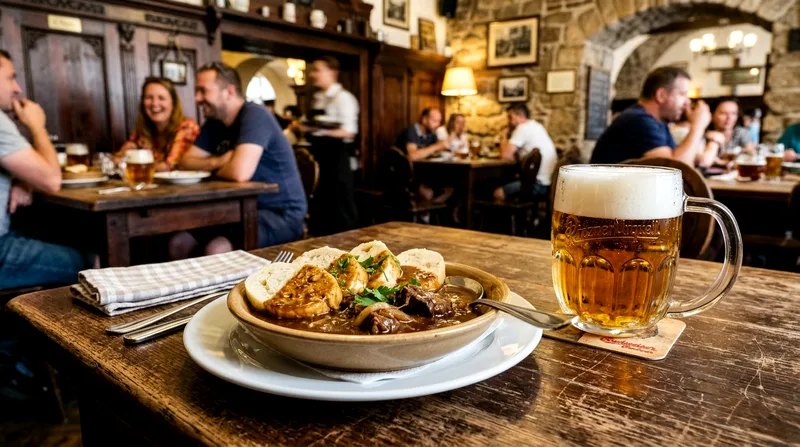
A Prague cooking class is one of the better rainy-day or free-evening bookings in the city, partly because Czech food doesn't photograph as well as it tastes and most visitors never get past tourist-menu versions of it. Done properly, a class walks you through knedlíky (bread or potato dumplings), a slow-braised goulash or svíčková, and usually a simple dessert — often trdelník or a fruit-filled pastry. The format you pick matters more than the recipe list, though, because the difference between a cramped group session and a relaxed market-and-cook combo changes the whole afternoon.
Before comparing categories, think about pace. Group classes move fast and follow a script; private classes slow down and let you ask about regional variations, like why svíčková from South Bohemia differs from a Prague version. Market combos add an hour of walking and browsing before you even touch a stove, which suits travelers who want context, not just a recipe card to take home.
Couples and Date-Night Classes
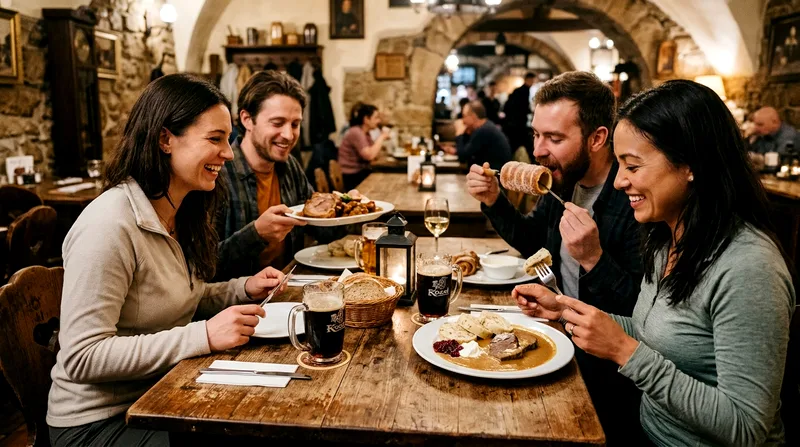
For couples, an evening group class in a studio near Old Town works well — expect six to twelve people, shared workstations, and a communal meal with Czech beer at the end. It's sociable without being awkward, and the shared task of pleating dumplings tends to break the ice faster than a standard dinner reservation. If you want something quieter, a private class for two costs more but gives you a dedicated instructor and the flexibility to linger over the meal rather than clear out for the next group. Avoid classes advertised as "romantic" that are really just a restaurant dinner with a ten-minute cooking demo tacked on — read the itinerary closely before booking.
Families with Older Kids and Solo Travelers
Families do best with classes explicitly marketed for kids or "all ages," typically capped at smaller groups and using simpler doughs that are forgiving for ten-year-old hands. Dumpling shaping is genuinely kid-friendly; stovetop goulash less so, since it involves hot oil and long simmering times, so check whether children actively cook or mostly observe that stage. Solo travelers tend to prefer group classes over private ones — not for cost reasons alone, but because the shared table at the end is often the most enjoyable part, and eating alone after a private lesson can feel flat by comparison.
Main Prague Cooking Class Types Compared
Four categories cover almost everything on offer: group classes, private classes, market-and-cook combos, and focused dumpling/goulash workshops. They overlap — a market combo might also be private — but the core trade-offs stay consistent across operators.
A dumpling-and-goulash workshop gives the most hands-on cooking per hour, while market combos trade kitchen time for context and browsing.
Prague cooking class types compared by duration, group size and best fit
| Class Type | Typical Duration | Group Size | Best For | Main Trade-off |
|---|---|---|---|---|
| Group class | 2–3 hours | 6–14 people | Couples, solo travelers, budget-conscious | Less personal attention, fixed menu |
| Private class | 2–4 hours | 1–6 people | Couples, families, dietary needs | Higher cost per person |
| Market and cooking combo | 3–5 hours | 4–10 people | Curious first-timers, food-focused travelers | Longer time commitment |
| Dumpling and goulash workshop | 2–3 hours | 4–12 people | Anyone wanting one dish done well | Narrower menu, less variety |
Durations and group sizes are typical ranges; always confirm specifics and current prices before booking.
Group vs Private Classes
Group classes run cheaper per person, usually last two to three hours, and put you alongside other travelers at shared cooking stations. The instructor demonstrates a step, then everyone replicates it, so the pace suits people who like structure and don't mind waiting their turn for oven or stovetop space. Private classes flip that: higher total cost, but the instructor adapts to your speed, answers tangents about Czech beer pairings or regional dumpling styles, and can sometimes shift timing to fit a flight or dinner reservation. If you're traveling with a food allergy that needs careful kitchen management, a private class is the safer choice — group kitchens juggling multiple diets can get chaotic fast.
Comparison Table: Class Categories
Here's how the main categories stack up before you start reading individual listings.
Dumpling and Goulash Classes: What to Expect
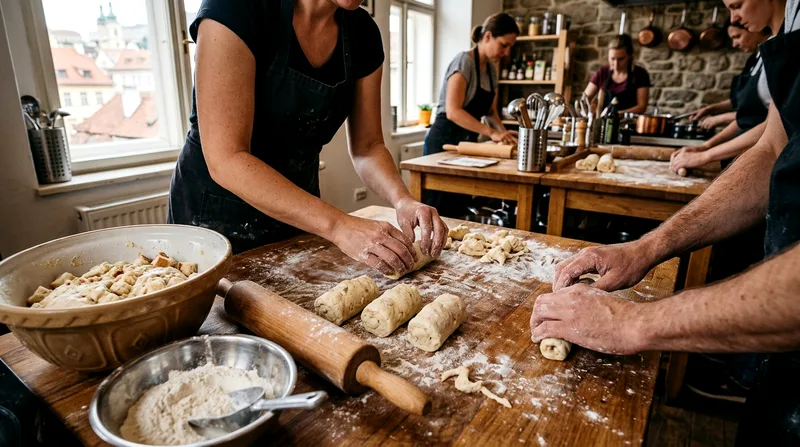
This is the most common class type in Prague, and for good reason — it teaches the two dishes every Czech household actually makes, rather than a tourist-menu fantasy of Czech cuisine. Expect two to three hours total: twenty minutes of introduction, an hour of hands-on dumpling-making and goulash prep, simmering time (often filled with a short Czech beer tasting or a chat about ingredients), then a shared meal.
Typical Menu and Skills Learned
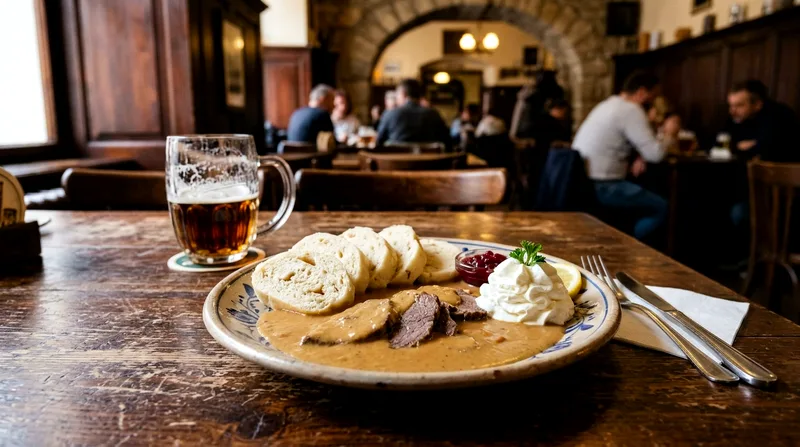
You'll typically make knedlíky from scratch — either yeasted bread dumplings or boiled potato dumplings — alongside a beef or pork goulash simmered with onions, paprika and sometimes beer. Some classes substitute svíčková, a cream sauce beef dish with sweet-tart notes from lemon and cranberry, which is arguably harder to get right and worth seeking out if it's offered. You walk away knowing how to proof and shape a bread dumpling (a skill that doesn't translate well from written recipes alone), how to build a goulash base properly, and roughly how much paprika is "enough" by Czech standards — more than most non-Czechs expect.
Dietary Needs and Vegetarian Options
Traditional Czech cooking leans heavily on meat and dairy, so vegetarian adaptation usually means swapping beef goulash for a mushroom or vegetable version, which some classes do well and others treat as an afterthought. Ask specifically how they handle it — a good instructor will have a tested vegetarian goulash, not just "we'll leave out the meat." Vegan and gluten-free options are harder to find, since dumplings rely on wheat flour and butter is common throughout; if you have a strict dietary requirement, email the host before booking rather than assuming it'll be handled on the day.
Market Tour and Cooking Class Combos
A market tour and cooking class combo adds a guided stop at a farmers market before you start cooking, usually near Old Town or along the Vltava River embankment where seasonal stalls set up several mornings a week. You'll pick up a few fresh ingredients — herbs, seasonal vegetables, sometimes fresh sausage or cheese — and the guide explains what's regionally typical versus imported.
What a Market Visit Adds
The real value isn't the ingredients themselves, which the studio usually has prepped as backup anyway — it's the context. A decent guide will point out the difference between Czech and Bavarian-style sausages, explain why dill and marjoram show up in so many dishes, and flag which market stalls are tourist-priced versus locally priced. That context makes the cooking portion land better, since you understand why certain ingredients matter rather than just following steps.
Who Should Choose a Combo
Choose a combo if this is your first full day in Prague and you want an efficient introduction to both the food culture and a neighborhood walk, ideally paired with other Old Town sightseeing afterward. Skip it if you're short on time or have already done a food-market walk elsewhere — Budapest's Central Market Hall and Munich's Viktualienmarkt cover similar ground, so there's no need to repeat the format if you've done one recently. Families with young kids may also find the extra walking tiring before the cooking even starts.
What to Check Before You Book
Listings for Prague cooking classes vary a lot in what "included" actually means, and the gap between a well-run class and a disappointing one usually comes down to details buried in the fine print.
Inclusions, Drinks and Recipes
Check whether beer or wine is included or an add-on — many Prague classes include one or two Czech beers in the price, but some charge extra per drink. Confirm you get a printed or digital recipe card to take home; it's a small thing, but without it you'll forget the dumpling-to-flour ratio within a week. Also check whether the meal you cook is your full lunch or dinner, or just a tasting portion — some shorter workshops serve smaller plates than the photos suggest.
Group Size, Cancellation and Accessibility
Smaller stated group sizes (six or fewer) usually mean more hands-on time per person; anything over fifteen starts to feel like a demonstration with occasional participation. Check cancellation policies carefully — free cancellation up to 24 or 48 hours before the class is standard on reputable listings, and anything stricter is a flag. If mobility is a concern, ask whether the kitchen has standing workstations only, since some older Prague buildings near Old Town have narrow stairs and no lift access.
When to Book Your Class
Cooking classes sell out less dramatically than big ticket attractions, but the good small-group ones do fill, especially in shoulder and peak travel months.
Peak Season and Weekend Timing
April through September and the December Christmas market period are Prague's busiest tourist months, and weekend evening classes in that window book out fastest — sometimes a week or more ahead. Compared to Vienna or Budapest, where cooking classes are less of a tourist staple, Prague's dumpling-and-goulash format is heavily promoted, so popular small-group sessions near Old Town can fill faster than you'd expect for a mid-tier city activity. Booking three to five days ahead is reasonable for weekday classes; aim for seven to ten days for weekend dates in peak season.
Best Time of Day and Trip Planning
Morning classes pair well with an afternoon of sightseeing — you eat a substantial lunch and skip the need for a big dinner, which also saves money. Evening classes work better as a standalone activity after a day of walking Prague Castle or the Charles Bridge, since you won't want to rush anywhere afterward. If you're also planning a day trip to Cesky Krumlov or Kutna Hora, schedule your cooking class on a day you're staying in the city — trying to fit both in one day usually means cutting one short.
Frequently asked questions
What dishes will I learn in a Prague cooking class?
Most classes teach knedlíky (bread or potato dumplings) alongside goulash or svíčková, Czech staples built around slow-cooked meat, dumplings and rich sauces. Many add a simple dessert, often trdelník or a fruit pastry, and some include a short Czech beer tasting during the simmering stage.
Are Prague cooking classes suitable for children?
Yes, for kids roughly eight and up, especially classes labeled as family-friendly with smaller groups and simplified dough work. Stovetop goulash involves hot pans and longer simmering, so younger kids may only watch that part rather than actively cook it.
Is a private or group cooking class better?
Group classes suit couples, solo travelers and budget-conscious bookers who like a social meal at the end; private classes suit families, strict dietary needs or anyone wanting flexible timing. Neither is objectively better — it depends on whether you value cost and atmosphere or personal attention.
Do Czech cooking classes cater for vegetarians?
Most offer a vegetarian goulash swap, usually mushroom or vegetable-based, but quality varies — ask the host in advance rather than assuming. Vegan and gluten-free options are harder to find since dumplings use wheat flour and butter appears throughout traditional recipes.
How long does a Prague cooking class last?
Standard dumpling and goulash workshops run two to three hours including the shared meal at the end. Market combo classes run longer, typically three to five hours, once you add the guided market walk before cooking begins.