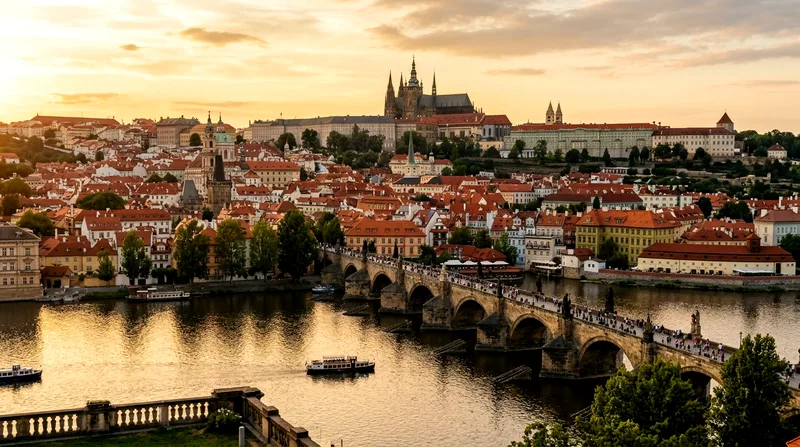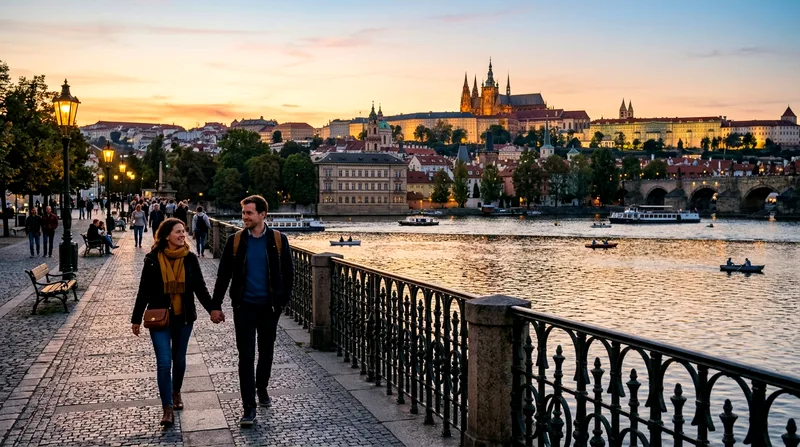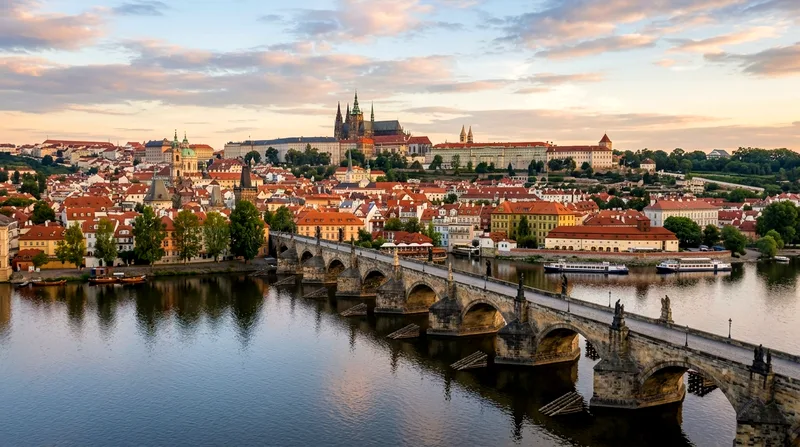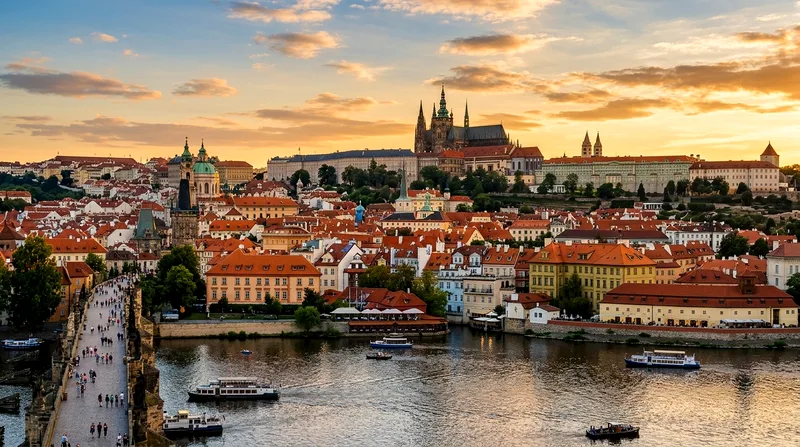
Plan 3 days in Prague with this first-timer's itinerary: Prague Castle, Old Town, the Jewish Quarter and a river cruise, plus a pre-book list for every day.
Who This 3-Day Prague Itinerary Suits
This Prague itinerary 3 days plan is built for someone standing in Old Town Square for the first time with no idea which direction to walk. It front-loads the big, non-negotiable sights — Prague Castle, Charles Bridge, the Astronomical Clock, the Jewish Quarter — and leaves room each evening for something slower. If you've already done Prague once and want niche museums or day trips to Kutna Hora or Cesky Krumlov, this isn't your itinerary; it's the one for a first pass.
It also assumes you're reasonably mobile. Prague is a city of cobblestones and one serious hill — the climb up to the Castle — and there's no way around that climb if you want to see it properly. Compare that to Vienna, which is flatter and more tram-dependent, or Budapest, where the castle side also requires a climb or funicular. Prague's center is more walkable than Budapest's spread-out layout, but less flat than Munich's old town.
I'd argue three days is the minimum for doing Prague without feeling cheated, not the ideal. Four or five days lets you add Kutna Hora's bone church as a half-day trip or slow down in the Jewish Quarter. But three days, done right, hits every major sight without the exhausting backtrack-and-rush pattern that ruins a lot of first visits.
Each day of this 3-day Prague itinerary has a distinct area, pace, and one booking to lock in ahead of time.
Prague itinerary 3 days: daily focus, pace and what to pre-book
| Day | Main Areas | Pace | Key Pre-Booking |
|---|---|---|---|
| Day 1 | Prague Castle, Lesser Town, Charles Bridge | Heaviest walking, one steep hill | Timed Castle complex ticket |
| Day 2 | Old Town Square, Josefov (Jewish Quarter) | Moderate, mostly flat | Jewish Quarter combined ticket |
| Day 3 | Vyšehrad, Wenceslas Square, Vltava River | Light morning, relaxed evening | Evening river cruise |
Typical pacing for an average walker; adjust timings for young children, mobility needs, or extra rest stops.
Pace and fitness expectations
Expect 8,000 to 12,000 steps most days, with Day 1 being the toughest because of the Castle hill and cobblestones through Lesser Town. Wear real walking shoes — the stones around Charles Bridge and Old Town are uneven and slick when wet, and I've watched more than one visitor in sandals regret it within an hour. Build in a sit-down lunch each day rather than grabbing food standing up; it's the easiest way to recover pace without losing time, and Czech restaurants don't rush you out the way some busier European cities do.
Using it as a weekend itinerary
If you're working with a Prague weekend itinerary — arriving Friday night, leaving Monday morning — compress Days 1 and 2 as written and treat Day 3 as optional extras rather than essentials. Vyšehrad and the river cruise are the first things to cut if you're short on time; Wenceslas Square can be seen in passing en route to the airport bus or train. Don't try to squeeze all three days into two by starting at 7am — most sights, including St. Vitus Cathedral, don't open until 9am, so you're not gaining as much time as you think.
Day 1: Prague Castle and Lesser Town
Start early. The Castle complex is Europe's largest ancient castle area by some measures, and it draws serious crowds by mid-morning, especially between late spring and early autumn. Getting there for opening gives you St. Vitus Cathedral with manageable light and far fewer people blocking your photos of the west facade.
Morning: Castle District and St. Vitus Cathedral
Take tram 22 from the city center up to Pražský hrad stop — it's a scenic ride and saves your legs for the walking inside. Arrive close to opening, buy or scan your pre-booked ticket, and go straight to St. Vitus Cathedral first since its line grows fastest. The cathedral's stained glass, including the Mucha window, is worth the 20 minutes it takes to walk the interior slowly. After that, the Old Royal Palace and St. George's Basilica are quicker stops, maybe 20-30 minutes combined. Golden Lane, the row of tiny historic houses, is fun but skippable if you're tired — it's the most crowded, least essential part of the complex.
Afternoon and evening: Lesser Town and Charles Bridge
Walk down from the Castle through Nerudova Street into Lesser Town (Malá Strana) — it's steep going down too, so take it slowly on the cobbles. Stop for lunch here rather than near the Castle gates, where prices run higher for mediocre food. Wander the quieter lanes around Kampa Island before crossing Charles Bridge in the late afternoon; midday the bridge is shoulder-to-shoulder, but by 5 or 6pm the crowds thin and the light is better anyway. If your legs are done, skip the walk back up any side streets and just follow the bridge straight into Old Town for dinner — you'll land there naturally for Day 2's starting point.
Day 2: Old Town and the Jewish Quarter
Day 2 is flatter and shorter on walking than Day 1, which makes it the better day for families with younger kids or anyone whose legs are still sore. It's also the day most people's itineraries get this wrong by trying to cram in a day trip — don't; save Kutna Hora or Cesky Krumlov for a return visit or a dedicated extra day.
Morning: Old Town Square and Astronomical Clock
Arrive at Old Town Square by 9am, before tour groups arrive in bulk. The Astronomical Clock's hourly show is genuinely minor — a few mechanical figures appear for under a minute — so don't plan your whole morning around it; just be nearby when it happens and move on. Climb the Old Town Hall Tower instead for a proper payoff: the view over the square's spires beats the clock show by a wide margin. From there, wander toward the Municipal House and Powder Tower before looping back.
Afternoon and evening: Josefov synagogues and dinner
The Jewish Quarter (Josefov) sits a five-minute walk north of Old Town Square. A combined ticket typically covers several synagogues — the Old-New Synagogue, Spanish Synagogue, and the Old Jewish Cemetery with its densely stacked, centuries-old gravestones — and you'll want a slow 2 to 3 hours here, not a rushed hour. This is one of the most historically dense few blocks in Central Europe, denser in some ways than the Jewish quarters in Budapest or Krakow's Kazimierz, partly because so much survived intact. Have dinner in the surrounding streets afterward; it's quieter than the main square and the food is often better value.
Day 3: Vyšehrad, New Town and River Cruise
Day 3 is the one I'd call genuinely optional in its first half but non-negotiable in its second — the river cruise. Vyšehrad is a fortress complex on a ridge south of the center, older in legend than the Castle itself, and it gets a fraction of the visitors. If you're tired from two heavy days, this is the day to sleep in.
Morning and afternoon: Vyšehrad and Wenceslas Square
Take the metro red line (C) to Vyšehrad station and walk up into the fortress — far less climbing than the Castle, and the Vltava views from the ramparts rival anything you saw on Day 1, with fewer people in the frame. Spend an hour here, including the cemetery where Dvořák and Mucha are buried. Afterward, head back toward Wenceslas Square, more a long boulevard than a traditional square, lined with shops and the National Museum at its head. It's less charming than Old Town and more about everyday Prague — useful for shopping or a pharmacy, not a highlight in its own right.
Evening: Vltava river cruise
Book a sunset or evening river cruise on the Vltava for your last night — this is the one experience on this itinerary worth reserving ahead rather than winging it. Most cruises run an hour to 90 minutes and pass beneath Charles Bridge with the Castle and St. Vitus floodlit above the water; it's a different, calmer view of everything you walked past on Day 1. Dinner cruises exist too, but a shorter sightseeing cruise after dinner is usually the better value — you're paying for the view, not a mediocre onboard meal. Check current prices and departure times when booking, since schedules shift with the season.
Getting Around and Where to Base Yourself
Prague's public transport is cheap and genuinely efficient — a 24-hour or 72-hour travel pass covers metro, trams, and buses, and for a 3-day Prague itinerary a 72-hour pass almost always pays for itself. Compare that to Vienna's similarly good network or Munich's slightly pricier one; Prague sits comfortably on the affordable end for a Western or Central European capital.
Trams, metro and walking routes
The metro has three lines (A, B, C) and is fastest for longer hops — airport to center, or center to Vyšehrad. Trams are better for scenic, shorter routes, especially tram 22 up to the Castle. Old Town, Lesser Town, and the Jewish Quarter are all walkable from each other in 10-20 minutes, so you'll use transport mainly to bridge the Castle and Vyšehrad legs. Avoid taxis hailed on the street near tourist sites — use a ride app or a taxi stand with posted rates instead, since overcharging tourists is a known issue around Old Town Square and the Castle.
Best neighbourhoods for first-time visitors
Stay in Old Town or Lesser Town if budget allows — you'll walk to most of Day 1 and Day 2's sights and only need transport for the Castle approach and Vyšehrad. Vinohrady, a short tram ride south of the center, is a quieter, more residential alternative with better-value restaurants, good for families or anyone who wants evenings away from tourist crowds. Avoid basing yourself too far out near the airport or in purely commercial districts — you'll spend trip time commuting that you could spend walking Prague's center, which is compact compared to Budapest's.
Pre-Book List for Each Day
Booking ahead in Prague isn't about avoiding sellouts most of the year — it's about avoiding the ticket queue that eats 30-45 minutes you don't have on a tight 3-day Prague itinerary. The exceptions are peak season weekends and anything tied to a specific time slot.
Tickets and timed entries to reserve
Reserve a timed entry for the Prague Castle complex (covering St. Vitus Cathedral, Old Royal Palace, and St. George's Basilica) before Day 1 — walk-up lines in summer can run long, and the ticket office queue is separate from the security queue. Also pre-book the Jewish Quarter combined ticket for Day 2; it's sold with a entry window and the Old-New Synagogue in particular limits numbers inside at a time. Neither requires locking in an exact hour months out — a few days ahead is usually enough outside peak summer weekends, but check official sites for current entry rules before you travel.
Optional tours and experiences
The Vltava river cruise on Day 3 is the one experience genuinely worth reserving ahead, since evening departures are limited and sell out on nice-weather nights. Beyond that, consider booking a guided walking tour for Day 1 or Day 2 if you want historical context rather than just sights — a 2 to 3 hour guided tour of the Castle or Old Town adds depth that's easy to miss reading signage. Skip the add-on combo tickets that bundle a dozen minor attractions; most first-timers never use half of them, and you'll spend more time deciding what's included than it's worth. Compare current cruise and tour prices before you book, since options and timing shift seasonally.
Frequently asked questions
Is 3 days enough for Prague?
Yes, for a first visit. Three days covers Prague Castle, Charles Bridge, Old Town, the Jewish Quarter, and Vyšehrad without constant rushing, as long as you resist adding a day trip like Kutna Hora on top. If you want to slow down or add a day trip to Cesky Krumlov, aim for four or five days instead.
What is the best order to see Prague's sights in 3 days?
Start with Prague Castle and Lesser Town on Day 1 while your legs are freshest, since it's the most physically demanding day. Move to flatter Old Town and the Jewish Quarter on Day 2. Finish with Vyšehrad, Wenceslas Square, and an evening river cruise on Day 3 — a lighter day that ends on a high note rather than more walking.
Which area is best to stay in for a first visit to Prague?
Old Town or Lesser Town puts you within walking distance of most Day 1 and Day 2 sights. Vinohrady is a solid, quieter alternative a short tram ride from the center, often with better-value food. Avoid staying near the airport or in purely business districts — you'll lose time commuting into the center every day.
Do I need to book Prague Castle tickets in advance?
It's strongly recommended, especially from late spring through early autumn. A timed entry ticket for the Castle complex, covering St. Vitus Cathedral and the Old Royal Palace, saves you a ticket-office queue that can run 30 minutes or more on busy mornings. Check the official Prague Castle site for current ticket types before your trip.
Can I do this itinerary as a long weekend?
Yes — this works as a Prague weekend itinerary if you arrive Friday evening and leave Monday morning. Keep Days 1 and 2 as written, since Castle and Old Town/Jewish Quarter are essential, and treat Day 3's Vyšehrad and river cruise as flexible extras you can trim if time runs short.