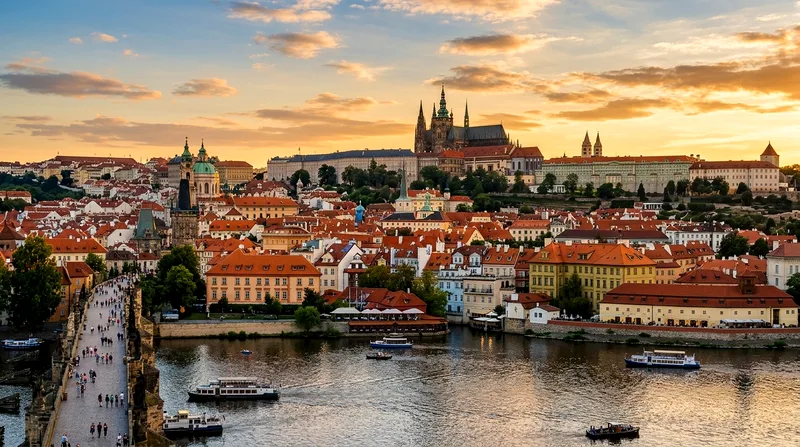
Plan 4 days in Prague with a day trip to Kutna Hora or Karlstejn: a day-by-day route covering castle, Old Town, food and beer, plus where to stay.
A 4-Day Prague Itinerary That Actually Works
This Prague itinerary 4 days plan is built for first-timers who want the big landmarks — Prague Castle, Charles Bridge, Old Town Square — but also want to leave the city once, properly, rather than just skimming the center. It suits couples, solo travelers who like a loose structure, families with kids old enough to handle a few hills and cobblestones, and senior travelers who'd rather walk at a human pace than race between ten sights a day.
The shape is simple. Day one covers the castle district and Mala Strana. Day two is Old Town, the Jewish Quarter and New Town. Day three leaves the city entirely for Kutna Hora or Karlstejn Castle. Day four closes things out with Vysehrad, a slower afternoon and a proper Czech food and beer evening. Each day has one thing worth booking ahead — a timed castle slot, a guided ossuary visit, a food and beer tasting — and a fallback if your legs or the weather give out.
If four days feels like a stretch, there's a tighter three-day version of this route for travelers with less time; the logic is the same, just without the day trip.
Day 1: Castle District and Mala Strana
Start early — Prague Castle complex opens its grounds around 6am, but the interiors (St. Vitus Cathedral, the Old Royal Palace, St. George's Basilica) open later, typically from 9am. Getting there by 9am, ahead of tour buses, saves you from shuffling through St. Vitus in a crowd three people deep.
Morning and Afternoon at Prague Castle
Take the tram up (lines 22 or 23 stop near the castle gate) rather than walking the steep approach from Malostranská metro station — it's a genuine hill, and senior travelers or anyone with knee trouble will thank themselves. Buy the castle's "Circuit B" combined ticket, which covers the cathedral, palace, basilica and Golden Lane; budget two and a half to three hours inside. Golden Lane's tiny houses are worth fifteen minutes but not more — they're atmospheric, not substantial. The real draw is St. Vitus Cathedral's nave and the view from the south tower if you don't mind 287 spiral steps.
Watch out for the changing of the guard at noon outside the main gate — it's short and genuinely crowded, so decide whether it's worth fighting for a sightline or skipping entirely. I'd skip it; the hourly changes on the quarter-hour are smaller and easier to actually see.
Evening in Mala Strana
Walk down through the castle gardens (open seasonally, roughly April to October) into Mala Strana, Prague's Baroque district of palaces-turned-embassies and steep lanes. Wallenstein Garden is free and far less crowded than anything near the castle gate — worth thirty minutes if it's open. For dinner, Mala Strana has more tourist-trap restaurants per square meter than almost anywhere else in the city, so avoid anywhere with a multilingual laminated menu and a tout outside; walk one street back from the main routes instead.
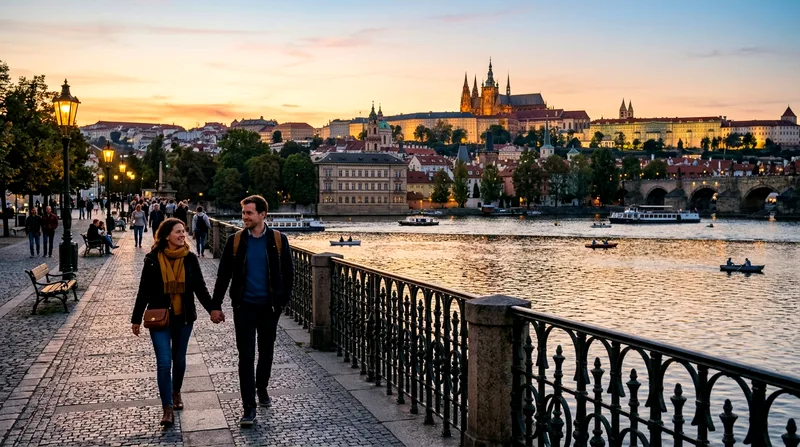
This is also the evening to book a sunset river cruise if you want one — an hour on the Vltava with Charles Bridge and the castle lit up is a reasonable way to end day one, and it's far better value as a sunset experience than as a dinner cruise. Compare current boat tours and prices before you book, since departure times shift with sunset through the year.
Day 2: Old Town, Jewish Quarter, New Town
Day two moves across the river and stays flat — a relief after day one's hills. This is the most crowded day of the four, so pace yourself and expect to share pavement space, especially around the Astronomical Clock.
Old Town Square and Charles Bridge
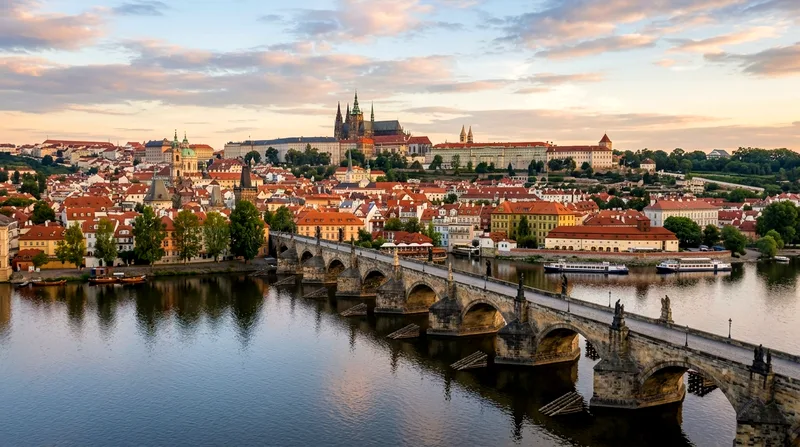
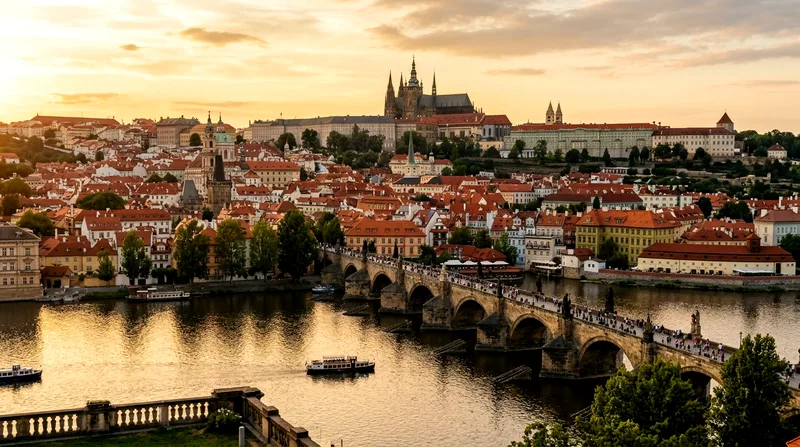
Cross Charles Bridge early, ideally before 9am, if you want photos without a wall of selfie sticks — by mid-morning it's shoulder to shoulder. Old Town Square follows; the Astronomical Clock's hourly show is genuinely minor (a brief figure parade, no sound worth chasing), so don't plan your whole morning around catching it on the hour. Spend longer in the Jewish Quarter instead — the Pinkas Synagogue and the Old Jewish Cemetery, with its layered, crowded headstones, make for a more affecting hour than the clock does. A combined ticket covers most of the Jewish Museum sites; book this one ahead in high season, as timed entry slots do sell out by early afternoon.
Lunch around Old Town is pricier and generally worse value than a few streets toward New Town — the markup near the square is real.
Evening in New Town
Walk down to Wenceslas Square and New Town in the afternoon — less postcard-pretty, more lived-in, with the National Museum anchoring one end. It's a good stretch for shopping or simply resetting after a dense morning. In the evening, this is a solid base for trying a traditional Czech dinner — goulash, svíčková, roast pork with dumplings — away from the Old Town Square premium. Keep this evening lower-key; you'll want energy for the day trip tomorrow.
Day 3: Kutna Hora or Karlstejn Day Trip
This is the day that separates a generic city break from an actual Prague itinerary 4 days plan worth following. Pick one destination, not both — they're in different directions and trying to combine them turns a relaxed day into a transit slog.
Each day of this Prague itinerary has a distinct pace, and the day trip choice between Kutna Hora and Karlstejn depends on whether you want strange history or a storybook castle.
Prague itinerary 4 days: daily themes, pace and day trip comparison
| Day/Option | Area | Pace | Best For |
|---|---|---|---|
| Day 1 – Castle District | Prague Castle, Mala Strana | Moderate, hilly | First full day, big landmark |
| Day 2 – Old Town & Jewish Quarter | Old Town, New Town | Busy, flat | Crowds-tolerant sightseeing |
| Kutna Hora (day trip) | 45–60 min train from Prague | Moderate | Sedlec Ossuary, Gothic cathedral |
| Karlstejn (day trip) | 30 min train + uphill walk | Moderate-high effort | Castle silhouette, guided tour fans |
| Day 4 – Vysehrad | Vysehrad, city-wide evening | Relaxed | Quiet views, food and beer evening |
Timings are approximate and vary by train schedule and season; check current Czech Railways times before you travel.
Kutna Hora Option
Kutna Hora is roughly 45–60 minutes from Prague by direct Czech Railways train from Hlavní nádraží (the main station), or about an hour by organized coach tour. The draw is twofold: the Sedlec Ossuary, a small chapel decorated with the bones of an estimated 40,000 people, arranged into chandeliers and garlands by a 19th-century woodcarver — unsettling and completely unlike anything in Prague — and St. Barbara's Cathedral, a Gothic landmark funded by the town's medieval silver mining wealth. Plan four to five hours round trip including train time. Book Sedlec Ossuary tickets with a timed slot in advance during summer; it's small inside and entry is capped.
Kutna Hora suits travelers who want something genuinely different from Prague's Baroque-and-Gothic city center — a quieter, stranger half-day. It's also the better choice if you're relying entirely on trains, since the connection is direct and well sign-posted, unlike the slightly fiddlier regional service to Karlstejn's station.
Karlstejn Option
Karlstejn Castle sits about 30 minutes from Prague by train, followed by a 20–25 minute uphill walk from the station to the castle gate — steeper than it looks on a map, and not ideal in summer heat or for anyone with mobility issues. The castle itself, built by Charles IV in the 14th century to house the Crown Jewels and holy relics, is visually the more dramatic building — a storybook silhouette on a wooded hill — but the interior is only accessible by guided tour in Czech or English, with limited English slots per day, so book ahead rather than hoping to walk in.
Karlstejn suits travelers who want a classic castle silhouette and don't mind a short hike; families with children who enjoy climbing to a "real castle" often prefer it to the ossuary's stranger atmosphere. If you're choosing between the two and have sturdy footwear and more interest in architecture than morbid history, go Karlstejn; if you want the one sight in the region people talk about afterward, go Kutna Hora.
Day 4: Vysehrad, Food and Beer Evening
Day four is deliberately lighter — you've earned it after a day trip — and ends the stay on food and beer rather than another monument.
Vysehrad and a Relaxed Afternoon
Vysehrad, an old fortress complex on a bluff above the Vltava, gets a fraction of Prague Castle's visitors despite comparable river views and genuinely peaceful grounds. Spend two to three hours: the Basilica of St. Peter and St. Paul, the walled cemetery (Antonín Dvořák and several other notable Czechs are buried here), and the ramparts looking back toward the castle you climbed on day one. There's no timed ticket needed for the grounds — it's one of the few major Prague sights you can just turn up to. Take the metro (line C to Vyšehrad) rather than walking from the center; it's a longer, less scenic walk than it looks on paper.
If your legs are genuinely done, swap this for a slower morning and a museum instead — the National Gallery's modern art collection at the Trade Fair Palace is an underrated, much less crowded alternative.
Czech Food and Beer Evening
Book a Czech food and beer evening for your last night — a guided tasting covering a few Czech beer styles alongside dishes like goulash, fried cheese or pork knee works better than picking a random pub, because menus heavy on photos and six languages are usually aimed squarely at tourists and priced accordingly. A good tasting format also solves the single biggest beginner mistake: ordering the same lager everywhere when Czech brewing actually has real variety, from pale lagers to dark, malty tmavé beers. Compare current food and beer evening options and prices before booking, since formats and group sizes vary by operator.
Getting Around and Where to Stay
Prague's public transport is cheap, frequent and genuinely easy to use once you understand the ticket system — which trips many first-timers up.
Trams, Metro and Day Trip Transport
Buy transport tickets from machines at metro stations or via the official app before boarding — there are no conductors selling tickets onboard, and inspectors do fine riders without a validated ticket. A 24-hour or 72-hour travel pass covers metro, trams and buses and is usually the better deal if you're moving around daily, which you will be on this itinerary. For the day trip, Czech Railways (České dráhy) runs the trains to both Kutna Hora and Karlstejn from Prague's main station, Hlavní nádraží; buy tickets at the station kiosk or via the IDOS/ČD app rather than scrambling at the platform. Trains to Karlstejn can get crowded with day-trippers on weekends — an early departure, before 9am, avoids the worst of it.
Best Areas to Base Yourself
Old Town and New Town are the most convenient bases — everything on days one, two and four is walkable or a short tram ride away — but they're also the loudest and most expensive, especially near Old Town Square. Mala Strana is quieter and atmospheric but hillier, which matters more than people expect after a full day of walking. Vinohrady, a 10–15 minute tram ride from the center, is the better choice for families or anyone staying longer than a weekend: residential, full of decent local restaurants, and noticeably cheaper than the center. Avoid booking anywhere right on Wenceslas Square if you're a light sleeper — it's one of the noisier strips in the city at night.
Optional Bookable Experiences
Beyond the one experience per day already built into this route, a few others are worth considering if you have flexibility or want to swap something out. A classical concert in a church or the Municipal House suits an evening when your feet need a rest more than your eyes need another sight — Mozart and Dvořák programs aimed at tourists are common and generally decent, if not groundbreaking. A guided walking tour of the Jewish Quarter adds context the self-guided combined ticket doesn't, particularly useful for understanding Prague's role before and during the Second World War. For families, a river cruise with a short commentary works better than a long walking tour for restless kids.
Skip the "ghost and legends" walking tours that cluster around Old Town in the evening — they're widely available, inconsistent in quality, and cover ground you'll already walk past naturally. Compare current tour and ticket options before booking any of these, since availability and formats shift with the season.
Frequently asked questions
Is 4 days enough for Prague?
Yes, for most first-time visitors. Four days covers Prague Castle, Old Town, the Jewish Quarter, Vysehrad and one full day trip without rushing. If you want multiple day trips or deeper museum time, five or six days is more comfortable, but four is the minimum for seeing the city properly rather than skimming it.
Should I visit Kutna Hora or Karlstejn on a day trip?
Choose Kutna Hora for the Sedlec Ossuary and a direct train connection with minimal walking. Choose Karlstejn for a dramatic castle exterior and a short uphill hike, but book the guided interior tour ahead since English slots are limited. Don't try to combine both in one day — they're in opposite directions from Prague.
How do I get from Prague to Kutna Hora?
Take a direct Czech Railways train from Prague's main station, Hlavní nádraží, a journey of roughly 45–60 minutes. Buy tickets at the station or via the ČD app rather than at the platform. From Kutna Hora's station, it's a short local bus or taxi ride to the Sedlec Ossuary and town center.
Which part of Prague is best to stay in for 4 days?
Old Town or New Town for maximum walkability to this itinerary's sights, accepting higher noise and prices. Mala Strana for atmosphere and castle proximity, with more hills. Vinohrady for a quieter, cheaper, residential base a short tram ride from everything.
Can I do this Prague itinerary without a car?
Yes — it's designed around trams, metro and direct trains, and a car adds no value. Prague's center is largely pedestrianized, parking is limited and expensive, and both Kutna Hora and Karlstejn are reachable by Czech Railways trains directly from the main station.