Compare Prague tickets for public transport, from short-trip fares to the 24 hour pass. See senior and child discounts, buy in the app and avoid fines.
How Prague Public Transport Tickets Work
Prague runs one of the more sensible transit systems in Central Europe, and understanding it takes about five minutes. Every bus, tram and metro line in the city falls under Prague Integrated Transport — Pražská integrovaná doprava, usually shortened to PID — and the whole network is operated day to day by Dopravní podnik hl. m. Prahy (DPP), the municipal transport company. One ticket, bought once, covers all three modes for a set period of time. There's no separate metro fare and tram fare to juggle, which puts Prague ahead of cities like Budapest, where you'll sometimes deal with different validators for different lines, or Vienna, where the base system is similar but the zone logic trips up visitors.
The core idea is time-based validity, not distance. You're not paying per stop or per kilometre — you're buying a block of time during which you can ride, transfer, and ride again as much as you like. That's a relief if you're staying somewhere like Vinohrady or Žižkov and connecting through the center via metro and tram in one outing. It also means a short-trip ticket for a quick hop costs noticeably less than a 24 hour ticket, so matching duration to your actual day matters more than it sounds.
One Ticket for Metro, Tram and Bus
A single valid ticket works across the Prague Metro's three lines (A, B and C), the extensive tram network, and city buses, including routes that run out to the airport-adjacent neighborhoods. There's no need to buy a separate pass for trams versus metro, which is a common point of confusion for visitors coming from systems with split fares. Funiculars — notably the one up Petřín Hill — are the main exception worth flagging; they're part of PID but some funicular services have their own fare conditions, so check before assuming your standard ticket covers it.
Zones and Time-Based Validity
Prague's fare zones (P, 0, and outer numbered zones) matter mainly if you're heading well beyond the city center — to the airport, or out toward suburban edges. Nearly everything a typical visitor does, from Prague Castle to Vyšehrad to Žižkov's pubs, sits inside zone P, the core zone covered by all standard tickets. Validity windows are straightforward: a short-trip ticket lasts around 30 minutes, a basic single ticket around 90 minutes, and multi-day passes run for a continuous 24, 72-hour, or similar block from first validation. The clock doesn't pause overnight — a 24 hour ticket validated at 8pm expires at 8pm the next day.
What Your Ticket Covers and Excludes
A standard PID ticket is broad but not limitless, and the exclusions are exactly where visitors get caught out — usually not through dishonesty, just unfamiliarity with the rules.
Included Modes and Areas
Within zone P, your ticket covers metro, tram and bus travel without restriction on the number of transfers during its validity window. You can ride the metro from Náměstí Míru, switch to a tram at Muzeum, and hop a bus toward the zoo, all on one validated ticket, as long as you're still inside the time limit. This is where Prague compares well to Krakow, which relies more heavily on separate tram tickets without the same unified time-based logic, or Dresden, where regional rail integration adds complexity tourists rarely need to untangle in Prague.
Airport, Luggage and Other Exclusions
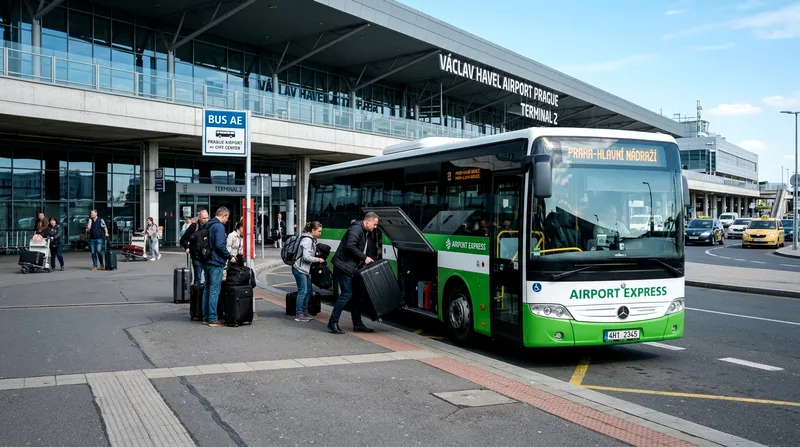
Václav Havel Airport Prague isn't served by metro — you reach the center by bus (lines such as 119 or 100 connecting to metro stations), and that bus ride is covered by a standard PID ticket bought for the appropriate zones, not a special "airport ticket." Don't pay extra for airport-branded transfers sold near arrivals when a normal ticket does the job. Large luggage can also require its own small supplementary ticket on some services — a rule that surprises people arriving with suitcases rather than day bags, so check current luggage fare rules before you travel. Regional trains and buses heading out to day-trip towns like Kutna Hora or Cesky Krumlov are not covered by city PID tickets at all; those require separate regional or national rail tickets.
Ticket Types Compared
Prague keeps the lineup fairly short, which is a mercy compared to some European systems with a dozen fare categories. The real decision is duration versus how much ground you're covering.
Choosing a Prague transport ticket comes down to matching its time window to how many rides you'll realistically take in a day.
Prague public transport ticket types compared by duration and traveler
| Ticket Type | Approx. Validity | Best For | Covers Transfers |
|---|---|---|---|
| Short-trip ticket | ~30 minutes | One quick, direct hop | Limited |
| Standard single ticket | ~90 minutes | A day with a few rides | Yes |
| 24 hour ticket | 24 hours from validation | Full sightseeing day, 4+ rides | Yes |
| 72 hour ticket | 72 hours from validation | Long weekend, castle + Old Town + extras | Yes |
| Lítačka annual pass | Full year | Residents, long-term stays | Yes |
Validity windows are stable and published by DPP, but always confirm current prices and exact minute counts on the official PID or DPP site before buying.
Short-Trip and Single-Ride Tickets
The short-trip ticket (roughly 30 minutes) suits a quick, direct hop — say, two or three tram stops to a restaurant, with no transfers planned. It's the cheapest option per ride but punishing if you underestimate your journey time and get caught without a valid ticket mid-transfer. The standard ticket (around 90 minutes) is the more practical default for most sightseeing days with some back-and-forth, since it comfortably covers a metro ride plus a tram transfer across town. If you're only taking two or three rides total in a day, buying individual tickets as you go is often cheaper than a day pass — do the math before defaulting to the biggest option.
24 Hour and Multi-Day Passes
The 24 hour ticket pays off once you're taking four or more rides in a day — a common pattern if you're bouncing between Prague Castle, the Old Town, and an evening concert. A 72-hour (3-day) pass extends that logic across a typical long weekend, and it's the better buy for most first-time visitors doing the castle, Old Town, and a river cruise or two over a few days. Compared to Vienna's 24/48/72-hour Wiener Linien passes or Munich's similar system, Prague's structure is close enough that frequent European travelers will find it familiar almost immediately.
Senior and Child Discounts
Prague's discount structure rewards families and older travelers more generously than many European peers, which is worth factoring in if you're traveling with a mixed-age group.
Age Limits and Free Travel Rules
Young children travel free up to a set age threshold (historically around 6, with reduced fares for a further bracket up to roughly 15), and seniors above a certain age — generally 65 and up — also travel free or at a reduced rate on PID services, though the exact cutoffs and conditions are set by DPP and worth confirming before you rely on them. This is noticeably more generous than Budapest's system, where discounts exist but free senior travel isn't universal in the same way. Don't assume reciprocity with other cities, though — a senior discount card from Munich or Dresden means nothing to a Prague ticket inspector.
Proof of Age and Documents to Carry
Carry a passport or ID card for anyone claiming a discounted or free fare — inspectors can and do ask, and "I forgot it at the hotel" doesn't exempt you from a fine. For children who look borderline on age, a passport showing date of birth settles it instantly. If you're traveling with a senior family member, keep their ID accessible, not buried in a day bag, since inspections on the metro happen quickly and without much warning.
Where and How to Buy Tickets
Buying correctly is less about finding a kiosk and more about picking the method that matches your trip length and how much you want to think about validation.
Buying in the Official App
The PID Lítačka app (the official Pražská integrovaná doprava app) is the simplest route for most visitors. Download it, set up payment, and buy single, 24-hour, or multi-day tickets directly on your phone — the ticket activates and timestamps itself, removing the validation step entirely for e-tickets of this kind. This matters because it eliminates the single most common tourist mistake: buying a paper ticket and forgetting to stamp it. The app also shows live departures, which beats toggling between a separate transit app and a ticket app the way you might in Krakow or Budapest.
Machines, Kiosks and Contactless Options
Yellow ticket machines sit at most metro stations, tram stops, and inside Prague Main Railway Station, accepting coins and cards; newsagent kiosks (Trafika) and some hotel desks sell paper tickets too. A growing number of Prague trams and metro gates also accept direct contactless bank card payment — tap your card at the reader and it functions as a ticket for that single ride, charged at standard rates, no app required. For a short visit where you'll take only a handful of rides, contactless tap-in may be the least fussy option of all, since there's nothing to buy in advance and nothing to validate separately.
Avoiding Inspector Fines
Fare inspection in Prague is active and plainclothes — inspectors flash a badge, not a uniform, and they check paper and app tickets on metro platforms, inside trams, and occasionally right as doors close. This surprises visitors used to more visible enforcement elsewhere, and it's the single biggest practical risk in this whole system.
Validation Rules and Common Mistakes
Paper and kiosk-bought tickets must be validated the moment you start your journey — insert them into the small yellow validation machines at metro station entrances or just inside tram and bus doors. The ticket isn't valid from the moment of purchase; it's valid from the moment it's stamped. The most common mistake isn't skipping this on purpose — it's buying a ticket in advance, say at the airport or train station, and then forgetting to stamp it hours later when actually boarding. App-purchased e-tickets through Lítačka don't need this step since they self-activate, which is yet another reason the app is the lower-risk choice for anyone nervous about the rules.
What to Do If You Are Stopped
If an inspector asks for your ticket, show it immediately along with ID if a discount applies. A genuinely invalid or missing ticket results in an on-the-spot fine, payable either immediately in cash/card or via a follow-up process if you dispute it — this is not a fee you can charm your way out of, and arguing rarely helps. Keep your phone's ticket screen easy to pull up without hunting through apps, and keep paper tickets in an accessible pocket, not at the bottom of a backpack. Confirm current fine amounts on the official DPP site rather than relying on word of mouth, since the figure is adjusted periodically.
Frequently asked questions
Which public transport ticket is best for tourists in Prague?
For a single day of heavy sightseeing with four or more rides, the 24 hour ticket is usually the best value. For a long weekend covering the castle, Old Town, and a day trip within the city, the 72-hour pass tends to work out cheaper per ride. If you're only taking two or three short rides a day, individual standard tickets bought in the Lítačka app often cost less overall.
Do I need to validate my ticket in Prague?
Yes, if it's a paper or kiosk ticket — stamp it in a yellow validation machine the moment you board or enter the metro platform. E-tickets bought through the official PID Lítačka app validate themselves automatically at the time of purchase or scheduled activation, so there's no separate stamping step for those.
Can I buy Prague public transport tickets on my phone?
Yes. The PID Lítačka app is the official channel, letting you buy short-trip, standard, 24-hour, and multi-day tickets with a card on file, with the ticket self-activating. Many trams and metro gates also accept direct contactless bank card tap-in as an alternative, without needing the app at all.
Do children and seniors get free or discounted public transport in Prague?
Yes — young children below a set age threshold travel free, with reduced fares for an older child bracket, and seniors above a certain age generally qualify for free or discounted travel too. Exact age cutoffs are set by DPP, so confirm current rules on the official PID or DPP website and carry ID to prove eligibility.
Does a Prague public transport ticket work on the metro, trams and buses?
Yes, one ticket covers all three modes within its zone and time validity, which is the main advantage of Prague's integrated PID system. The main exceptions are certain funicular services and regional trains or buses heading outside the city, like routes to Kutna Hora or Cesky Krumlov, which need separate tickets.