Prague vs Budapest compared on sights, costs, tours and atmosphere. See which city suits your travel style and how to combine both in one trip.
Prague vs Budapest at a Glance
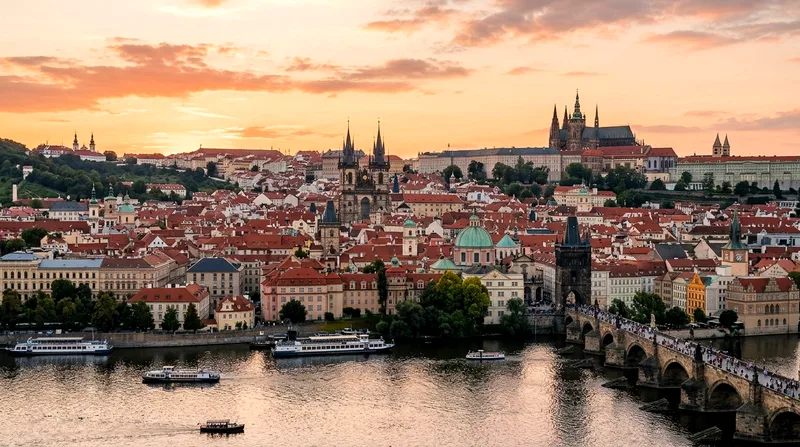
Prague and Budapest get lumped together constantly — both are former Habsburg-adjacent capitals, both sit on rivers, both became backpacker and stag-party staples after 1989, and both now draw serious architecture crowds. But the comparison breaks down fast once you're actually standing in either place. Prague is compact, hilly, and almost theatrically preserved — Old Town Square and the lanes around it feel like a film set that happens to have real pharmacies and real residents. Budapest is bigger, flatter in parts, split dramatically by the Danube into Buda and Pest, and it carries a grittier, more lived-in energy alongside its grand boulevards.
If you're trying to decide prague or budapest for a first European city break, the honest answer is that it depends on what kind of two days you want. Prague rewards walking and looking up — spires, bridges, castle views. Budapest rewards a slower pace: a thermal bath afternoon, a ruin bar evening, a longer metro ride to see something worth the trip. Neither city is a mistake. The mistake is assuming they're interchangeable and picking based on flight price alone.
Prague suits dense, walkable sightseeing on a short timeline, while Budapest suits a slower pace with more space and lower costs.
Prague vs Budapest compared across cost, time, sights and travel style
| Factor | Prague | Budapest |
|---|---|---|
| Typical daily budget | Moderate | Lower |
| Walkability of center | Very high, compact | Good, but spread across river |
| Minimum days to see highlights | 2-3 | 2-3 |
| Standout landmark | Charles Bridge, Prague Castle | Hungarian Parliament Building, Buda Castle |
| Signature experience | Old Town wandering | Thermal bathing at Széchenyi |
| Nightlife style | Pub crawls, beer halls | Ruin bars, later-night scene |
| Best for | First-timers, couples, architecture fans | Budget travelers, bath lovers, longer stays |
Relative comparison only — actual costs vary by season and travel style, so check current prices when booking tours or trains.
Quick comparison table
See the comparison table below for a side-by-side on size, cost, sights and best use case. It's the fastest way to settle the debate before you read further, though the nuance below the table matters for your specific trip.
Size and layout
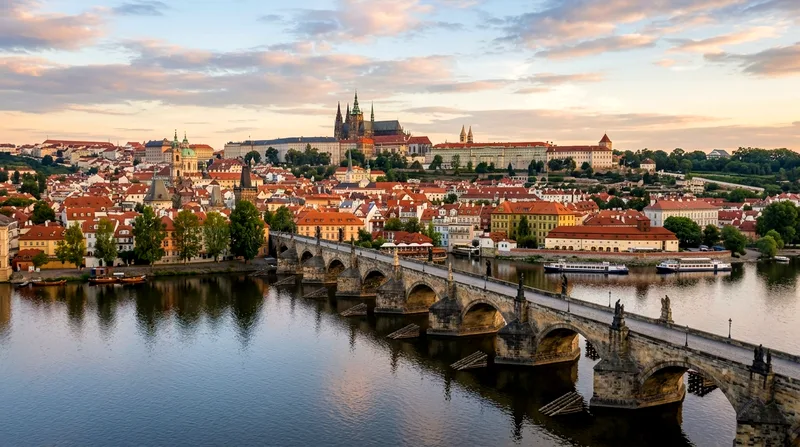
Prague's historic core is walkable in a way few European capitals manage — you can cross from Old Town Square to Prague Castle in under 30 minutes on foot, crossing Charles Bridge along the way. The whole tourist-relevant center fits inside roughly 2 square miles. Budapest is roughly twice the physical footprint for its central districts, and the river split means you're genuinely moving between two different cities in character: Buda is hilly, leafy, residential-feeling, with Buda Castle on its hill; Pest is flat, grid-like, and holds the Hungarian Parliament Building, the ruin bars, and most of the restaurants. You'll use the metro or tram in Budapest far more than you'll need public transport in Prague.
Sights and Atmosphere Compared
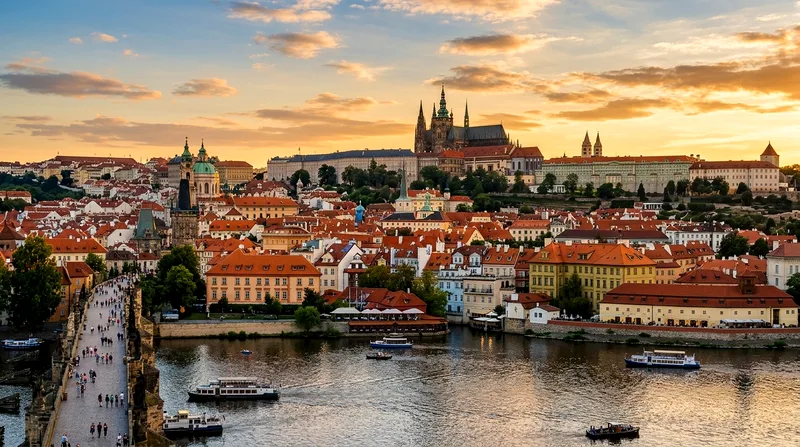
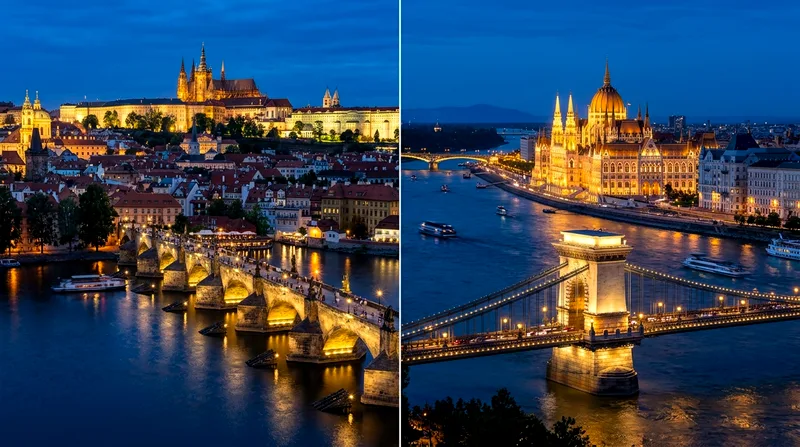
This is where the two cities genuinely diverge rather than just differing in scale. Prague's atmosphere is built on density — Gothic, Baroque, and Art Nouveau buildings stacked close together, cobbled lanes that don't run in straight lines, and a castle complex (Prague Castle) that's actually the largest ancient castle complex in the world by area, according to Guinness World Records. Budapest's atmosphere is built on grandeur and water — wide Danube views, thermal culture dating back to Ottoman occupation, and a Parliament building that's more overtly monumental than anything in Prague's skyline.
I'd rate Prague ahead for pure old-town wandering; I'd rate Budapest ahead for river views and for not feeling like every street is doing the same trick twice. That's a real trade-off, not a dodge.
Landmarks and views
Charles Bridge at sunrise, before the statue vendors and crowds arrive around 9am, is one of the better free experiences in Europe — go before 7am if you want photos without a hundred heads in frame. Prague Castle's grounds are free to enter, though the interior sights (St. Vitus Cathedral's tower, the Old Royal Palace) require a ticket, typically sold as a combined pass. Budapest counters with the view from Fisherman's Bastion in Buda looking across to the Parliament Building — arguably the single best skyline shot in either city, especially at dusk when the building is lit. Buda Castle itself is less architecturally dazzling inside than Prague Castle, but the hill it sits on gives better panoramic payoff for less walking.
Nightlife, food and crowds
Budapest's ruin bars — repurposed courtyard buildings in the Jewish Quarter, the best-known being a sprawling multi-room venue with mismatched furniture — are a genuinely different nightlife format than anything Prague offers. Prague's nightlife leans toward beer halls, cellar bars, and a still-thriving (if touristy) pub crawl scene; Czech beer is cheap by Western European standards and the culture around it is unpretentious. For food, Budapest has more variety and, generally, better value for a sit-down dinner; Prague's traditional fare (goulash, svíčková, dumplings) is heartier than refined. Crowds are a genuine downside in both — Old Town Square and Charles Bridge get uncomfortably packed from late morning through early evening in peak season, and Budapest's thermal baths get similarly crowded on weekends. Avoid both at their worst by going early or very late.
Costs, Tours and Effort Head-to-Head
Neither city is expensive by Western European standards, but there's a consistent gap. Budapest tends to run cheaper across accommodation, food, and transport — a function of Hungary's generally lower price level compared with the Czech Republic, though both remain far less costly than Vienna or Munich. If you're comparing prague or budapest purely on a tight budget, Budapest usually edges it, especially on dinners out and taxis.
Where Prague claws back value is in how much you can see without paying for anything beyond your own two feet. The castle grounds, the bridge, the square, the Astronomical Clock, the Vltava riverside — all free, all within close range of each other. Budapest's best single experience, a few hours at Széchenyi Thermal Bath, isn't free; entry runs in the moderate range for a day ticket, and you'll want to budget a half-day for it to be worth the cost.
Relative cost level
Think of it this way: a week combining both cities costs noticeably less than the same week split between, say, Munich and Vienna, but more than a week spent entirely in Krakow, which remains one of the cheapest major Central European bases. Prague sits in the middle — pricier than Budapest for hotels and transit, cheaper than Vienna for almost everything. Don't assume Prague is "expensive" by European standards; it isn't, but it's no longer the bargain destination it was two decades ago, and central hotel rates now rival mid-range Western European cities during peak summer weekends.
Walking tours vs day trips
Both cities are built for walking tours — a 2 to 3 hour guided old-town walk covers the highlights efficiently and is worth it in Prague especially, where guides explain the Astronomical Clock's mechanism and the Jewish Quarter's history in ways a guidebook won't. Where Prague pulls further ahead is day-trip potential: Kutna Hora, with its bone church and historic silver-mining core, is about an hour away by train, and Cesky Krumlov, the South Bohemian river town with its own castle, is a reasonable (if long) day trip or better as an overnight. Budapest's day-trip options — the Danube Bend towns like Szentendre — are pleasant but less dramatic. If day-tripping matters to your itinerary, that tips toward basing in Prague. Compare current day-tour prices and departure times before booking either Kutna Hora or Cesky Krumlov, since schedules shift seasonally.
Which City Suits Which Traveller
There's no universal winner here, and anyone telling you otherwise is selling something. The right call depends heavily on who's traveling and what they actually enjoy doing on vacation, not just what photographs well.
Couples, families and history lovers
Couples tend to love Prague for the romance-by-density effect — Charles Bridge at dusk, a riverside dinner, a short walk back to a hotel in Old Town. Families with children under 10 often find Prague easier logistically because distances are short and there's less reliance on public transport, though the cobblestones are rough on strollers. History lovers should lean Prague too, if forced to choose one: the castle complex, the Jewish Quarter's synagogues, and the well-preserved medieval core give more to actually read and absorb per hour walked. Budapest's history is just as rich — the Hungarian Parliament Building tour and the Shoes on the Danube memorial are genuinely moving — but it's more spread out and requires more deliberate routing.
Budget and nightlife seekers
If cost and nightlife are the two deciding factors, Budapest wins fairly clearly. Hostel beds, bar tabs, and taxi rides all skew cheaper, and the ruin bar scene has a longer, later rhythm than Prague's pub-and-cellar culture. Solo travelers on a budget backpacking route through Krakow, Budapest, and Vienna will find Budapest slots in naturally cost-wise. Prague isn't a bad nightlife city — it just leans more toward beer culture than the all-night, multi-room party format Budapest is known for.
Combining Prague and Budapest in One Trip
Most travelers asking prague vs budapest don't actually need to choose — the two cities pair naturally, and plenty of multi-city Central Europe itineraries run Prague, Vienna, Budapest as a loop or a one-way run. You skip very little by doing both, and the contrast between them is part of what makes the trip memorable rather than repetitive.
Prague to Budapest travel options
The Prague to Budapest train is the standard option — a direct daytime service covers the route in roughly 6.5 to 7 hours, running through or near Brno and Bratislava depending on the exact line. Booking a seat reservation in advance is wise in peak summer; the trains run a handful of times daily and midsummer services do sell out on popular departures. Flying is faster in the air (around 1 hour 15 minutes) but rarely faster door to door once you account for airport transfers and check-in buffers for a short-haul flight. Driving is roughly 5 hours via Brno and Bratislava and gives flexibility to stop in Bratislava briefly, though parking in both city centers is a hassle not worth taking on for a short visit. Compare current train times and fares before booking — schedules and direct-service availability shift a couple of times a year.
Suggested time split
For a 7 to 9 day Central Europe trip, 3 nights in Prague and 3 nights in Budapest, with a travel day between, is a workable baseline — it gives each city two full sightseeing days plus arrival/departure slack. If you have 10+ days, add a Cesky Krumlov overnight between Prague legs, or a Bratislava stop on the train route to Budapest, since it's roughly on the way and worth 3 to 4 hours even as a brief stopover. Don't try to squeeze both cities into under 5 days total — you'll spend more time in transit and checking into hotels than actually seeing anything, and both cities reward at least two full unhurried days each.
Verdict: Prague or Budapest?
If you can only pick one and you're a first-time visitor to Central Europe who wants maximum old-world atmosphere in minimum time, go to Prague. The castle, the bridge, the square, and the Jewish Quarter deliver a concentrated version of "fairytale European capital" that's hard to match, and the compact layout means you won't waste vacation time on transit. If budget and a different kind of unwinding — thermal baths, ruin bars, river views from a hill — matter more to you than density of medieval architecture, Budapest is the better call, and your money will stretch further.
For couples, families with young kids, and architecture-focused travelers, Prague edges ahead. For budget backpackers, nightlife-focused groups, and anyone craving a slower, bath-and-boulevard pace, Budapest edges ahead. For everyone else with more than 6 days to spend: do both. The train ride between them is comfortable, scenic in parts, and short enough that splitting your trip costs you half a day, not a full one. You lose nothing meaningful by refusing to choose.
Frequently asked questions
Is Prague or Budapest better for a first visit?
Prague is generally the easier first visit — its historic core is smaller, more walkable, and easier to navigate without much public transport. Budapest rewards a first visit too, but its sights are more spread across the river, so you'll rely more on trams and the metro to see Buda Castle and the Parliament Building in the same day.
Which is cheaper, Prague or Budapest?
Budapest is typically the cheaper of the two for accommodation, food, and local transport, reflecting Hungary's generally lower price level. Prague has gotten pricier over the past decade, especially for central hotels in peak summer, though it's still noticeably cheaper than Vienna or Munich for a comparable trip.
How many days do you need in Prague and Budapest?
Budget 2 to 3 full days per city to see the major sights without rushing — Prague Castle, Charles Bridge and Old Town in Prague; Buda Castle, the Parliament Building and Széchenyi Thermal Bath in Budapest. A combined 6 to 7 day trip covering both comfortably, with a travel day between.
How do you get from Prague to Budapest?
The direct train takes roughly 6.5 to 7 hours and is the most practical option for most travelers, running a few times daily with reservable seats. Flying takes about 1 hour 15 minutes in the air but rarely saves real time once airport transfers are factored in; driving takes about 5 hours via Brno and Bratislava.
Which city is better for nightlife and food?
Budapest generally wins on nightlife, thanks to its ruin bar scene and later-running venues, and it edges ahead on food variety and value for sit-down dining. Prague's nightlife is strong too, but it leans toward beer halls and pub culture rather than the all-night party format Budapest is known for.