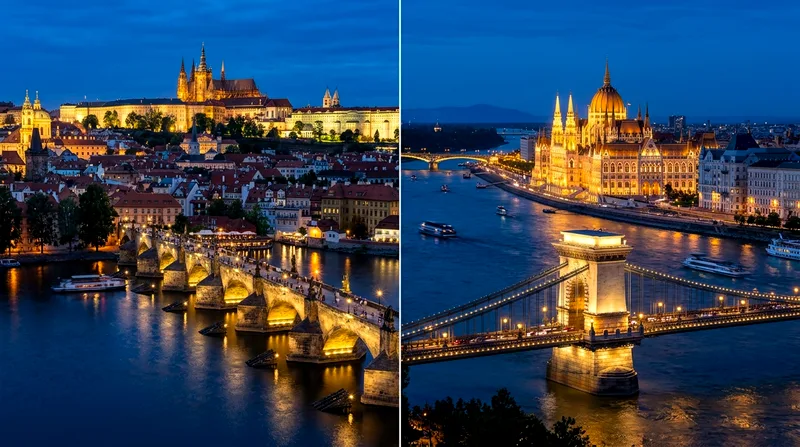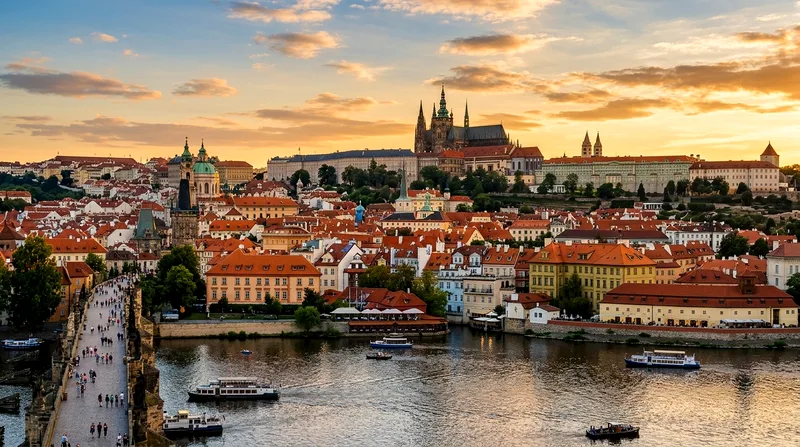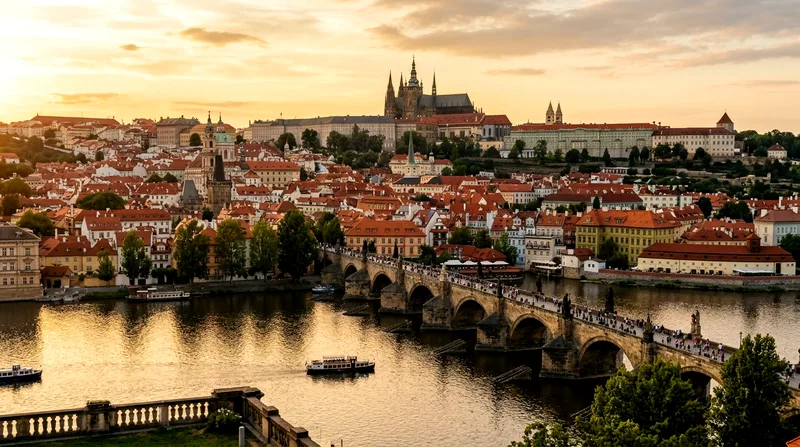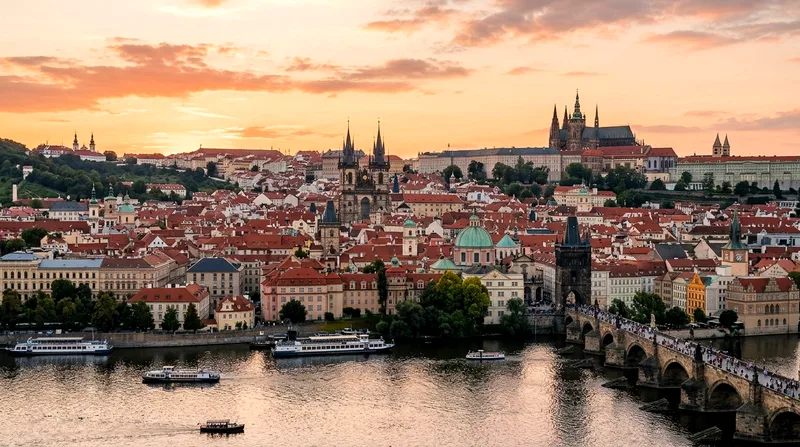
Prague vs Vienna compared on budget, culture, family appeal and day trips, plus a simple train-linked itinerary to see both cities on one trip.
Prague and Vienna at a Glance
Prague vs Vienna is one of the most common Central Europe trip-planning dilemmas, and for good reason — the two capitals are about four hours apart by train, both were seats of Habsburg-era power, and both get held up as essential stops on a first European trip. But they deliver very different experiences once you're actually walking their streets.
Prague, the capital of the Czech Republic, is compact, dramatic, and medieval in feel — Gothic spires, a castle complex looming over the Vltava River, and Charles Bridge thick with statues and street musicians. Vienna, Austria's capital, is grander and more formal: wide Ringstrasse boulevards, imperial palaces like Schönbrunn, and a civic order that Prague doesn't really aim for. If Prague feels like a fairytale illustration, Vienna feels like a well-run opera house.
Neither city is objectively "better." It depends on what exhausts you on a trip. If crowded medieval lanes and constant photo-ops wear you down, Vienna's wider streets and museum-paced culture will feel like a relief. If formal architecture and quieter evenings bore you, Prague's chaos and nightlife will suit you more.
Prague generally costs less and feels more dramatic, while Vienna offers calmer streets and deeper museum culture, with Budapest as the budget-friendly third option.
Prague vs Vienna at a glance: cost, culture and travel time compared
| City | Daily Budget Level | Best For | Walkability | Standout Sight | Train Time from Prague |
|---|---|---|---|---|---|
| Prague | Low to mid | First-timers, budget trips, couples | High, but hilly near the castle | Prague Castle and Charles Bridge | — |
| Vienna | Mid to high | Culture lovers, families, senior travelers | High, flat and orderly | Schönbrunn Palace | approx. 4 hours direct |
| Budapest | Low to mid | Thermal baths, nightlife, budget stretch | High, some hills on Buda side | Danube riverside and Parliament | approx. 6-7 hours (via Vienna) |
| Český Krumlov | Low | Day trip, small-town charm | High, compact old town | Český Krumlov Castle | approx. 3 hours from Prague (day trip) |
Typical figures based on published rail routes and general price levels; actual costs and journey times vary by season and booking class, so check current fares before you travel.
Quick comparison table
Before going deeper into budget and culture, it helps to see the two cities side by side on the factors that actually drive the decision — see the comparison table below. Use it as a starting point, not a final verdict; your travel style will shift the balance more than any single row does.
Where Budapest fits in
Budapest often gets thrown into the Prague vs Vienna vs Budapest conversation, and it deserves a mention. Budapest is cheaper than both Prague and Vienna, has a similarly dramatic riverside skyline (think the Danube instead of the Vltava), and offers thermal baths that neither Czech nor Austrian capital can match. If your trip has room for three cities and roughly 8-10 days, a Vienna–Budapest or Prague–Vienna–Budapest train loop works well, since all three are linked by direct rail. But if you only have 4-6 days, pick two — trying to rush all three usually means seeing none of them properly.
Budget and Cost Level Compared
On the Prague vs Vienna budget question, Prague consistently comes out cheaper — accommodation, beer, and casual meals all run noticeably lower than in Vienna. That doesn't mean Prague is a bargain-basement destination anymore; Old Town hotel prices have crept up toward Western European levels in peak season (May, September, Christmas markets). But step a few tram stops outside the historic core and prices drop fast, which isn't as true in Vienna, where even outer districts carry a baseline cost of doing business in Austria.
Vienna's costs reflect its status as a wealthy Western European capital: public transport, museum tickets, and sit-down dining all sit closer to Munich or Zurich pricing than to Prague or Budapest. You're not getting ripped off — the quality is consistently high — but you'll feel the difference on a multi-day trip, especially if you're traveling as a family of four.
Food, drink and sightseeing costs
A pint of beer in a Prague pub away from the main tourist squares is still noticeably cheaper than a comparable beer in central Vienna — Czech beer culture also means it's often better value, not just cheaper. Museum and attraction entry in Prague (castle complex, museums, river cruises) tends to run lower than Vienna's major sights, though Schönbrunn Palace and the Kunsthistorisches Museum are priced like the world-class attractions they are, and worth it if that's your travel priority. Avoid eating directly on Old Town Square or right by Charles Bridge in Prague — markups there rival Vienna's inner-city restaurants without the quality to match.
Value for money by traveler type
Solo travelers and budget-focused couples generally get more for their money in Prague — hostels, tram passes, and casual dining all stretch further. Senior travelers and those prioritizing comfort over cost often find Vienna's higher prices justified by quieter streets, better-organized museums, and more predictable service standards. Families sit in between: Vienna's parks and child-friendly museums are excellent but pricier, while Prague's day-to-day costs are lower even if the castle hill walk tests small legs.
Culture, Sights and Atmosphere
This is where Prague vs Vienna architecture and culture really diverges. Prague's Old Town and Lesser Town are a dense mix of Romanesque, Gothic, Baroque and Art Nouveau buildings that survived the 20th century largely intact — no major Allied bombing campaign flattened it, unlike Dresden not far north. The result is a historic core you can walk across in 20 minutes that feels genuinely medieval in places, with Prague Castle anchoring the skyline from almost every angle.
Vienna's identity is more Habsburg-imperial than medieval — grand 19th-century boulevards, opera houses, and palaces built to project the power of an empire that once ran much of Central Europe. It's less about wandering lost in alleys and more about visiting specific, monumental set-pieces: Schönbrunn, the Belvedere, the State Opera. If Prague rewards aimless wandering, Vienna rewards planning your day around two or three major sights.
Architecture, music and museums
Vienna's classical music heritage — Mozart, Beethoven, Strauss all worked there — gives it an edge for anyone who wants a proper concert or opera evening as part of the trip; Prague has classical concerts too, mostly aimed at tourists in churches, and they're fine but not in the same league. On museums, Vienna's collections (Kunsthistorisches, Albertina, Belvedere) are deeper and better funded than Prague's, which leans more on the castle and historic interiors than on world-class painting collections. Munich actually rivals Vienna here more than Prague does, if museum density is your main criterion.
Crowds, walkability and views
Charles Bridge at midday in July is genuinely unpleasant — shoulder to shoulder, selling points thick with tourist-trap portrait artists and fridge magnets. Go at 7am instead, or after 9pm, and you get the same view without the crush. Vienna rarely gets that congested; its wider Ringstrasse layout and larger city footprint spread tourists out more evenly. Prague's hilly castle district is also tougher on knees and strollers than Vienna's largely flat center, something senior travelers and parents with buggies should factor in before committing to a packed one-day castle itinerary.
Family Appeal and Day Trips
For Prague vs Vienna for families, Vienna edges ahead on sheer convenience — flatter streets, excellent trams, and attractions like the Prater amusement park and Schönbrunn's zoo (the oldest in the world, dating to 1752) that are built with children in mind. Prague's charm works on kids too, just differently: boat rides on the Vltava, the astronomical clock show on the hour, and the sheer "castle in real life" factor of Prague Castle tend to land well with children under 10.
Kid-friendly sights and effort level
Prague Castle involves a genuine uphill walk or a tram plus a hike up Castle Steps — doable with kids but tiring with a stroller, so budget extra time and consider the tram route from Malostranská instead of walking the whole hill. Vienna's Schönbrunn Palace grounds are flat and spacious, with a maze and zoo that can fill half a day without anyone melting down. If you're traveling with children under 6, Vienna is simply the easier city to manage logistically, even if Prague edges it on charm.
Best day trips from each city
Prague's best day trip is Český Krumlov, a small medieval town in southern Bohemia with its own castle and a river looping through it — about 2.5 to 3 hours each way by bus or train, best done as a full day rather than rushed. Kutná Hora, closer at about an hour from Prague, offers the famous bone church (Sedlec Ossuary) and a historic silver-mining town, a more manageable half-day option for families with limited stamina. From Vienna, the Wachau Valley and its vineyards, or a day trip to Bratislava (under an hour by train), are the standard choices — both easier logistically than Prague's day trips, but arguably less dramatic.
Prague to Vienna by Train Itinerary
You don't have to choose — the Prague to Vienna train is one of the more comfortable, scenic routes in Central Europe, and it's the reason so many travelers end up combining both cities rather than picking one. Direct trains run multiple times daily, covering the roughly 400 km route through the Czech and Austrian countryside, past small towns and farmland rather than anything dramatic, but comfortable enough to work or nap through.
Journey overview and what to expect
The direct Prague-Vienna train takes approximately 4 hours, with no border formalities to worry about since both countries are in the Schengen Area — you won't even notice crossing from the Czech Republic into Austria. Trains typically have a dining car, and standard second-class seating is perfectly comfortable for the trip; there's little practical reason to pay for first class unless you want extra legroom. Book a seat reservation in peak season (summer weekends, December) since trains can fill up, but off-season you can often walk up and buy a ticket the same day.
Sample split of days between both cities
For a Prague Vienna itinerary of about 7 days, a 4-3 or 3-4 split works well: four days in Prague covers the castle, Old Town, a Vltava river cruise, and either Český Krumlov or Kutná Hora as a day trip, while three days in Vienna fits Schönbrunn, the inner city, and one museum or concert evening. Travelers with 10 days or more can stretch to 4-4 with a Bratislava or Wachau Valley add-on. If you only have 5 days total, weight it toward Prague (3 days) plus Vienna (2 days) — Prague's sights are denser and more walkable in short bursts, while Vienna benefits more from a slower, longer stay.
Who Should Pick Which: Our Verdict
If you're forced to choose just one city for a first trip — the "Prague or Vienna first trip" question — go with the one that matches your energy level and budget more than your list of places to visit. Prague delivers more visual drama per euro and per hour of walking. Vienna delivers more polish, more depth in its museums, and an easier pace for anyone who finds constant crowds draining.
Choose Prague if
Pick Prague if you're traveling on a tighter budget, you want a city you can largely cover on foot in 3-4 days, you like nightlife and casual pub culture, or you're drawn to medieval and Gothic architecture over imperial grandeur. It's also the stronger pick for solo travelers and groups of friends who want an affordable base with easy day trips to Český Krumlov or Kutná Hora.
Choose Vienna if
Pick Vienna if you want world-class museums and classical music as the centerpiece of your trip, you're traveling with young children or have mobility concerns and want flatter, calmer streets, or you simply have a higher travel budget and want polish over grit. It's also the better anchor city if you're planning to continue on to Budapest or further into Central Europe by train.
Frequently asked questions
Is Prague or Vienna better for a first trip to Central Europe?
Prague is generally the easier, cheaper first stop — its compact Old Town and castle district are walkable in a few days and don't require much planning. Vienna rewards a slightly more structured visit, with museums and palaces that benefit from advance tickets. If you can only do one city, pick Prague for atmosphere and budget, Vienna for culture and comfort.
Is Prague cheaper than Vienna?
Yes, generally. Accommodation, beer, casual dining, and local transport all tend to run lower in Prague than in Vienna, which prices closer to other wealthy Western European capitals. That gap narrows in Prague's Old Town during peak season, so staying a few tram stops out keeps costs down in both cities.
How long is the train from Prague to Vienna?
The direct train takes approximately 4 hours, covering roughly 400 km through the Czech and Austrian countryside with no border checks, since both countries are in the Schengen Area. Multiple direct trains run daily; booking a seat reservation is worth it in peak summer and around Christmas.
Can you visit both Prague and Vienna in one trip?
Yes, and it's a common, well-worn route given the roughly 4-hour direct train connection. A week-long trip split as 4 days in Prague and 3 in Vienna (or the reverse) works well; add Budapest if you have 10 days or more, since it's also directly rail-connected from Vienna.
Which city is better for families with children?
Vienna is generally easier with young children — flat streets, strong trams, and attractions like Schönbrunn's zoo and gardens built for family visits. Prague still works well for families with kids over 6 or 7, especially for castle visits and river cruises, but expect more uphill walking and stroller friction.