Planning a trip? See Prague weather by month and learn which activities, events and tours suit each season, from winter markets to summer river cruises.
Prague Weather by Month: What Each Season Means for Your Trip
What will Prague actually be like when I'm there? That's the question behind nearly every booking decision — whether to pack a heavy coat, whether the castle views will be fogged in, whether the Vltava River cruises even run in January. Prague weather by month changes more than most visitors expect for a city this far from any coastline, and the difference between visiting in April and visiting in July isn't just temperature — it's which tours make sense, how long the lines at Prague Castle will be, and whether you'll spend your evenings on a rooftop terrace or ducking into a heated wine bar.
This guide breaks the year into its four real seasons and tells you, month by month, what the Czech Hydrometeorological Institute's long-term averages suggest you'll experience, plus what that means for actual plans: walking tours, river cruises, Christmas markets, museum days. None of this replaces checking a short-range forecast before you fly, but it will stop you from booking a rooftop bar crawl in November or a heavy wool coat for a June trip.
Prague Weather at a Glance
Prague sits inland in the Czech Republic, shielded from Atlantic moisture by hills and far from any sea, which gives it a continental climate: colder winters and warmer summers than you'd get in London or Paris at a similar latitude, with daily temperature swings that can genuinely surprise people. A 15°C morning can become a 25°C afternoon in May, so dressing in layers isn't just a cliché here — it's the only sensible approach.
May, June and September offer the most reliable mix of mild weather and manageable crowds in Prague.
Prague weather by month: average temperatures, rainfall and what suits the season
| Month(s) | Avg. High (°C) | Avg. Low (°C) | Rain Pattern | Best For |
|---|---|---|---|---|
| Dec-Feb | 1-4 | -4 to 0 | Occasional snow, grey skies | Christmas markets, indoor sights |
| Mar-Apr | 10-16 | 1-6 | Changeable, scattered showers | Walking tours, fewer crowds |
| May | 18-20 | 8-10 | Showers, blossom season | Gardens, river cruises |
| Jun-Jul | 22-25 | 12-14 | Thunderstorms, humid spells | Long days, outdoor events |
| Aug | 24 | 13 | Hot spells, sudden storms | Early mornings, shaded sights |
| Sep-Oct | 13-19 | 5-10 | Mild, drier than summer | Autumn colour, photography |
| Nov | 7 | 2 | Steady rain, early dusk | Museums, cozy interiors |
Figures are long-term averages from Czech meteorological records; any single year can vary noticeably, so check a short-range forecast before you travel.
Prague's continental climate explained
The practical upshot: summers are warmer than many expect from Central Europe, winters are colder and greyer, and spring and autumn are genuinely transitional rather than mild extensions of the adjacent seasons. Compare this to Vienna, which sits in a similarly continental pocket and feels almost identical in its seasonal rhythm, versus Munich, which gets more Alpine-influenced rain and cooler summer evenings. Budapest, further south and at lower elevation, tends to run a few degrees warmer in summer than Prague — worth knowing if you're deciding between the two for a July trip.
Yearly temperature and rainfall overview
Across the Prague yearly weather cycle, average highs run from around 1-3°C in January to roughly 23-25°C in July, with lows dipping below freezing from December through February. Rainfall is spread fairly evenly across the year rather than concentrated in one obvious wet season, though May through August tend to bring more total precipitation — often as short, heavy afternoon showers and thunderstorms rather than the steady drizzle you get in autumn and winter. Snow is possible from November to March but not guaranteed in any given week, and rarely settles for long in the city center itself.
Winter: December to February
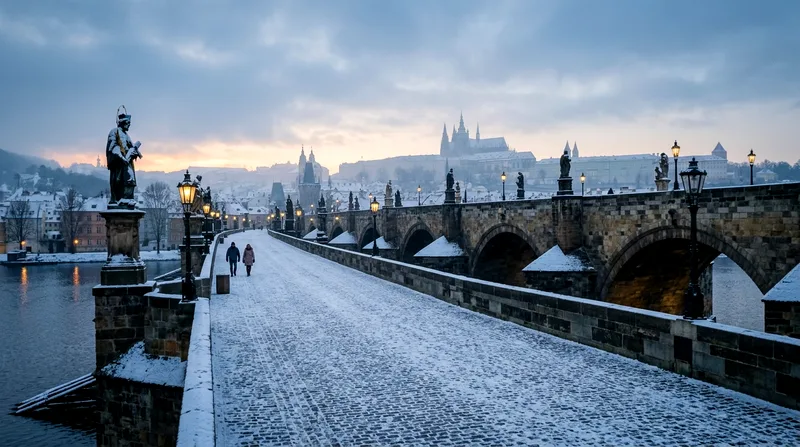
Prague weather in winter is genuinely cold — not Scandinavian cold, but cold enough that a lightweight jacket won't cut it. Daytime highs hover around freezing, nights regularly drop below zero, and the Vltava occasionally carries drifting ice, though it rarely freezes solid enough to walk on. The upside is real: fewer tourists, shorter lines at Prague Castle, and a city that looks genuinely different under grey skies and bare trees than it does in any tourist brochure photo.
December: Christmas markets and festive tours
December is the exception to winter's quiet reputation. The Prague Christmas Markets in Old Town Square and Wenceslas Square draw heavy crowds for mulled wine, trdelník, and wooden stalls strung with lights, and this is genuinely one of the better times to book an evening walking tour, since the lit-up squares photograph far better after dark than in daylight. Expect temperatures around freezing, occasional light snow, and the need for proper boots — cobblestones get slick. Book market-focused evening tours a few days ahead in the two weeks before Christmas, when demand spikes hardest.
January and February: quiet sights and indoor attractions
This is the low season proper, and I'd actually recommend it to budget-conscious travelers and anyone who dislikes crowds more than they dislike cold. Expect highs of 2-4°C, occasional snow that dusts Prague Castle's rooftops without disrupting transport, and noticeably cheaper accommodation than the summer rate. It's a strong window for museum visits, the interiors of St. Vitus Cathedral, and indoor food tours — outdoor river cruises run, but you'll want the heated cabin option rather than an open-deck boat.
Spring: March to May
Spring is where Prague starts rewarding patience. Early March still feels like winter's tail end, but by late April the parks are green and outdoor cafés reopen in earnest. This is also one of the better stretches for value — hotel prices haven't hit summer peaks, and the light is softer for photography than the harsh midday sun of July.
March and April: changeable weather and walking tours
Don't trust a sunny morning in March — afternoons can turn sharply colder, and rain showers arrive with little warning. Pack a layer you can add and remove rather than committing to one coat. This unpredictability doesn't ruin walking tours of the Old Town or Charles Bridge; if anything, the lighter crowds make guided walks more pleasant than in peak season, and guides report groups move faster without constant congestion on the bridge itself.
May: gardens, blossom and river cruises
May is arguably the strongest all-round month. Average highs reach the high teens to low 20s°C, rainfall is present but rarely disruptive, and Petřín Hill's gardens are in bloom, often with cherry blossom still visible into early May depending on the year. This is a good month to book a Vltava River cruise — daylight hours are long enough for an evening sailing past Charles Bridge and Prague Castle without needing a heavy coat. Compare current river cruise options and prices before you book, since schedules shift seasonally.
Summer: June to August
Summer brings the warmest, driest-feeling days and also the thickest crowds — Old Town Square at midday in July can feel more like a queue than a square. If you're weighing Prague against Budapest or Vienna for a July trip, know that all three get hot and busy at once, so the choice usually comes down to which city's indoor attractions and shaded parks appeal more to you.
June and July: long days and outdoor events
Daylight stretches past 9pm, temperatures sit in the low-to-mid 20s°C, and outdoor terraces, open-air concerts, and evening river cruises all make sense. Thunderstorms are common in the afternoon, usually brief but sometimes intense, so carry a compact umbrella rather than relying on forecasts alone. Letná Park is a genuinely good summer escape — wide lawns, a beer garden, and views over the river without the density of the Old Town crowds.
August: heat tips and shaded alternatives
August can push past 30°C on the hottest days, and the Old Town's stone streets trap heat with little shade. I wouldn't recommend a midday castle tour in this stretch — go at opening time instead, or shift your sightseeing to late afternoon and evening. Indoor options like the Museum of Decorative Arts or a boat cruise with a covered deck are sensible heat alternatives, and they tend to be less crowded at the hours everyone else is baking on Charles Bridge.
Autumn: September to November
Autumn is the season I'd point most first-time visitors toward if they can be flexible, and it's also where "Prague weather in October" searches cluster for good reason — the month tends to deliver some of the best photography light of the year along with manageable crowds.
September and October: mild days and autumn colours
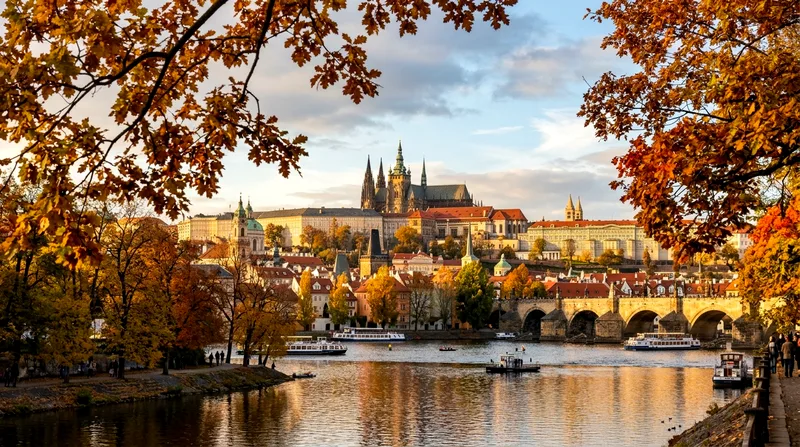
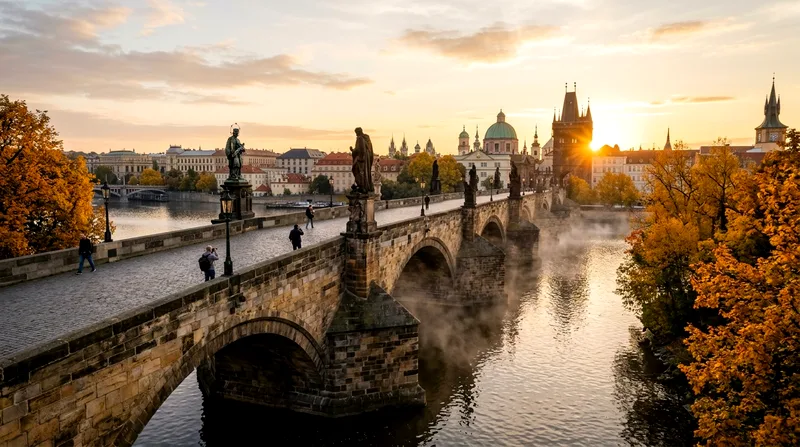
September often still feels like late summer, with highs around 18-19°C and noticeably thinner tourist numbers than August. October cools further, into the low-to-mid teens, and brings the golden foliage along the Vltava that makes early-morning Charles Bridge photos look dramatically different from the hazy summer version. Rain becomes more frequent than in summer but falls more as steady drizzle than violent storms — a packable rain jacket serves better than an umbrella on windier days. This is a strong window for walking tours, Petřín Hill hikes, and day trips to Kutna Hora or Cesky Krumlov, both of which look better under autumn light than flat summer glare.
November: rain, early dark and museum visits
November is the month I'd steer trip planning away from if weather comfort matters to you. Rain is frequent, skies stay grey for days at a stretch, and darkness falls by late afternoon — by 5pm you're often sightseeing by streetlight. It's not a wasted month, though: museum visits, the interiors of Prague Castle's halls, and food or beer tours shift naturally indoors, and hotel prices drop before the December market rush begins.
Choosing the Best Month for You
There's no single best time to visit Prague — there's a best time for your priorities. If you want warm evenings for river cruises and rooftop bars and can tolerate crowds, June works. If you want the lowest prices and don't mind cold, January and February deliver real value along with genuinely quiet museum halls. If you're chasing photographs — golden light on Charles Bridge, blossom on Petřín Hill, snow dusting Old Town Square — then October, May, and December respectively are your targets.
For most travelers weighing this against other European city breaks, the comparison that matters most is crowd tolerance versus weather comfort. Krakow and Dresden both run slightly cooler and less crowded than Prague in peak summer, which is worth knowing if you're building a multi-city itinerary and want to stagger your hottest days. Within the Czech Republic itself, pairing a Prague stay with a day trip to Cesky Krumlov works best from May through September, when the drive and riverside walks aren't competing with rain.
Whichever month you land on, build your itinerary around the weather rather than against it — book the river cruise for May or June evenings, save the castle interiors for a rainy November afternoon, and reserve the Christmas market walking tour for December when the lights do the work daylight can't. Compare current tours, tickets and seasonal itineraries before you book, since availability and timing shift with the season.
Frequently asked questions
What is the best month to visit Prague for good weather?
May and September offer the best balance: daytime highs around 18-20°C, lower rainfall intensity than midsummer, and crowd levels well below the July-August peak. June is a close third if you want longer daylight hours and can handle busier streets.
How cold does Prague get in winter?
Average daytime highs sit around 1-4°C from December through February, with nighttime lows regularly dropping to -2 to -5°C during cold spells. Snow falls periodically but rarely accumulates deeply in the city center, since Prague's low elevation and urban heat keep it from settling long.
Is October a good time to visit Prague?
Yes — Prague weather in October tends to be mild, with highs around 13-15°C early in the month cooling into single digits by late October, plus fewer crowds than summer and strong foliage color along the Vltava. Rain is more frequent than in September, so pack a waterproof layer rather than relying on sunshine.
Which are the rainiest months in Prague?
May through August see the highest total rainfall, though it typically falls as short, heavy afternoon thunderstorms rather than all-day drizzle. November and early December bring more persistent, lower-intensity rain spread across more days, which affects sightseeing differently even with less total volume.
Does it snow in Prague at Christmas?
It's possible but not guaranteed — December averages hover near freezing, and light snow does fall in many years, though a heavy, settled snow cover on Christmas Day is the exception rather than the rule. Treat any snow as a pleasant bonus rather than something to plan photography or travel around.